
Loading story…
A threat actor impersonated a CoinDesk marketing executive in X direct messages, using post-Black Hat and DEFCON cryptocurrency-conference lures to target security researchers. The messages linked to legitimate Google Docs containing container-bound Google Apps Script that profiled visitors and sent their IP address, geolocation, browser details, and cryptocurrency-wallet-extension data to the operator through Telegram.
The campaign routed victims to operating-system-specific malware: macOS users received a variant of the AMOS infostealer, while Windows users were served an encoded PowerShell loader chain and installers signed with three stolen or fraudulently issued certificates. Recovered Windows components included a malicious NetSupport Manager deployment, a persistent rogue local certificate authority capable of TLS interception, and a Ledger-wallet-focused implant. Russian-language comments and C2 artifacts indicate the operator may be Russian-speaking, but no threat group has been attributed.
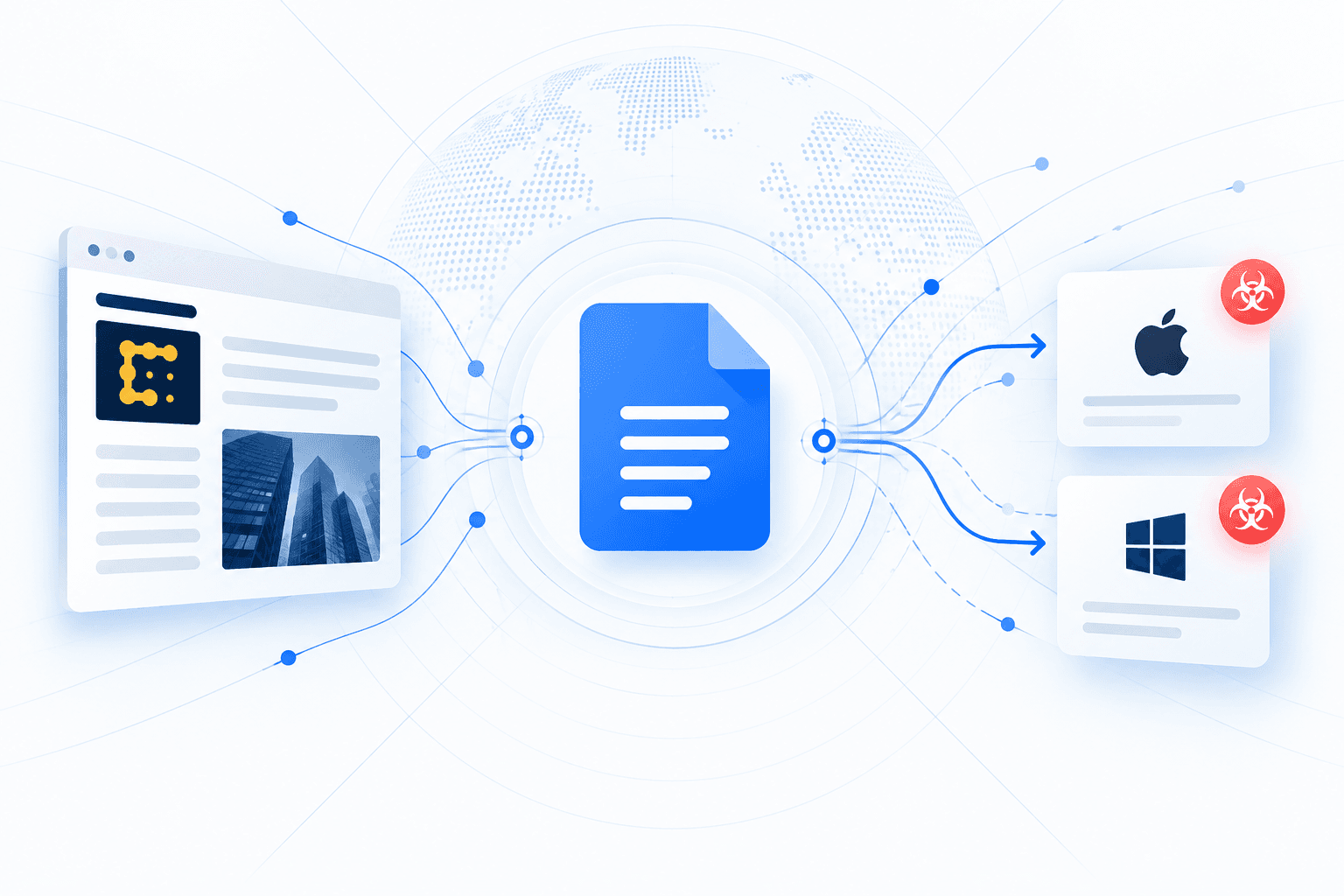
Get the infrastructure and lures behind it.
6 events from the most recent confirmed update back to the earliest known activity.
Social-media users reported suspected scam activity associated with the X account impersonating a CoinDesk marketing executive as early as October 2025.
The Windows loader captured a desktop screenshot, retrieved password-protected archives from actor infrastructure, and launched payloads including a maliciously configured NetSupport Manager installation, a persistent rogue local certificate authority and TLS-intercepting proxy, and a Ledger-wallet-focused implant. The rogue-PKI component used a stolen Lenovo certificate, installed a fake Google Trust Services root CA, and persisted its CA, hosts-file, and firewall-rule changes across reboots.
Windows victims were directed to a fake Google API Connector delivered through ClickOnce and signed with a suspected stolen or fraudulently issued Norwegian-company certificate, or to an encoded PowerShell ClickFix chain. A separate Dropbox DocSend lure supplied a fake DocSend desktop application bearing a non-validating stolen Discord certificate signature.
macOS visitors were offered either a piped zsh ClickFix command or a DMG download from the actor's GitHub repository. The delivered macOS malware appeared to be an AMOS infostealer variant using Gatekeeper-bypass instructions and a password prompt.
The actor's legitimate Google Docs contained a container-bound Apps Script sidebar that collected viewers' IP address, geolocation, browser details, and cryptocurrency-wallet-extension presence upon opening. The script relayed profiling data and action beacons through the Telegram API without an OAuth consent prompt.
A threat actor using @HartmansDoeke, while posing as CoinDesk's VP and Head of Marketing, contacted multiple security researchers near the end of DEFCON with cryptocurrency-conference lures and links to alleged planning material.
Vulnerabilities, threat actors, malware, products, organizations, breaches, and observables Mallory has linked to this story. Indicator values are masked here and available in full in the app.
Indicator values are masked on this page. See the values in Mallory Domains, IPs, hashes, and URLs are exportable to your SIEM.
Get the infrastructure, lures, and IOCs behind this campaign, ready to push into your email and identity stack.
1 reference tracked. Mallory keeps watching after this page renders.
Map indicators from this story to your assets and identify affected systems in minutes.
Every observed campaign, victim, and pivot linked to actors named in this story.
Malware, exploits, and IOCs connected to the activity described here.
YARA, Sigma, and Snort rules deployed to your SIEM as soon as they’re published.
Get matching new stories delivered to your team as they break — not the next morning.
Ask questions about this story and take action on the answers.
Other stories Mallory is tracking that overlap on entities, sources, or topic labels.

A threat actor targeted security researchers after Black Hat and DEF CON by impersonating a senior CoinDesk-linked cryptocurrency media executive on X and sending conference-planning lures through trusted services including Google Docs, GitHub Releases, and Dropbox DocSend. Huntress reported that the first lure used a booby-trapped Google Doc with a malicious Google Apps Script sidebar that asked victims for an "encryption key," profiled the host, and then steered users into staged malware delivery paths tailored to macOS and Windows systems. On macOS, victims were served a disk image resembling **Atomic macOS Stealer (AMOS)**, while Windows targets received a fake Google API Connector update that led to a ClickOnce application, PowerShell-based loaders, and additional payloads. Huntress said the Windows chain ultimately deployed **NetSupport RAT**, a fake Ledger wallet application, and a local TLS-intercepting proxy built around a rogue certificate authority, indicating goals that included credential theft, cryptocurrency wallet compromise, and persistent remote access; when the first attempt failed, the actor followed up with a second malicious document disguised as a DocSend share to continue the intrusion attempt.
Aug 24, 2026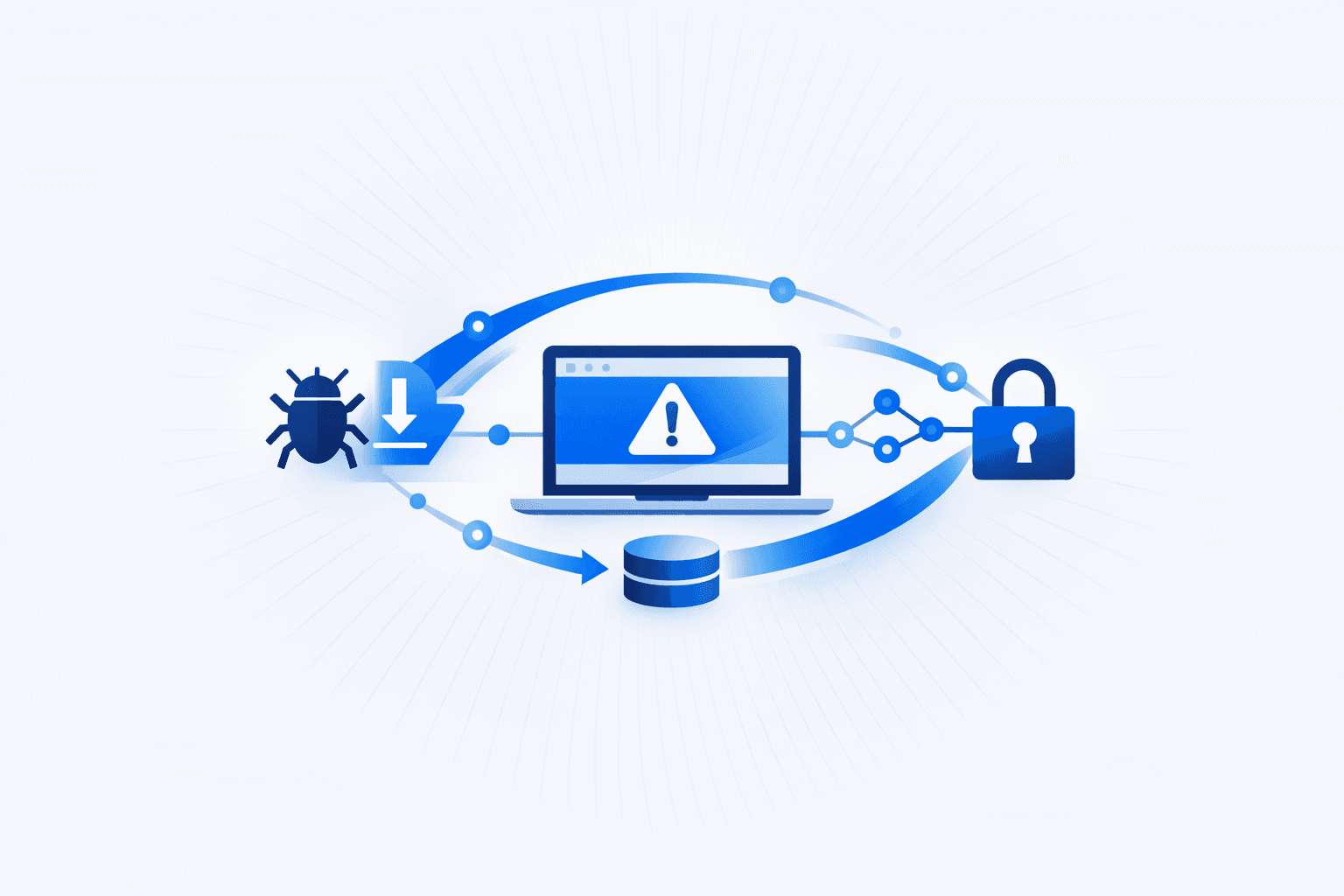
A sophisticated cybercriminal campaign has been identified targeting macOS users, particularly developers, by leveraging fake download portals that impersonate trusted platforms such as Homebrew, LogMeIn, and TradingView. The attackers have registered over 85 domains that closely mimic the legitimate sites of these popular tools, using convincing branding and user interfaces to deceive visitors. These malicious domains are promoted through Google Ads, ensuring that they appear prominently in search results and increasing the likelihood that unsuspecting users will visit them. Once on the fake sites, users are instructed to copy and execute a curl command in their Terminal, which initiates the download and installation of infostealing malware. The primary payloads delivered in this campaign are AMOS (Atomic macOS Stealer) and Odyssey Stealer, both of which are capable of harvesting sensitive information such as system details, browser data, and cryptocurrency credentials from infected machines. The campaign employs advanced social engineering tactics, including clipboard manipulation and command obfuscation, to increase the success rate of infections. Researchers from Hunt.io have mapped the infrastructure supporting this operation, noting that the attackers reuse IP addresses and SSL certificates across multiple domains, indicating a persistent and well-organized effort. The infrastructure has been active for several years, with some IP addresses registered under personal names, suggesting a degree of operational continuity and experience. The campaign does not rely on exploiting software vulnerabilities but instead exploits user trust in widely used open-source and financial tools. The use of Google Ads as a distribution vector highlights the attackers' willingness to invest in paid advertising to reach their targets. The campaign's focus on the developer community is particularly concerning, as compromised developer systems could lead to broader supply chain risks. Security researchers have emphasized the importance of verifying download sources and being wary of unsolicited installation instructions, especially those involving Terminal commands. The ongoing nature of the campaign, with continuous adaptation of infrastructure and tactics, underscores the need for vigilance among macOS users. The discovery of this campaign began with public reports from independent researchers, which were then corroborated and expanded upon by threat intelligence teams. The scale and persistence of the operation suggest that it is likely to continue evolving, posing a significant threat to the macOS ecosystem. Organizations are advised to educate users about the risks of malvertising and to implement technical controls to block access to known malicious domains. The campaign demonstrates the increasing sophistication of social engineering attacks targeting macOS, a platform often perceived as less vulnerable than Windows.
Jun 29, 2026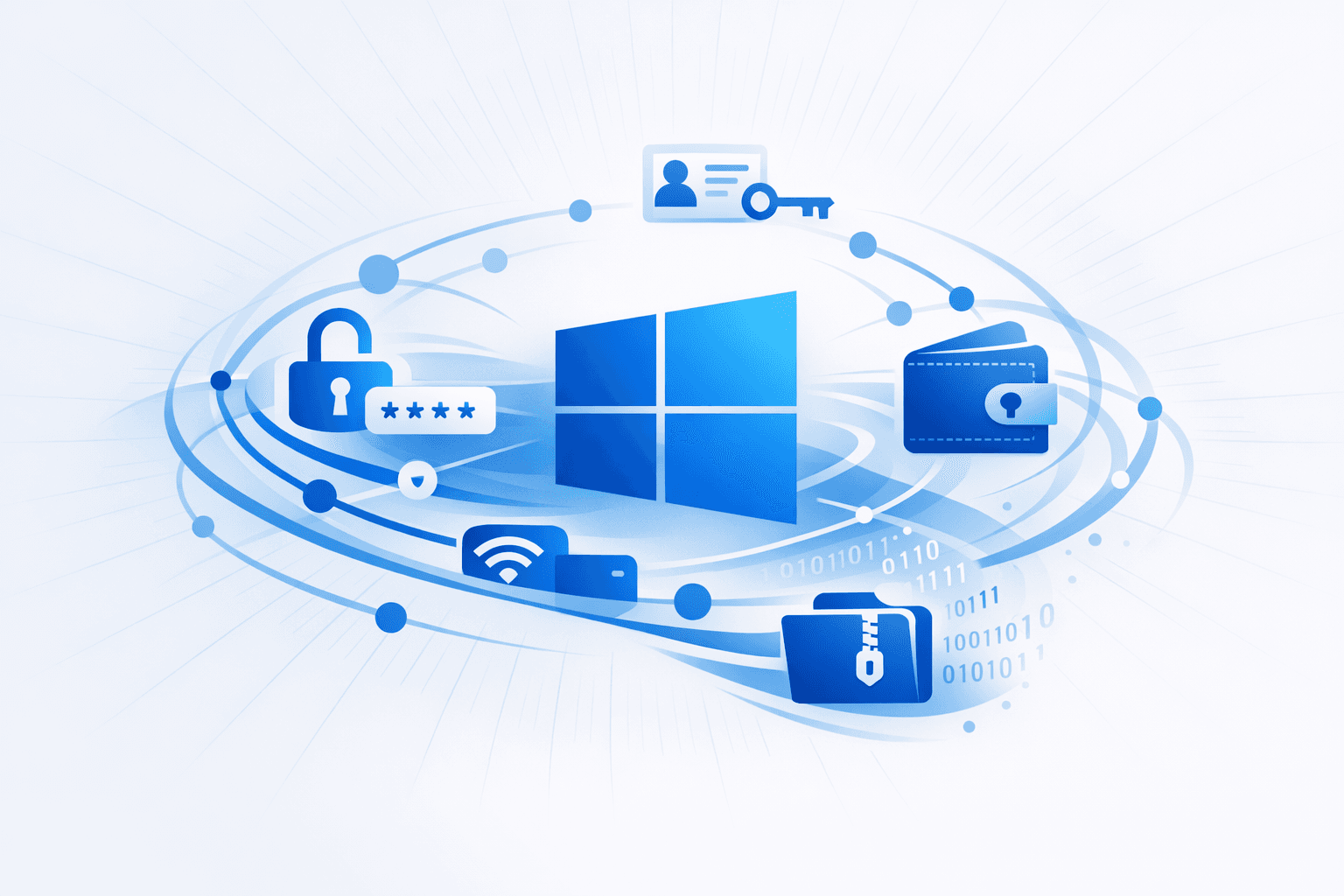
Multiple reports describe **active malware campaigns targeting Windows users** with a focus on **credential, session, and wallet theft** delivered through social engineering and abuse of legitimate services. **CharlieKirk Grabber**, a Python infostealer packaged with *PyInstaller*, is distributed via phishing, cracked software, cheats, and social-media lures; it kills browser processes (via `TASKKILL`) to access credential stores, collects passwords/cookies/autofill/Wi‑Fi data, zips the loot, uploads it to *GoFile*, and relays the download link to operators via **Discord webhooks** or **Telegram bots**. Separately, attackers are buying **Facebook ads** impersonating Microsoft to drive victims to cloned Windows 11 download pages on lookalike domains (e.g., `ms-25h2-update[.]pro`), delivering a malicious installer that steals saved passwords, browser sessions, and **cryptocurrency wallet** data; the campaign uses **geofencing/sandbox evasion** to show benign content to data-center IPs while serving malware to likely end users. Other contemporaneous activity highlights broader Windows-targeted intrusion tradecraft and adjacent threats. FortiGuard Labs reported **Winos 4.0 (ValleyRat)** phishing campaigns in Taiwan using tax and e-invoice lures, with delivery chains including malicious **LNK** downloaders, **DLL sideloading**, and **BYOVD** using the vulnerable driver `wsftprm.sys`, supported by rapidly rotating domains and cloud hosting. In LATAM, a fake bank-receipt lure delivers **XWorm v5.6** via a `.pdf.js` double-extension WSH dropper that uses junk-padding and Unicode obfuscation, then reconstructs and runs PowerShell (spawned via WMI) and abuses trusted hosting (e.g., Cloudinary) for later stages—enabling credential theft and potential ransomware follow-on. Additional reporting covered a USB-propagating **Monero cryptomining** operation capable of crossing air-gapped environments, a new Linux **SysUpdate** variant with encrypted C2 traffic (and a Unicorn Engine-based decryption approach developed during DFIR), and the **Foxveil** loader abusing **Cloudflare Pages, Netlify, and Discord** to stage shellcode and persist via services or *SysWOW64* masquerading—these are separate threats but reinforce the trend of attackers blending into trusted infrastructure and common user workflows.
Jun 29, 2026