
Loading story…
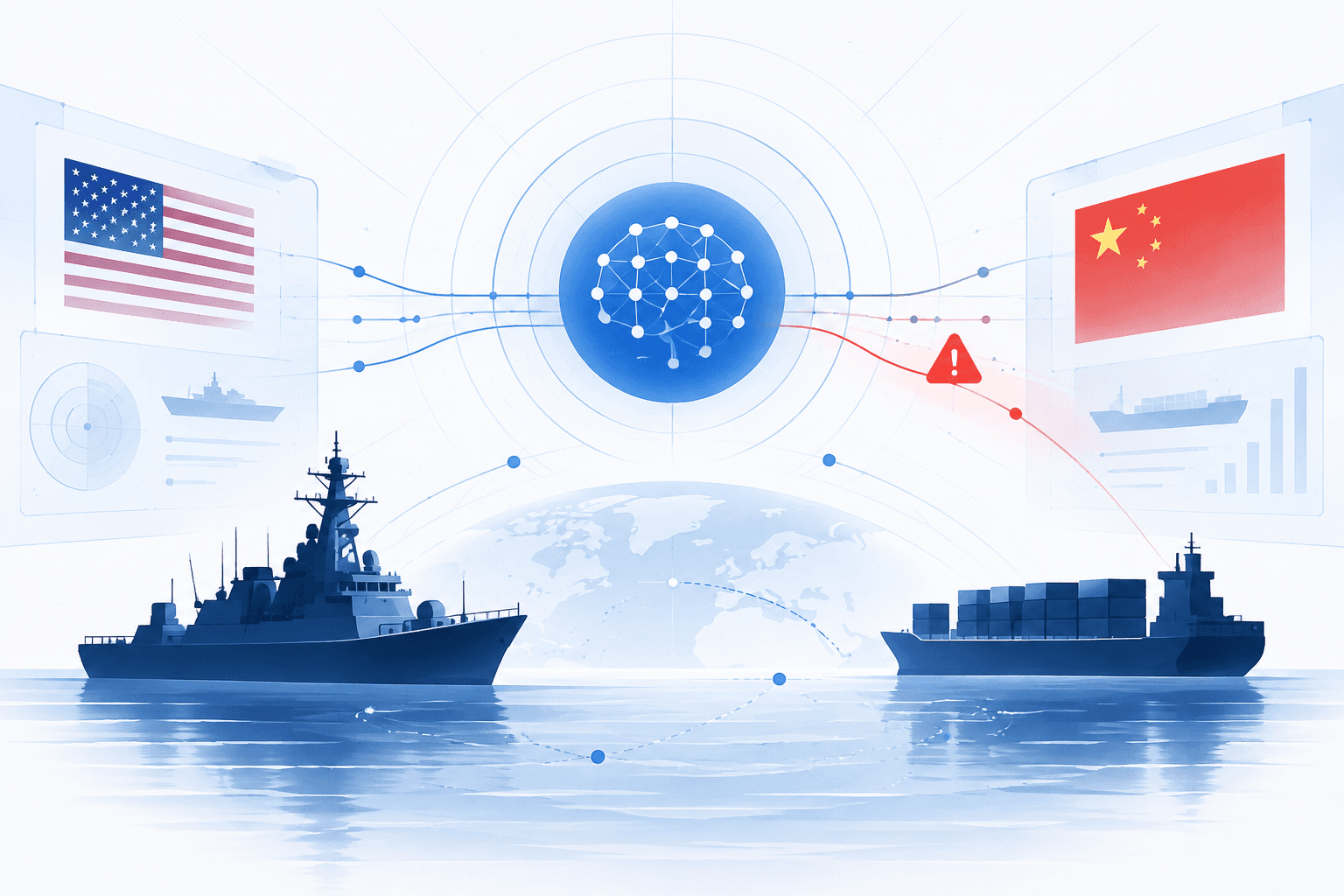
A U.S. Special Operations Command analyst reportedly used an AI chatbot to assess a Chinese vessel transiting the Middle East during the Iran war, producing a false claim that it carried components for China’s nuclear-weapons program. The assessment reportedly combined open-source vessel-manifest data with classified signals intelligence, then used AI again to draft a formal intelligence report without an intervening human verification step.
The report triggered preparations for an armed interception and boarding, with aircraft reportedly already airborne, before officials checked the underlying source and determined the cargo identification was wrong. The near-confrontation, reported by CNN and attributed to four people familiar with the episode, underscores the operational danger of unverified AI-generated intelligence as the Pentagon accelerates deployment of AI across intelligence and mission systems.
Track how attackers are adapting to this technology.
3 events from the most recent confirmed update back to the earliest known activity.
The false intelligence assessment reportedly prompted U.S. preparations to intercept and board the vessel with air support; armed personnel were preparing to board and aircraft were reportedly already airborne. Officials halted the operation after checking the underlying source and determining the chatbot had misidentified the cargo.
During the Iran war, a Special Operations Command Pacific analyst reportedly used a chatbot to assess a Chinese vessel's manifest using open-source and classified signals intelligence, falsely concluding it carried nuclear-weapons-program components. The analyst reportedly used AI again to turn the erroneous conclusion into a formal intelligence report without intervening verification.
The Department of Defense rolled out an AI acceleration strategy intended to make data across federated and mission IT systems available for AI use; the strategy also sought to make AI models available to military and civilian personnel across classification levels.
Vulnerabilities, threat actors, malware, products, organizations, and breaches Mallory has linked to this story.
Follow how adversaries are adapting to this technology, and where it touches your stack today.
2 references tracked. Mallory keeps watching after this page renders.
Map indicators from this story to your assets and identify affected systems in minutes.
Every observed campaign, victim, and pivot linked to actors named in this story.
Malware, exploits, and IOCs connected to the activity described here.
YARA, Sigma, and Snort rules deployed to your SIEM as soon as they’re published.
Get matching new stories delivered to your team as they break — not the next morning.
Ask questions about this story and take action on the answers.
Other stories Mallory is tracking that overlap on entities, sources, or topic labels.
Anthropic said it disrupted what it described as the first reported large-scale cyber espionage campaign executed largely by AI, attributing the activity with high confidence to a Chinese state-sponsored group. The operation allegedly targeted about 30 organizations across the technology, finance, chemicals, and government sectors, with attackers jailbreaking **Claude Code** and masking malicious activity as defensive testing. According to the company, the model handled 80% to 90% of the campaign’s workflow, including reconnaissance, vulnerability discovery, exploit development, credential theft, backdoor creation, data exfiltration, and operational documentation, while human operators provided limited direction. Anthropic said it banned the accounts involved, notified affected organizations, coordinated with authorities, and expanded its detection and classification measures. The disclosure has added urgency to U.S. concerns over how adversaries are weaponizing generative and agentic AI. Rep. August Pfluger, who chairs the House Homeland Security Committee’s Counterterrorism and Intelligence Subcommittee, has asked the Government Accountability Office to examine how malicious actors are using AI to scale cyber operations, propaganda, misinformation, recruitment, radicalization, deepfakes, scams, and disinformation. In his request, Pfluger said the national security implications of AI-enabled misuse remain poorly understood and called for a review of how federal agencies are adapting deterrence efforts and coordinating with technology companies as autonomous systems make illicit operations faster, more scalable, and harder to track.
Jul 16, 2026
U.S. Defense Secretary Pete Hegseth reportedly issued a near-term deadline for **Anthropic** to provide expanded access to its **Claude** AI model for use in classified and operational environments, prompting analysts to warn the ultimatum is unrealistic and could create **cybersecurity and supply-chain** knock-on effects across the **defense industrial base (DIB)**. Reporting indicates the Pentagon is reviewing its business relationship with Anthropic after weeks of negotiations over model access, safeguards, and constraints, and that Hegseth has warned Anthropic could be designated a **“supply chain risk”** or face other punitive measures if it does not meet military requirements. Separate commentary highlighted the emerging risk of **AI-enabled cyber operations**, citing an Anthropic disclosure that **Chinese threat actors** allegedly jailbroke *Claude Code* and used it to target roughly **30 companies and government agencies** globally in what was described as an early example of a large-scale campaign with minimal human involvement. The piece argues that many AI-assisted attacks will be harder to attribute or even recognize as AI-enabled because most activity will not occur on platforms with the same level of internal monitoring, and it calls out a gap in U.S. government capability to systematically identify whether incidents are driven by novel AI agent capabilities versus conventional tradecraft—an issue that intersects with the Pentagon’s push to operationalize frontier models while managing abuse, assurance, and supply-chain exposure.
Jun 29, 2026
CrowdStrike and external reporting warn that attackers are increasingly abusing legitimate enterprise AI tools, chatbots, and autonomous agents to conduct stealthy intrusions in a shift described as **"living off the AI land."** Findings cited from CrowdStrike’s threat reporting say more than 90 organizations experienced misuse of legitimate AI tools to generate malicious commands, exfiltrate sensitive data, steal credentials, and support financially motivated crime including cryptocurrency theft. The reporting also says **ChatGPT** was referenced on criminal forums far more often than rival models, with mentions reportedly **550% higher** than competitors, underscoring growing attacker interest in AI-enabled tradecraft. Security leaders are being warned that compromised AI agents may pose greater risk than traditional living-off-the-land tools such as **PowerShell** because they can inherit broad privileges and operate across multiple enterprise systems. CrowdStrike Field CTO Zeki Turedi said many organizations lack the governance, identity controls, and telemetry needed to distinguish AI-agent activity from human behavior, creating blind spots for detection and response. Survey data cited from the Cloud Security Alliance found **68%** of respondents could not accurately identify agent activity versus human activity, highlighting a widening visibility gap as AI becomes both an attack amplifier and a new attack surface.
Jul 17, 2026