
Loading story…
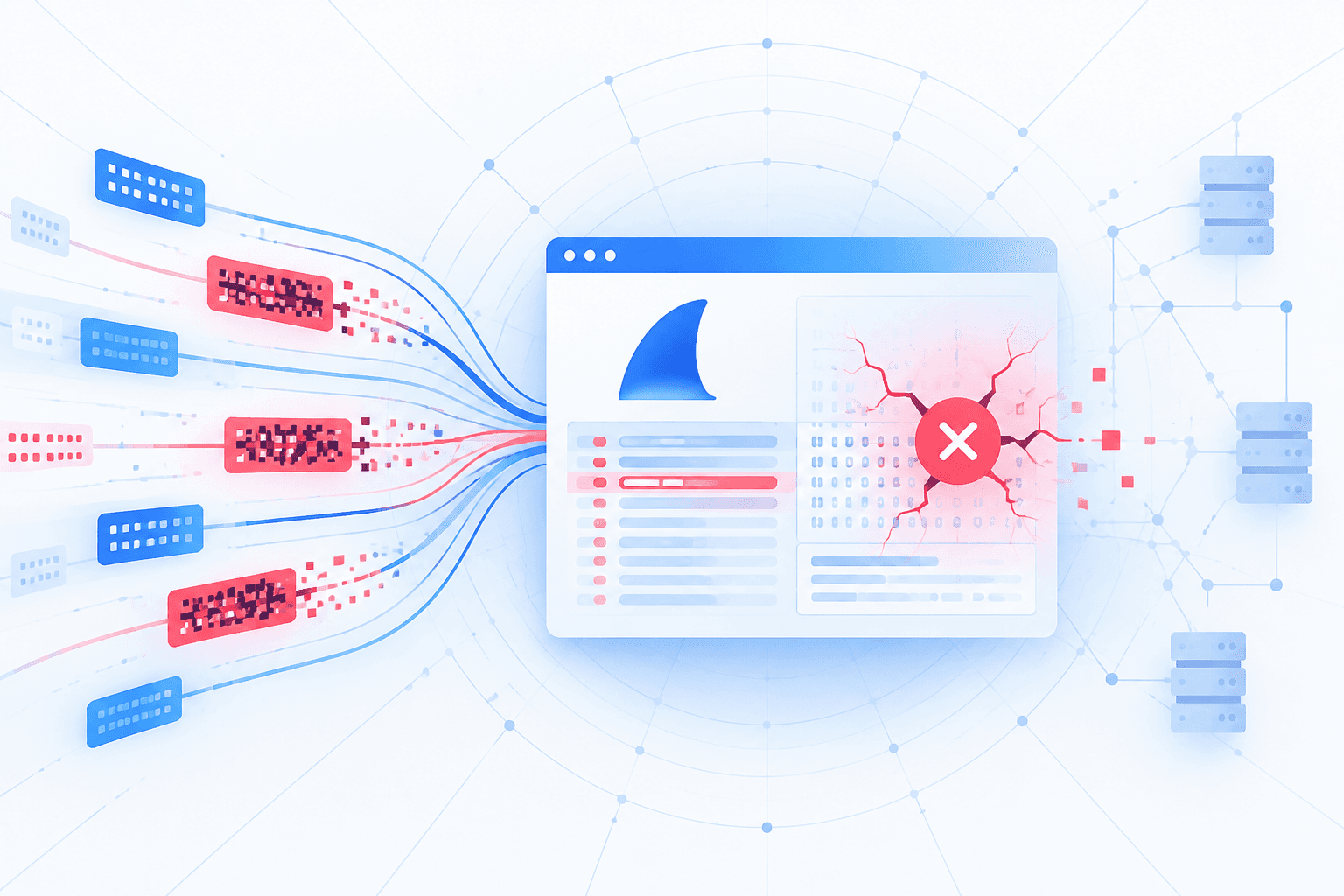
Wireshark disclosed CVE-2025-5601, a denial-of-service flaw in its dissection engine’s column utility handling. A remote attacker could inject a malformed packet onto a monitored network, or trick an analyst into opening a crafted capture file, to crash Wireshark or TShark. The affected releases are Wireshark 4.4.0–4.4.6 and 4.2.0–4.2.11; Wireshark reported no known exploitation and said the issue was identified through internal testing.
Fuzzing of a crafted PCAP uncovered an out-of-bounds heap write in CLNP dissection paths that invoked column-handling functions, corrupting heap metadata and causing Valgrind to abort. The remediation constrains column-fence handling during prepending so it cannot exceed the column size. Wireshark’s advisory identifies 4.2.12 and 4.4.7 as fixed releases, while the associated development issue was subsequently retargeted to 4.4.8, so organizations should deploy the latest supported Wireshark maintenance release.
See affected versions and whether adversaries are exploiting it.
3 events from the most recent confirmed update back to the earliest known activity.
Wireshark closed issue #20509 after fixes were merged, including a change preventing column fences from exceeding column size during prepending. John Thacker closed the issue with commit 53213086.
Wireshark's automated Valgrind Menagerie fuzz job found out-of-bounds heap writes while TShark processed a crafted PCAP on the release-4.4 branch. The writes originated in CLNP dissection paths invoking column utility functions and corrupted heap metadata.
Wireshark published advisory wnpa-sec-2025-02 for CVE-2025-5601, a dissection-engine crash caused by a column utility module bug affecting versions 4.4.0–4.4.6 and 4.2.0–4.2.11. Wireshark identified the issue through internal testing, stated it was unaware of exploitation, and listed versions 4.4.7 and 4.2.12 as fixes.
See whether adversaries are exploiting this yet, and where the affected versions run in your environment.
2 references tracked. Mallory keeps watching after this page renders.
Map indicators from this story to your assets and identify affected systems in minutes.
Every observed campaign, victim, and pivot linked to actors named in this story.
Malware, exploits, and IOCs connected to the activity described here.
YARA, Sigma, and Snort rules deployed to your SIEM as soon as they’re published.
Get matching new stories delivered to your team as they break — not the next morning.
Ask questions about this story and take action on the answers.
Other stories Mallory is tracking that overlap on entities, sources, or topic labels.
Wireshark disclosed **CVE-2026-5653**, a heap-based buffer overflow in its DCP-ETSI protocol dissector that can crash the network protocol analyzer and cause a denial of service. The flaw affects Wireshark versions `4.6.0` through `4.6.4` and `4.4.0` through `4.4.14`, and was assigned **CWE-122** with a **CVSS v3.1 score of 5.5**. According to the advisory, an attacker could trigger the issue by injecting a malformed packet onto the network or by convincing a user to open a crafted packet capture file. Wireshark fixed the vulnerability in versions `4.6.5` and `4.4.15`; the issue was discovered by Alexandre de Oliveira, and the vendor said no active exploits were known at the time of disclosure.
Aug 21, 2026
Wireshark disclosed **CVE-2025-1492**, a denial-of-service flaw that can crash the application through its Bundle Protocol and CBOR dissectors. The issue, identified through OSS-Fuzz, affects Wireshark versions `4.4.0`–`4.4.3` and `4.2.0`–`4.2.10`; related fuzzing identified a stack-overflow condition while processing UDP protocol input. An attacker could trigger the crash by injecting a malformed packet onto a monitored network or by convincing a user to open a crafted packet-capture file. Wireshark reported no known exploitation and released fixes in versions `4.4.4` and `4.2.11`; organizations should upgrade affected installations or later versions.
Sep 23, 2026
Wireshark disclosed a denial-of-service vulnerability in its BEEP protocol dissector that can crash the packet analyzer through a stack-call overflow caused by recursive function handling. The issue is tracked as **CVE-2026-6538** and documented in advisory **`wnpa-sec-2026-23`**, with the underlying bug reported in Wireshark's issue tracker as a BEEP dissector stack-call overflow. The flaw affects Wireshark versions **4.6.0 through 4.6.4** and **4.4.0 through 4.4.14**. According to the vendor, an attacker could trigger the crash by injecting a malformed packet onto the network or by convincing a user to open a crafted capture file. Wireshark said no active exploits are known, credited Sharon Brizinov with discovery, and released fixes in versions **4.6.5** and **4.4.15**.
Aug 21, 2026