
Loading story…
An unattributed threat actor targeted South Korean financial organizations in a campaign that resulted in data exfiltration, according to CrowdStrike Intelligence. The attacker combined agentic AI with traditional offensive capabilities, using ARTEX, a Chinese-developed open-source penetration-testing tool, with multiple large language models. The operation relied on two servers and several proxies. Exposed attacker-controlled directories contained Claude Code session histories, ARTEX configurations, and memory files documenting the AI-assisted activity.
CrowdStrike assessed with moderate confidence that the attacker was likely Chinese-speaking and financially motivated, citing Chinese-language prompts, tooling choices, and inquiries about selling Korean breach data. The attacker’s identity and the number of affected organizations remain unconfirmed. The recovered artifacts document AI use during the intrusion campaign, but do not establish that the attacks were fully autonomous.

Track how attackers are adapting to this technology.
16 events from the most recent confirmed update back to the earliest known activity.
Gurucul issued a High-severity advisory listing ten IP indicators associated with the AI-assisted campaign targeting South Korean financial organizations. It supplied a detection query matching source or destination traffic against those indicators.
South Korea's National Office of Investigation opened a formal investigation on October 6 after beginning preliminary inquiries on October 1. It assigned four cyberterrorism investigation teams totaling 28 personnel and pursued international cooperation to trace proxy infrastructure.
South Korea's Financial Services Commission warned customers of the breached financial organizations to watch for phishing attacks and loan scams. It said affected organizations would continue investigating the extent of the breaches and provide updates.
South Korea's Financial Supervisory Service began an on-site inspection at Shinhan Bank on September 30, 2026, following the bank's detection of an intrusion on September 29. Shinhan publicly disclosed the breach on October 1.
Reporting identified KB Kookmin Bank as a target of the AI-assisted attacks against South Korean financial institutions, alongside previously named Shinhan Bank and Hana Bank.
Seven South Korean financial institutions disclosed breach impacts estimated in aggregate at approximately 67,000 people, including about 25,700 Shinhan Bank customers and potentially 40,000 Yegaram Savings Bank customers. Some counts remained preliminary, and Welcome Savings Bank's 2,370 leaked records had not been deduplicated into affected individuals.
The South Korean government convened an emergency meeting in response to the bank cyberattacks and called for immediate security measures for critical IT systems.
South Korean President Lee Jae Myung reportedly stated that authorities had found definitive indications of AI-agent involvement in the financial-sector breaches and directed a multi-agency investigation.
ARTEX developer Autumn-27 reportedly closed the tool's source and stopped updates following the South Korean financial-sector attacks. The developer stated that ARTEX was intended for learning and research and that the attacks were unrelated to the project.
Reporting identified Hana Bank, BNK Busan Bank, Yegaram Savings Bank, Hyundai Capital, Welcome Savings Bank, and two unnamed online lending firms as affected by the AI-assisted intrusion campaign. The total number of affected organizations remained unconfirmed.
CrowdStrike assessed with moderate confidence that the attacker was likely Chinese-speaking and financially motivated, citing Chinese-language prompts, tooling choices, and requests for help finding markets for Korean breach data. A résumé-generation prompt supplied possible operator details, including the Telegram handle @YY520CN, but CrowdStrike could not definitively associate those details with the attacker or attribute the campaign to a named adversary.
CrowdStrike identified open attacker-controlled directories exposing Chinese-language instructions, Claude Code session histories, ARTEX configurations, and memory files documenting activity against reported victims. The records revealed a Hong Kong-based primary server, an ARTEX instance at 38.244.50[.]120, multiple proxies, and use of DeepSeek v4.1-flash, GLM-5.3, and Grok 4.6.
Industry reporting connected the activity to ARTEX through references to the tool's name in HTML files hosted on a reportedly attacker-controlled server.
The attacker reportedly compromised an employee mobile work-support system at another South Korean bank. Reporting identified overlapping IP addresses across activity affecting multiple organizations.
Industry reporting described a breach of a loan progress inquiry service used by financial brokers at one affected South Korean bank.
An unattributed attacker targeted South Korean financial organizations from late September through early October 2026, using ARTEX and large language models alongside traditional offensive capabilities. The campaign resulted in data exfiltration, but the total number of affected organizations was unconfirmed.
Vulnerabilities, threat actors, malware, products, organizations, breaches, and observables Mallory has linked to this story. Indicator values are masked here and available in full in the app.
Indicator values are masked on this page. View all 76 in Mallory Domains, IPs, hashes, and URLs are exportable to your SIEM.
Follow how adversaries are adapting to this technology, and where it touches your stack today.
13 references tracked. Mallory keeps watching after this page renders.
cyberveille.ch
Open sourcereflectiz.com
Open sourcegenians.co.kr
Open sourcebleepingcomputer.com
Open sourcecommunity.gurucul.com
Open sourcecybersecuritynews.com
Open sourceinfosecurity-magazine.com
Open sourcecrowdstrike.com
Open sourceMap indicators from this story to your assets and identify affected systems in minutes.
Every observed campaign, victim, and pivot linked to actors named in this story.
Malware, exploits, and IOCs connected to the activity described here.
YARA, Sigma, and Snort rules deployed to your SIEM as soon as they’re published.
Get matching new stories delivered to your team as they break — not the next morning.
Ask questions about this story and take action on the answers.
Other stories Mallory is tracking that overlap on entities, sources, or topic labels.
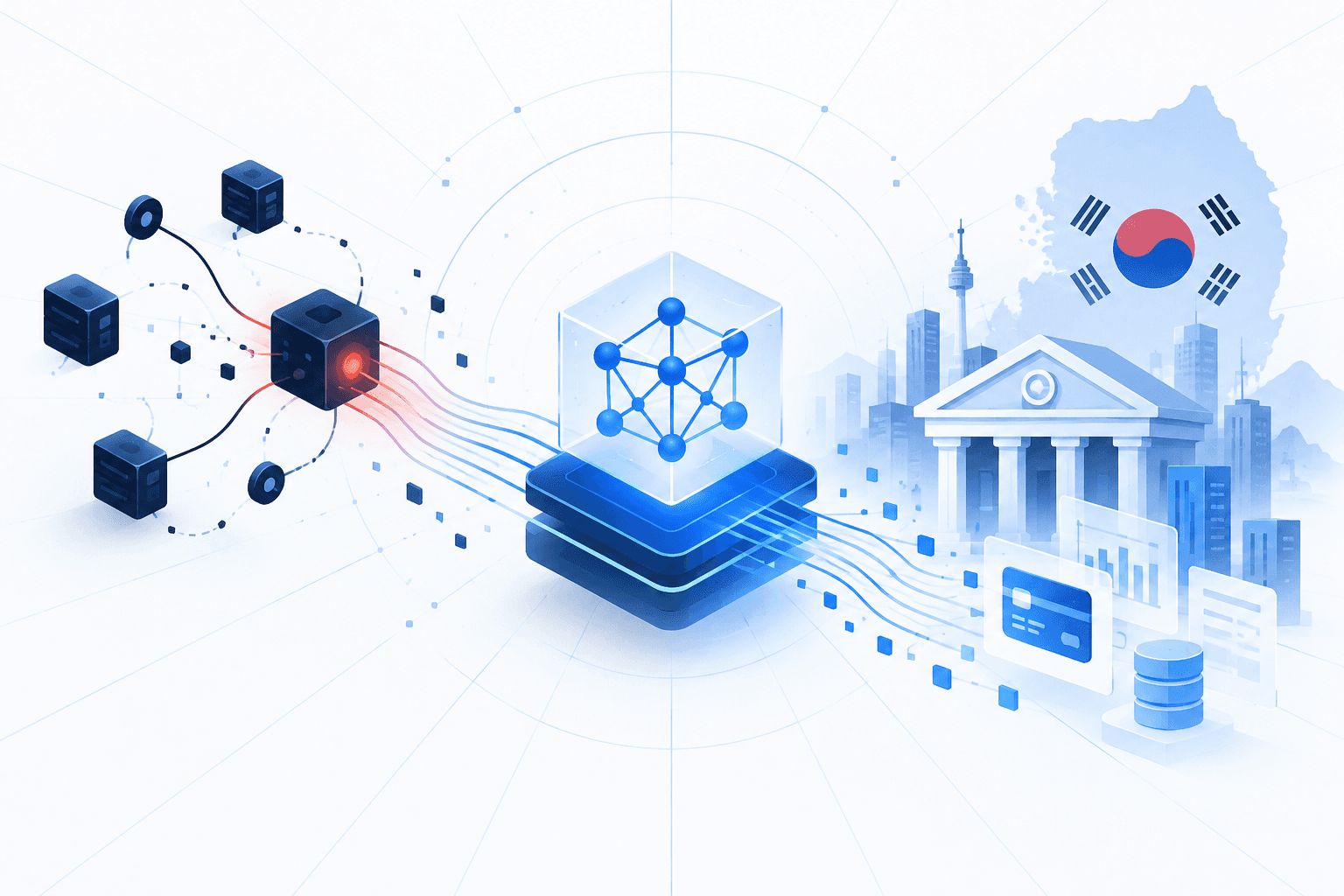
An attacker abused **ARTEX**, a China-developed agentic penetration-testing framework, to compromise peripheral internet-facing applications at multiple South Korean financial institutions and steal personally identifiable information belonging to approximately **67,000 individuals**. Zscaler ThreatLabz first observed the campaign in late September 2026. ARTEX coordinated multiple large language model backends to automate reconnaissance and exploitation of SQL injection and authentication-bypass vulnerabilities. Stolen records included names, telephone numbers, annual income figures, and loan limits. ThreatLabz assessed with **moderate confidence** that the attacker was Chinese-speaking and financially motivated. The actor separately used Claude Code to seek advice on monetizing the stolen information; the reporting does not establish that any sale occurred. Following public disclosure of the abuse, ARTEX’s developer made the project closed source, although previously downloaded copies and forks may remain available. The campaign highlights the need for financial institutions to prioritize security testing and remediation of internet-facing peripheral applications, particularly SQL injection and authentication weaknesses.
Oct 16, 2026
CrowdStrike reported that AI has become both an offensive enabler and a direct target in cyberattacks, with AI-enabled malicious activity rising **89%** over the past year and generating more than twice as much potentially malicious detection noise as human-triggered activity. The company said attackers are using frontier models to identify vulnerabilities, generate scripts and payloads, automate intrusion workflows, and troubleshoot operations, while also pursuing attacks such as **LLMjacking**, AI cost-harvesting, and compromises of AI infrastructure and agentic systems. The findings align with earlier disclosures from OpenAI, which said it banned accounts tied to publicly reported **China-linked** actors including **Vixen** and **Keyhole Panda**, as well as suspected **DPRK-affiliated** operators, for using AI to support vulnerability research, scripting, phishing, malware research, translation, and cryptocurrency-focused targeting. The report warns that AI is sharply compressing defender response time, with **88%** of vulnerabilities reportedly weaponized within **48 hours**, reducing effective patch windows to roughly **24 to 48 hours**. CrowdStrike highlighted rapid post-disclosure exploitation by China-linked groups including **Vault Panda** and **Genesis Panda**, and described advanced AI-enabled tradecraft by North Korean actors such as **Famous Chollima**, including fake companies, AI-generated infrastructure, and trojanized repositories aimed at cryptocurrency, blockchain, and AI-focused development environments. It also cited expanding supply-chain risk, including **TeamPCP’s** compromise of more than **300** software dependencies in a single day and financially motivated activity such as **Altered Spider** stealing credentials and pivoting into cloud environments, underscoring how AI tools and integrations are widening an under-defended attack surface.
Aug 11, 2026
A financially motivated lone attacker used AI-assisted workflows to breach a large **AWS** environment in roughly 72 hours, according to a Sygnia incident-response report, chaining weaknesses across Internet-facing applications, AWS resources, source code repositories, **CI/CD** pipelines, runtime components, and data stores. The intrusion reportedly began with the theft of an AWS access key and expanded through secrets harvesting, cloud enumeration, backdoor creation, data exfiltration, deployment pipeline abuse, runtime modification, database access, and operational disruption. To extort the unnamed global enterprise, the actor carried out mostly reversible actions including denying access to **S3** buckets, scaling **ECS** services to zero, blocking network access with ACL rules, and purging **SQS** queues. The incident reflects a broader shift from isolated malicious use of generative AI to **agentic AI** supporting larger portions of the attack chain. Research cited by OALABS and observations from Anthropic indicate attackers are using tools such as **Claude** and **OpenAI Codex** to automate reconnaissance, analyze stolen data, generate code, and adapt operations during live intrusions, lowering the barrier for less-skilled actors while helping experienced operators scale activity. Security researchers said the trend now spans multiple **MITRE ATT&CK** tactics, including reconnaissance, credential theft, malware development, and social engineering, pushing defenders to prioritize detection of AI-enabled workflows, stronger identity controls, broader visibility, and faster automated containment.
Jul 9, 2026