Warlock Ransomware Attackers Disable Security on 40 Hosts Before Deployment
Threat Actor Intelligence · 2 sources · Updated 1mo ago · First seen Oct 27, 2026

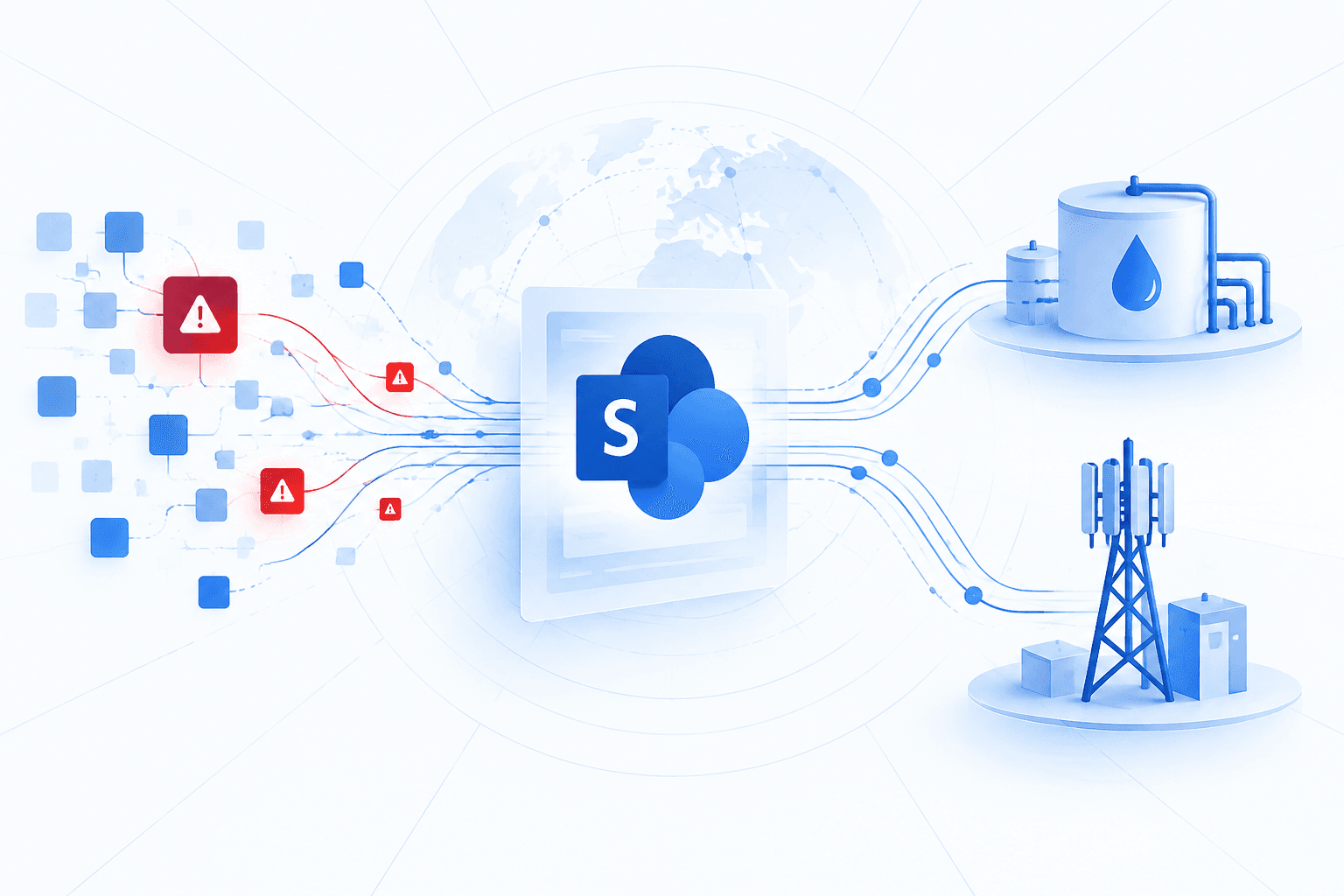
China-linked ransomware group Storm-2603, which operates Warlock, reportedly attacked at least four organizations across Europe, Africa and Latin America, including a water utility, a telecommunications provider, a regional government body and a university. Vulnerable on-premises Microsoft SharePoint deployments were identified as the likely initial entry point. In one critical infrastructure intrusion, attackers spent nine days conducting domain reconnaissance, escalating privileges and establishing covert remote access before disabling security software on at least 40 hosts within approximately two hours.
The attackers then staged Warlock in the domain’s SYSVOL share, leveraging replication to distribute it to at least 33 hosts; ransomware appeared shortly after endpoint protection was disabled. The operation underscores the risk of attackers neutralizing defensive sensors before encryption. Recommended safeguards include timely SharePoint patching, tighter Active Directory and administrative privilege controls, endpoint tamper protection, and independent monitoring capable of detecting when security tools stop reporting.
Why it matters
Storm-2603, the China-linked operator of Warlock ransomware, reportedly targeted at least four organizations across Europe, Africa and Latin America: a water utility, telecommunications provider, regional government body and university. The campaign threatens service availability and recovery capability through domain-wide ransomware deployment preceded by coordinated disabling of endpoint protection; the references do not establish actual utility-service outages, data theft or financial losses.
- Scope: Reported victims were in Portuguese- and Spanish-speaking countries, all outside the United States. This is a targeted campaign, not evidence of universal compromise of SharePoint deployments.
- Observed exploitation: In one critical infrastructure intrusion, attackers maintained access for approximately nine days, disabled security software on at least 40 hosts in about two hours, and distributed ransomware to at least 33 hosts.
- Operational significance: Administrative compromise and loss of endpoint visibility allowed attackers to prepare encryption while undermining defenders’ ability to detect and contain it.