Mallory
← Back to News
financial-sector-threatphishing-campaign-intelligencedefense-evasion-methodidentity-impersonation-fraud

“Suspended” Banking Phishing Campaign Uses Fake Takedown Notices to Evade Detection

Sector Threat Intelligence · 5 sources · Updated 12d ago · First seen Nov 3, 2026
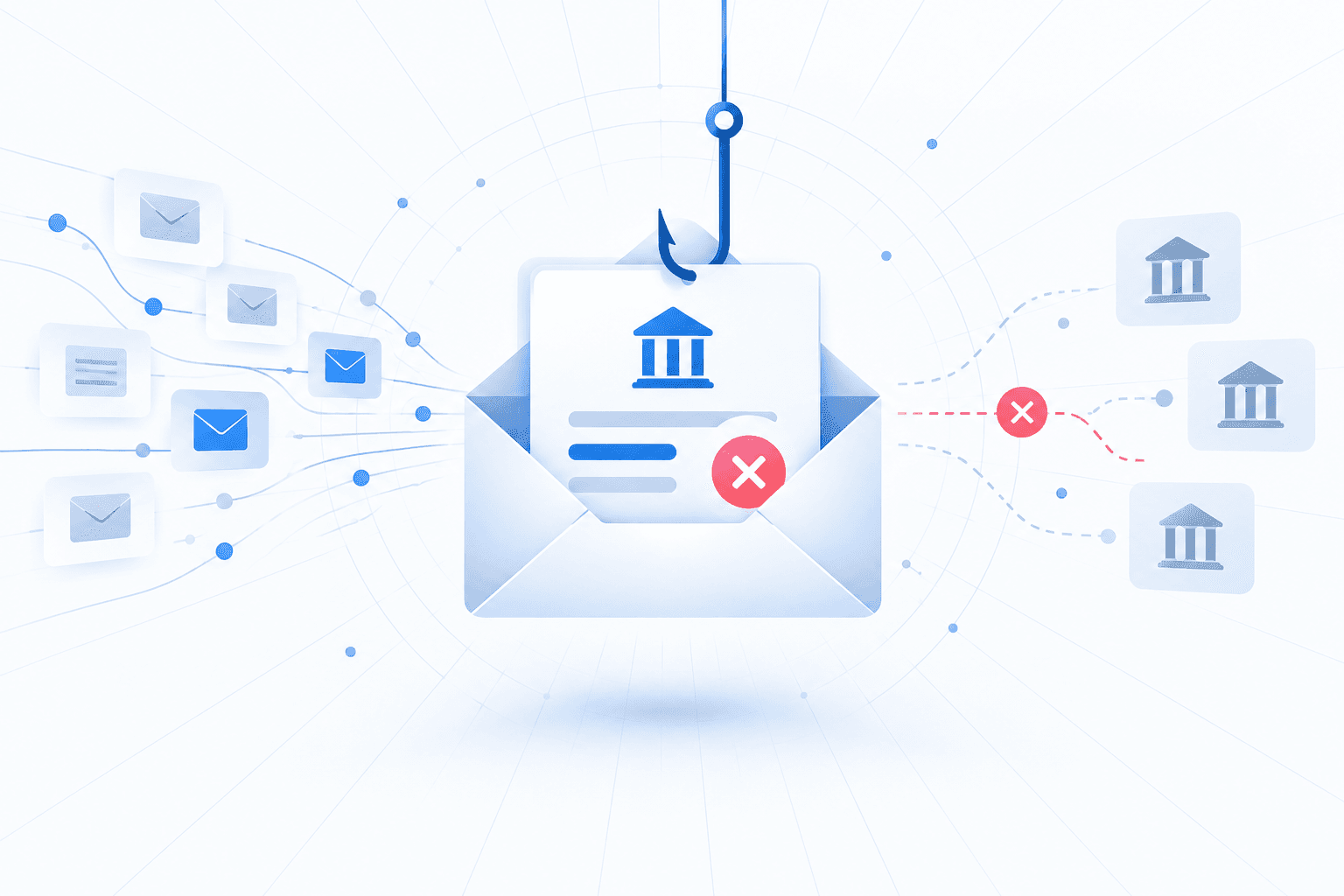
“Suspended” Banking Phishing Campaign Uses Fake Takedown Notices to Evade Detection

KELA researchers uncovered an active financial-phishing operation dubbed “Suspended” that impersonates U.S. banks and hides behind fake website-suspension notices to frustrate investigations and takedowns. Operating since May 2026, the campaign steals account credentials to facilitate financial fraud, targeting customers of banks including midsize and regional institutions. As of October 25, researchers identified 248 live impersonation domains covering 189 U.S. financial-services organizations; more than 300 scam domains have used the infrastructure since May.

The phishing kit tracks visitors’ IP addresses, showing cloned banking pages to first-time visitors but fake suspension notices or innocuous pages on repeat visits. This can mislead investigators checking whether a reported site remains active. Other anti-analysis measures include challenge pages, reCAPTCHAs, redirects, blank pages and developer-tool blocking. Shared hosting also supports phishing against cryptocurrency exchanges, financial institutions and government services internationally, suggesting—but not establishing—a common operator or phishing-as-a-service platform. Administrative connections from an apparent U.K. residential IP address do not establish the operator’s location because it could be a proxy. Some domains were taken offline following disclosure to law enforcement, but the operation remains active; defenders should not treat a suspension notice on a repeat visit as proof of successful takedown.
Who's targeting your sector?See the actors and campaigns active against you right now.
See sector threats
Event timeline

How this story unfolded

Events from the most recent confirmed update back to the earliest known activity.

11 events · May 2026 – Oct 25, 2026
  1. Reported Nov 3, 202614d ago

    Some phishing domains are taken offline following disclosure

    Some associated domains were taken offline after researchers disclosed their findings to law enforcement. The takedowns did not stop the operation, with new domains continuing to appear.

    This clever banking scam keeps phishing by faking its own demise - how it works - ZDNET
  2. Reported Nov 3, 202614d ago

    KELA notifies authorities and affected financial institutions

    KELA shared its findings with law enforcement and intelligence agencies and notified affected institutions before publication.

    This clever banking scam keeps phishing by faking its own demise - how it works - ZDNET
  3. Reported Nov 3, 202614d ago

    KELA uncovers fake suspension notices used to evade phishing takedowns

    KELA found that the phishing kit tracks visitor IP addresses and shows repeat visitors fake suspension notices or other decoys while leaving cloned banking pages accessible to first-time visitors. Researchers also identified challenge-page disguises, reCAPTCHAs and scripts blocking browser developer tools.

    This clever banking scam keeps phishing by faking its own demise - how it works - ZDNET
  4. Reported Nov 3, 202615d ago

    Infrastructure analysis links hosting to additional international phishing operations

    KELA found that the same hosting infrastructure supported phishing against banks, cryptocurrency exchanges and government services in several countries. Shared infrastructure and coordinated migrations suggested a common operator or phishing-as-a-service platform, but researchers could not establish that the operations had one operator.

    Phishing Campaign Actively Targets Customers of 300 US Banks
  5. Oct 25, 202624d ago

    KELA identifies 248 live domains impersonating 189 financial firms

    As of October 25, KELA had linked 248 live phishing and financial-scam domains impersonating 189 U.S. financial-services organizations to the infrastructure. Researchers identified more than 300 associated domains used since May.

    This clever banking scam keeps phishing by faking its own demise - how it works - ZDNET
  6. Oct 20, 202629d ago

    U.K. residential IP address is exposed again during administration

    On October 20, an apparent administrator again failed to conceal the U.K. residential IP address. Researchers associated the address with remote desktop access to the jump server and connections to the backend server, but could not conclusively attribute the activity.

    Phishing Campaign Actively Targets Customers of 300 US Banks
  7. Oct 11, 20261mo ago

    Apparent administrator exposes a U.K. residential IP address

    On October 11, an apparent administrator failed to conceal an IP address associated with a U.K. residential broadband connection. KELA cautioned that the address could be a proxy and did not establish the operator's identity or location.

    Phishing Campaign Actively Targets Customers of 300 US Banks
  8. Oct 2026

    Phishing campaign adds 49 domains and expands impersonation templates

    During the week ending October 25, 2026, the campaign added 49 domains, approximately half using newer help-desk, live-support, treasury-portal or “primary device” naming templates. Newer domains included help-desk and live-chat impersonations of JPMorgan, Citi, BMO and Santander.

    Bank Phishing Sites Show Fake 'Suspended' Pages to Evade Takedowns - SecurityWeek
  9. Oct 2026

    Researchers observe recurring concealed access to an apparent administration panel

    Over an 11-day period in October, researchers observed access to a related web server through Mullvad VPN and Tor, primarily between 05:00 and 07:00 UTC. KELA assessed that the pattern suggested routine administration-panel checks.

    Phishing Campaign Actively Targets Customers of 300 US Banks
  10. Sep 2026

    Attackers migrate phishing infrastructure to another hosting provider

    The attackers switched hosting providers in September. U.S. bank phishing sites migrated alongside phishing operations targeting foreign banks and cryptocurrency exchanges.

    Phishing Campaign Actively Targets Customers of 300 US Banks
  11. May 2026

    Banking phishing campaign begins operating

    The campaign KELA calls “Suspended” began operating in May 2026, targeting U.S. banking customers with cloned financial websites designed to steal login credentials and facilitate financial fraud.

    This clever banking scam keeps phishing by faking its own demise - how it works - ZDNET
Linked entities

Related entities

Vulnerabilities, threat actors, malware, products, organizations, and breaches Mallory has linked to this story.

Open in app →

Organizations

10 linked
Wells FargoUnited States Department of the TreasuryCitigroupBanco SantanderZions BankBank of MontrealJPMorgan Chase & Co.Lloyds BankAmerican Business BankBank of Tennessee
Do you run this?See the adversaries and campaigns active against your sector right now, ranked by what they're exploiting.
See Your Sector's Threats
Mallory platform

See the full picture, correlated to your attack surface.

This page covers what’s public. Mallory adds the parts that aren’t: which of your assets are affected, which threat actors are using it right now, and what to deploy next.

Exposure mappingMap indicators from this story to your assets and identify affected systems in minutes.
Threat actor evidenceEvery observed campaign, victim, and pivot linked to actors named in this story.
Associated malwareMalware, exploits, and IOCs connected to the activity described here.
Detection signaturesYARA, Sigma, and Snort rules deployed to your SIEM as soon as they’re published.
Scheduled alertsGet matching new stories delivered to your team as they break, not the next morning.
AI threadsAsk questions about this story and take action on the answers.