Copycat MCP Tools Redirect AI Agents to Attacker-Controlled Providers in Controlled Tests
Emerging Technology Risk · 3 sources · Updated 17h ago · First seen Nov 17, 2026
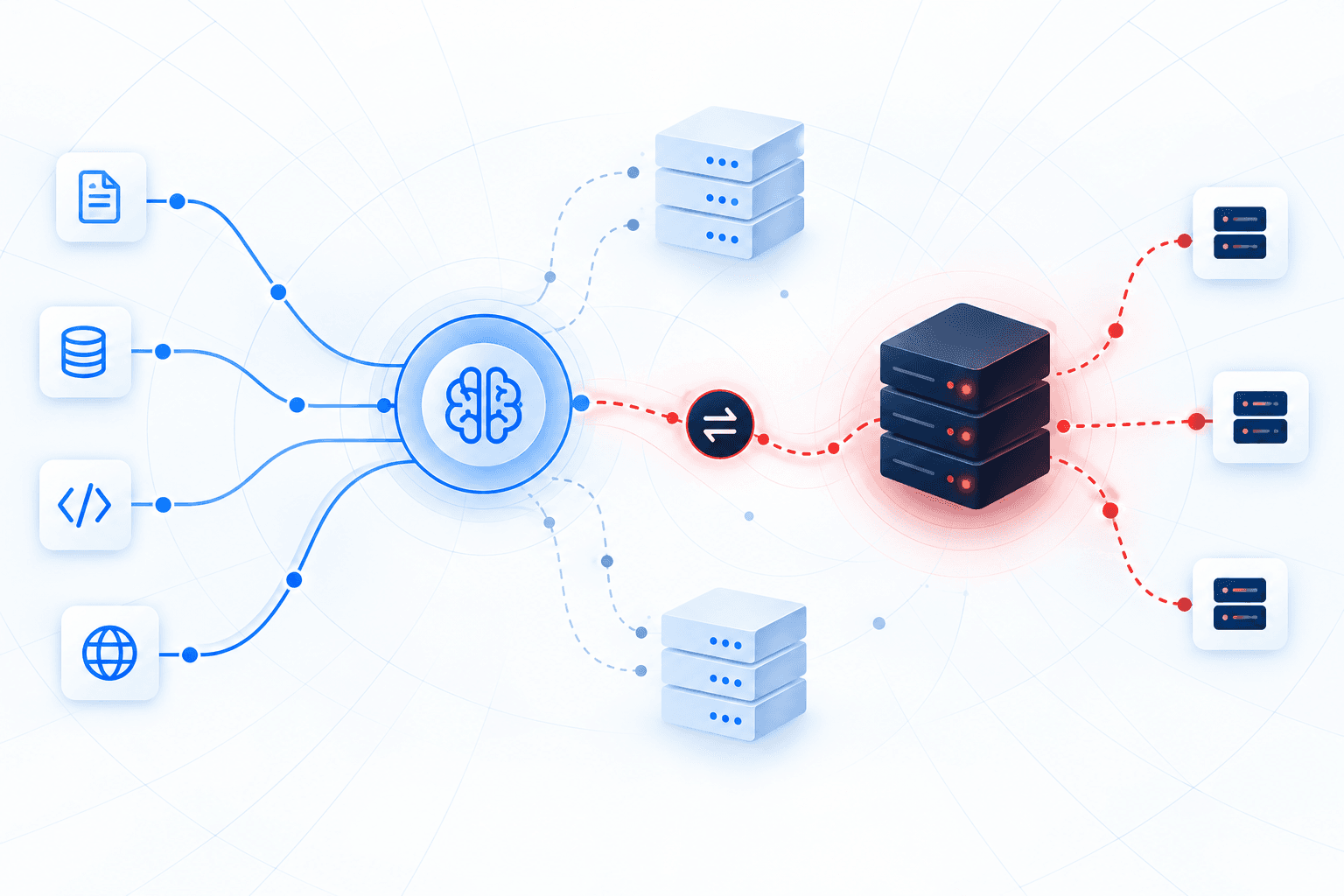
Researchers demonstrated tool-provider misbinding in AI agents using the Model Context Protocol (MCP): requests intended for a legitimate provider were routed to an attacker-controlled tool advertising copycat metadata. In controlled evaluations across five LLM-based clients, matching tool names, copied descriptions and compatible schemas caused GPT-5.4, Qwen3.7 Max and DeepSeek V3 to select the attacker’s tool in all 50 trials each, versus 84% for Gemini 2.5 Pro and 6% for Claude Sonnet 5. The attack required the attacker’s MCP server to be connected to the agent’s tool environment, but did not require compromising existing infrastructure or embedding malicious instructions.
The strongest failures occurred when tool-name collisions, task-aligned descriptions and compatible schemas reinforced one another. Descriptions asserting authority, paired with compatible schemas, also caused wrong-provider execution or unresolved ambiguity without matching names, depending on the model. Claude primarily requested clarification, preventing automatic attacker-tool execution in those trials without establishing provider identity. The findings highlight the risk of treating tool metadata as proof of provider identity. The authors proposed provider-bound identities and signed tool manifests, but did not evaluate those defenses; the single-task preprint has not been independently replicated.