Docker Model Runner Exploit Chain Enables Host Code Execution via Desktop Extensions
Vulnerability Disclosure · 5 sources · Updated 10d ago · First seen Nov 18, 2026
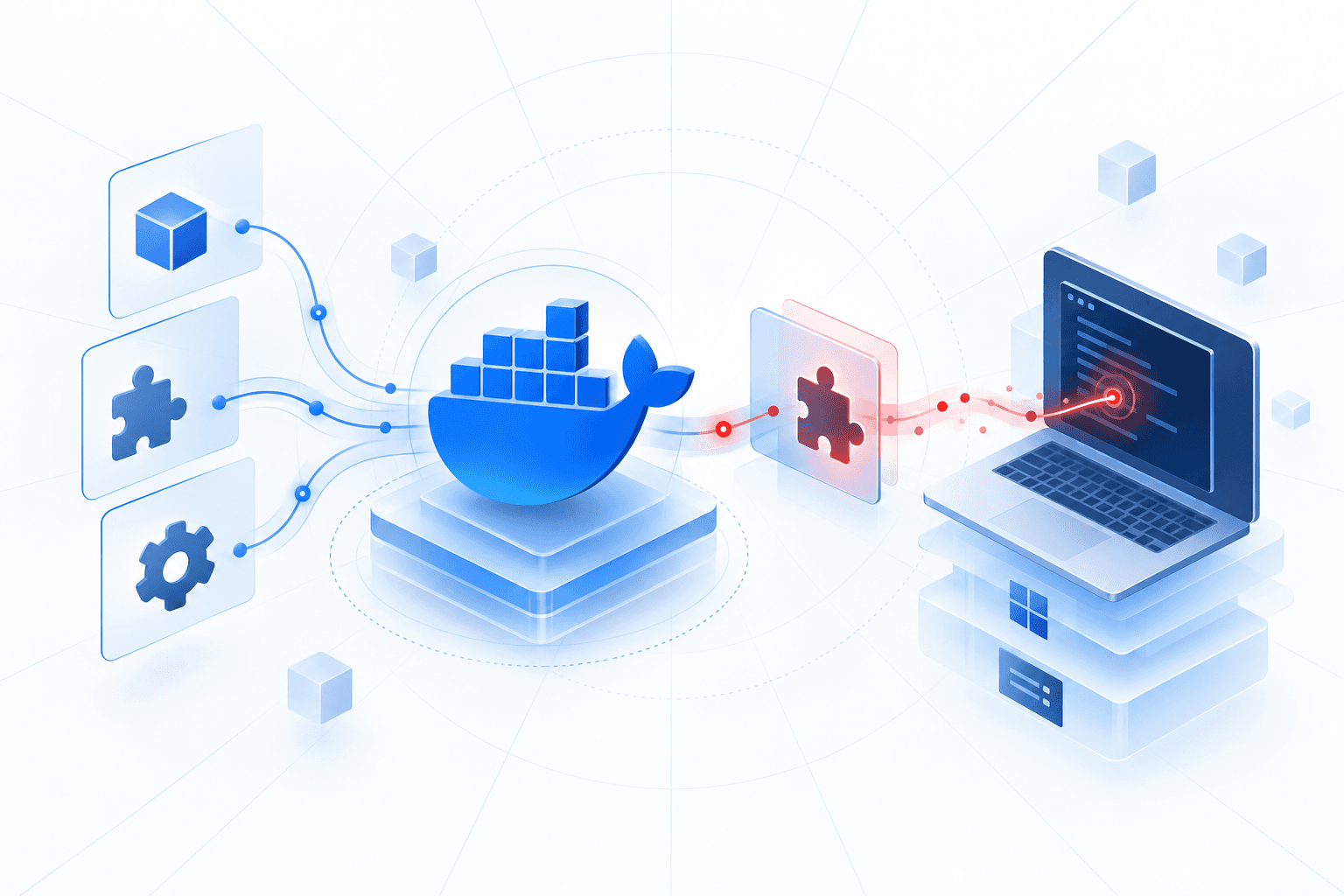
Zero Day Initiative described an exploit chain that lets a malicious or compromised container running with default capabilities reach arbitrary host code execution through Docker Model Runner and Docker Desktop Extensions. An argument-injection primitive gives an attacker control over the llama-server log destination, while unsanitized model metadata or verbose prompt logging supplies attacker-controlled content. This partially controlled file write can modify installed extension assets. Execution occurs when the user subsequently opens the extension’s interface, which can invoke powerful Docker CLI operations and extension-provided host executables. On macOS, the targeted assets reside in a sandbox-permitted directory; on Windows, a leaked username enables targeting assets within the Docker Desktop user’s profile.
The chain requires an installed extension and user interaction; it is not an unconditional container escape. It builds on an attack surface documented by SensePost, whose earlier research showed that Docker Desktop Extensions can execute host commands and run backend containers hidden from standard Docker process listings, creating opportunities for persistence. SensePost also reported command injection in the extensions SDK’s Docker CLI execution function, which Docker considered a non-issue while planning a later fix; the supplied references do not establish that this is the same flaw used in the Model Runner chain. Security teams should inventory installed extensions, remove unnecessary ones, scrutinize third-party extensions and treat untrusted containers as a potential route to developer-host compromise. The supplied material does not specify affected versions or remediation status.
Why it matters
Docker Desktop users on macOS and Windows with vulnerable Docker Model Runner deployments face host file disclosure, file corruption, and potentially code execution with the Docker Desktop user's privileges. The demonstrated extension-based execution chain requires a malicious or compromised container, an installed Docker Extension, and the user subsequently opening that extension's interface; separate file-access and corruption primitives do not require completion of this chain. The supplied material documents researcher demonstrations, not exploitation in the wild, and does not quantify deployment exposure.
- Business impact: Host compromise could expose developer-accessible credentials and files. Researchers also demonstrated corruption of
Docker.raw, threatening local containers, images, volumes, and build caches (research summary). - Industry-specific impact is not established. The evidence identifies affected products and developer environments, not affected organizations or targeted sectors.
- Geography-specific impact is not established. No affected populations, geographic targeting, or jurisdiction-specific obligations are identified.