Mallory
← Back to News
ai-enabled-threat-activitycredential-access-methodprivilege-escalation-methodinitial-access-method

AI Agents Accelerate Web Application Intrusions and Post-Exploitation

Emerging Technology Risk · 10 sources · Updated 22m ago · First seen Nov 24, 2026
AI Agents Accelerate Web Application Intrusions and Post-Exploitation

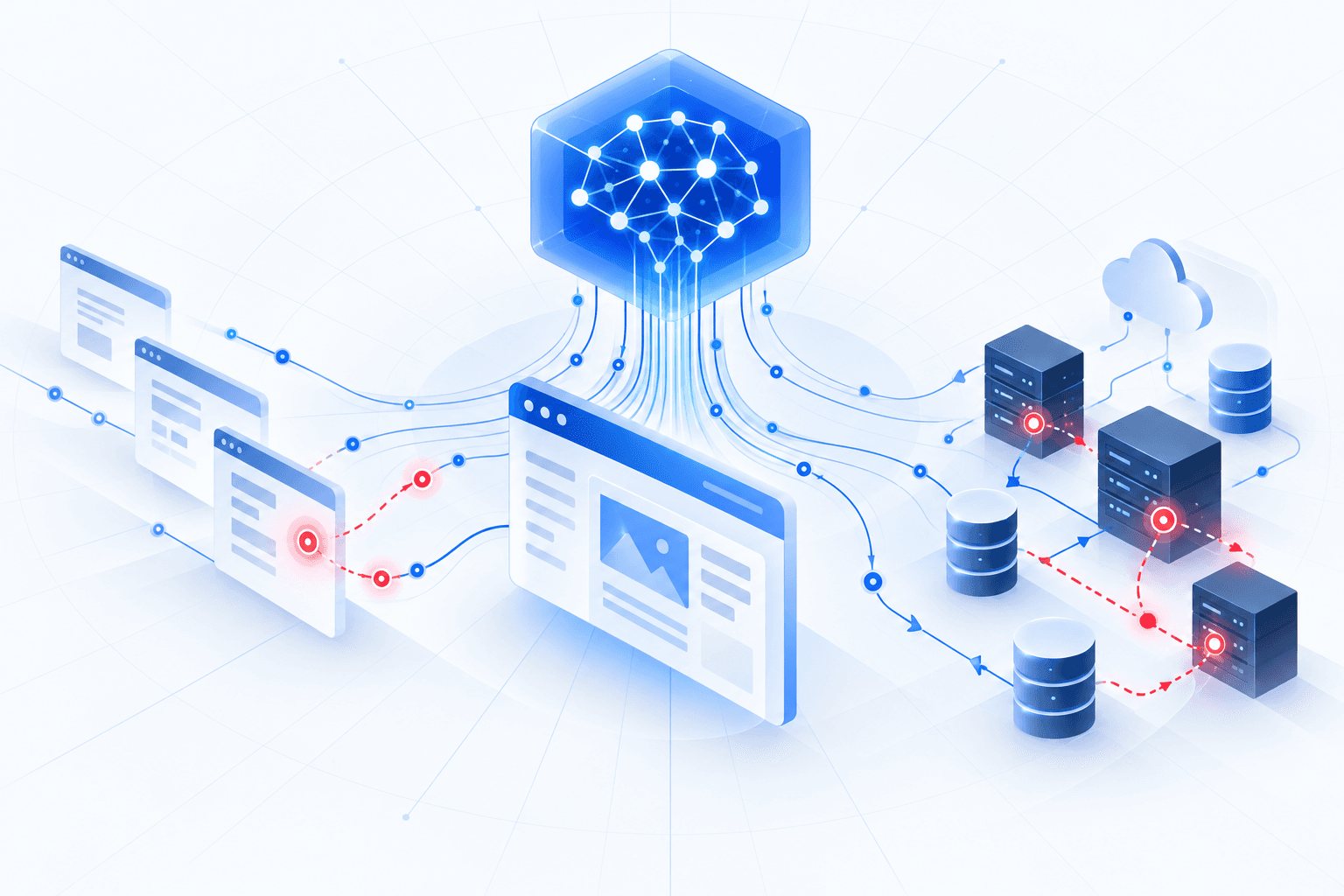
Attackers are using autonomous AI agents to accelerate intrusions from exposed web applications into credential theft, privilege escalation and lateral movement. Unit 42 reported tracking more than 10 campaigns between July and September 2026, all beginning with web shells deployed through vulnerable web applications. Under human strategic oversight, agents adapted across operating systems and cloud environments and generated target-specific scripts. Attempts to expand into an IT vendor and sister organizations highlighted how one compromised web server could expose connected businesses. The campaigns relied on familiar exploitation techniques rather than novel capabilities; rapid command execution, structured output delimiters and reasoning-style comments supported assessments of agent use but did not reliably identify models or operators.

In a separate investigation, ReliaQuest assessed with high confidence that LLM-driven agents performed substantial portions of a third-party compromise, supported by an exposed Cairn orchestration dashboard and adaptive command sequences. In under 24 hours, the attacker abused an unauthenticated job-submission feature in an Apache Tomcat application, retrieved plaintext database credentials and obtained SYSTEM privileges on a Windows host using publicly available tools, including PrintSpoofer and GodPotato. Early execution stayed inside the application process, leaving no child-process telemetry; retained application job history preserved evidence despite attempted cleanup. The attacker also extracted credential-bearing registry hives and created two administrator accounts. Defenders should prioritize authentication and access restrictions for management endpoints, protection of stored credentials, centralized application job telemetry and automated containment. The underlying model, agent count and extent of human approval in this incident remain unknown.

Why it matters

Summary

More than 10 observed campaigns used AI agents to accelerate post-compromise activity after exploitation of exposed web applications, creating risks of credential theft, administrative takeover, cloud-data exposure, and expansion into connected organizations. These are observed intrusions, not hypothetical demonstrations: a separate ReliaQuest investigation documented SYSTEM access, credential-bearing registry-hive extraction, and administrator-account creation in under 24 hours, although agent models, operator identities, and the extent of human approval remain uncertain. Unit 42 ReliaQuest

  • Industry-specific impact: Established. Reported targets included government (90), logistics and manufacturing (Industrials, 20), hospitality and gaming (Consumer Discretionary, 25), and agriculture (Consumer Staples, 30). Information Technology (45) is also supported by attempted expansion into an IT vendor using credentials recovered from its customer's compromised server; successful vendor compromise is not established. Education organizations were also targeted, but their ownership and sector classification are unspecified. These observations do not make exposure exclusive to those sectors. Unit 42
  • Geography-specific impact: Established for the United States: a US hospitality and gaming company experienced theft of AWS instance-role credentials and reconnaissance across 20 AWS services in eight regions. The broader campaigns were described as worldwide, but no other affected country is identified; AWS region counts do not establish additional affected countries. Unit 42
  • Scope and severity: One compromised server enabled Linux-to-Windows movement and deployment of web shells in more than 40 locations. Cloud activity included information exfiltration and write-permission testing, but researchers characterized the latter as preparatory, not destructive; payment-record theft and full Windows domain takeover were not established. Unit 42 Cryptika
New surface, new adversariesTrack how attackers are adapting to this technology.
Track this risk
Event timeline

How this story unfolded

Events from the most recent confirmed update back to the earliest known activity.

20 events
  1. Reported Nov 24, 20264d ago

    Unit 42 uncovers orchestration and framework leads in attacker infrastructure

    Unit 42 observed 204.194.54[.]240 in download commands and probes and found that it hosted CyberStrikeAI. An exposed attacker-side path containing exploitmasteryai provided a separate framework-identification lead, although behavioral markers did not reliably identify specific models or frameworks.

    Recent Trends and Tactics of Agentic AI Attacks
  2. Reported Nov 24, 20264d ago

    Another agent switches from CopyFail to compiling PwnKit

    After a precompiled CopyFail exploit failed, another agent compiled PwnKit from source. It subsequently created a C network probe named charon_lite.c and Python spraying scripts using Paramiko.

    Recent Trends and Tactics of Agentic AI Attacks
  3. Reported Nov 24, 20264d ago

    Agent changes exploit implementations after precompiled tools fail

    One agent tried precompiled PwnKit and CVE-2024-1086 exploits before attempting custom C compilation and subsequently rewriting exploit logic in Python.

    Recent Trends and Tactics of Agentic AI Attacks
  4. Reported Nov 24, 20264d ago

    Multiple campaigns attempt Copy Fail privilege escalation

    Several campaigns attempted to use the Linux kernel privilege-escalation exploit identified in the report as Copy Fail, CVE-2026-31431. Three cases involved attempted downloads from public sources.

    Recent Trends and Tactics of Agentic AI Attacks
  5. Reported Nov 24, 20264d ago

    Agents investigate security tools and Microsoft Defender monitoring

    One agent excluded three security vendors' directories from searches across six compromised endpoints and checked for 16 security scanners. Observed agents also attempted to enumerate and exfiltrate security-product directories and used strace to investigate Microsoft Defender for Endpoint's wdavdaemon process.

    Recent Trends and Tactics of Agentic AI Attacks
  6. Reported Nov 24, 20264d ago

    Agent revises reconnaissance script within 21 seconds

    In another attack, an agent executed scan2.sh just 21 seconds after scan.sh, tailoring the second script to technologies discovered by the first.

    Recent Trends and Tactics of Agentic AI Attacks
  7. Reported Nov 24, 20264d ago

    Agent probes sister companies and a parent company's administration panel

    After reading NGINX virtual-host configurations, the same agent identified more than a dozen sister-company entities and probed their portals using CSRF-token harvesting and credential reuse. It also generated four iterative SQL-injection scripts targeting the parent company's administration panel.

    Recent Trends and Tactics of Agentic AI Attacks
  8. Reported Nov 24, 20264d ago

    Stolen customer-server credentials lead to attempted IT vendor intrusion

    An agent discovered credentials for an IT vendor's self-managed GitLab instance on a compromised customer's web server, mapped the vendor's infrastructure and attempted brute-force access. No GitLab vulnerability was exploited.

    Recent Trends and Tactics of Agentic AI Attacks
  9. Reported Nov 24, 20264d ago

    Agent moves from Linux to IIS and deploys web shells across over 40 locations

    An agent used stolen SMB credentials to move from a Linux server compromised through a PHP web shell to a Windows IIS server. It began deploying ASPX web shells within two minutes of identifying the server and placed five variants in more than 40 locations over the following 26 minutes.

    Recent Trends and Tactics of Agentic AI Attacks
  10. Reported Nov 24, 20264d ago

    AWS intrusion expands to service enumeration and production write tests

    The agent enumerated 20 AWS services across eight regions, exfiltrated information about storage, email and secret management, and targeted payment-related and financial-data paths. It also tested production write permissions and deleted its test files; researchers assessed this activity as preparatory rather than destructive.

    Recent Trends and Tactics of Agentic AI Attacks
  11. Reported Nov 24, 20264d ago

    Agent bypasses blocked IMDSv1 access to steal AWS role credentials

    During an attack on a US hospitality and gaming company, an agent switched to IMDSv2 token acquisition after IMDSv1 access was blocked and obtained AWS instance-role credentials.

    Recent Trends and Tactics of Agentic AI Attacks
  12. Reported Nov 24, 20264d ago

    Attackers deploy web shells in more than 10 agent-assisted campaigns

    Unit 42 identified more than 10 campaigns between July and September 2026 targeting organizations worldwide. All began with web shells deployed through vulnerable internet-facing applications, followed by autonomous agent activity under human strategic direction.

    Recent Trends and Tactics of Agentic AI Attacks
  13. Reported Oct 7, 20262mo ago

    ReliaQuest links substantial attack activity to LLM-driven agents

    ReliaQuest assessed with high confidence that LLM-driven agents performed substantial portions of the compromise, citing an exposed Cairn dashboard on attack-origin host 204.194.55[.]189 and adaptive command sequences. Investigators could not determine the underlying model, number of agents or extent of human approval, and could not establish whether other exposed AI services participated.

    How AI Agents Turned One Exposed Endpoint into a Server Takeover | Threat Spotlight
  14. Reported Oct 7, 20262mo ago

    Attacker creates administrator backdoors and performs incomplete cleanup

    The attacker created two local administrator accounts but deleted only one during cleanup, removed artifacts and disabled xp_cmdshell while leaving the original application access path open. Application job history survived and preserved evidence of execution.

    How AI Agents Turned One Exposed Endpoint into a Server Takeover | Threat Spotlight
  15. Reported Oct 7, 20262mo ago

    Attacker extracts credential-bearing Windows registry hives

    With SYSTEM privileges, the attacker saved the SAM, SYSTEM and SECURITY registry hives, enabling offline extraction of local password hashes and other stored credential material.

    How AI Agents Turned One Exposed Endpoint into a Server Takeover | Threat Spotlight
  16. Reported Oct 7, 20262mo ago

    Attacker switches from PrintSpoofer to GodPotato and obtains SYSTEM

    The attacker uploaded fragmented Base64-encoded PrintSpoofer and GodPotato binaries and reassembled them using certutil. Repeated PrintSpoofer file-permission failures prompted a switch to GodPotato, which obtained SYSTEM privileges; the overall takeover took less than 24 hours.

    How AI Agents Turned One Exposed Endpoint into a Server Takeover | Threat Spotlight
  17. Reported Oct 7, 20262mo ago

    Plaintext database credentials enable operating-system command execution

    The attacker recovered SQL Server credentials with sysadmin privileges from application configuration files and enabled xp_cmdshell to run commands as the database service account. It then identified SeImpersonatePrivilege before selecting privilege-escalation tools.

    How AI Agents Turned One Exposed Endpoint into a Server Takeover | Threat Spotlight
  18. Reported Oct 7, 20262mo ago

    Attacker retrieves command results and files through application jobs

    The attacker deliberately generated errors to retrieve command results and extracted information in sequential 1,800-byte chunks without requiring a web shell. A separate address, 94.177.131[.]113, retrieved job results in bulk and submitted upload requests, although its possible relay role remained unconfirmed.

    How AI Agents Turned One Exposed Endpoint into a Server Takeover | Threat Spotlight
  19. Reported Oct 7, 20262mo ago

    Attacker executes unauthenticated Spring Batch jobs through a Tomcat application

    An attacker exploited an internet-facing Apache Tomcat application feature that accepted Spring Batch task descriptions without authentication. Malicious tasks invoked Nashorn JavaScript inside the existing application process, initially producing no child-process telemetry.

    How AI Agents Turned One Exposed Endpoint into a Server Takeover | Threat Spotlight
  20. Reported Oct 7, 20262mo ago

    Staging infrastructure contacts a third-party environment before compromise

    ReliaQuest found that 204.194.54[.]240 contacted the affected third-party environment before the incident. The host also served privilege-escalation tools with filenames matching those later observed on the compromised server.

    How AI Agents Turned One Exposed Endpoint into a Server Takeover | Threat Spotlight
Linked entities

Related entities

Vulnerabilities, threat actors, malware, products, organizations, breaches, and observables Mallory has linked to this story. Indicator values are masked here and available in full in the app.

Open in app →

Affected products

6 linked
Internet Information ServicesSql ServerGitlabWindowsWindows ServerAmazon Web Services

Observables

7 linked

Indicator values are masked on this page. See the values in Mallory Domains, IPs, hashes, and URLs are exportable to your SIEM.

Do you run this?Follow how adversaries are adapting to this technology, and where it touches your stack today.
Track This Risk
Mallory platform

See the full picture, correlated to your attack surface.

This page covers what’s public. Mallory adds the parts that aren’t: which of your assets are affected, which threat actors are using it right now, and what to deploy next.

Exposure mappingMap indicators from this story to your assets and identify affected systems in minutes.
Threat actor evidenceEvery observed campaign, victim, and pivot linked to actors named in this story.
Associated malwareMalware, exploits, and IOCs connected to the activity described here.
Detection signaturesYARA, Sigma, and Snort rules deployed to your SIEM as soon as they’re published.
Scheduled alertsGet matching new stories delivered to your team as they break, not the next morning.
AI threadsAsk questions about this story and take action on the answers.