
Loading story…
Attackers leveraged artificial intelligence to generate highly obfuscated code within phishing campaigns, using complex and verbose scripts embedded in SVG files to evade detection. Microsoft Threat Intelligence identified and blocked a credential phishing operation that utilized AI-generated code, making the malicious payload difficult to analyze and detect with traditional security tools. The phishing emails mimicked file-sharing notifications and used self-address tactics to bypass basic email filters, with attachments designed to appear as legitimate PDF documents but actually being SVG files containing hidden JavaScript. The campaign primarily targeted US-based organizations and highlights the growing trend of cybercriminals adopting AI to enhance the sophistication and stealth of their attacks. Despite the advanced obfuscation, Microsoft's AI-powered security systems successfully detected and mitigated the threat, underscoring the importance of AI-driven defenses against evolving attacker techniques.
Mallory correlates global threat intelligence with your attack surface — know if you’re exposed before adversaries strike.
2 events from the most recent confirmed update back to the earliest known activity.
Microsoft and follow-on reporting revealed that attackers used AI-generated, overly verbose code as an obfuscation layer in phishing malware, highlighting a new defensive and analytical challenge. This disclosure marked the public release of technical details about the campaign's methods.
Microsoft reported identifying and stopping a phishing campaign that used LLM-generated verbose code to obfuscate malicious scripts and hinder analysis. The campaign was described publicly in Microsoft's security blog and subsequently covered by other outlets.
5 references tracked. Mallory keeps watching after this page renders.
securityonline.info
Open sourcehelpnetsecurity.com
Open sourcemicrosoft.com
Open sourcegovinfosecurity.com
Open sourcebankinfosecurity.com
Open sourceMap indicators from this story to your assets and identify affected systems in minutes.
Every observed campaign, victim, and pivot linked to actors named in this story.
Malware, exploits, and IOCs connected to the activity described here.
YARA, Sigma, and Snort rules deployed to your SIEM as soon as they’re published.
Get matching new stories delivered to your team as they break — not the next morning.
Ask questions about this story and take action on the answers.
Other stories Mallory is tracking that overlap on entities, sources, or topic labels.
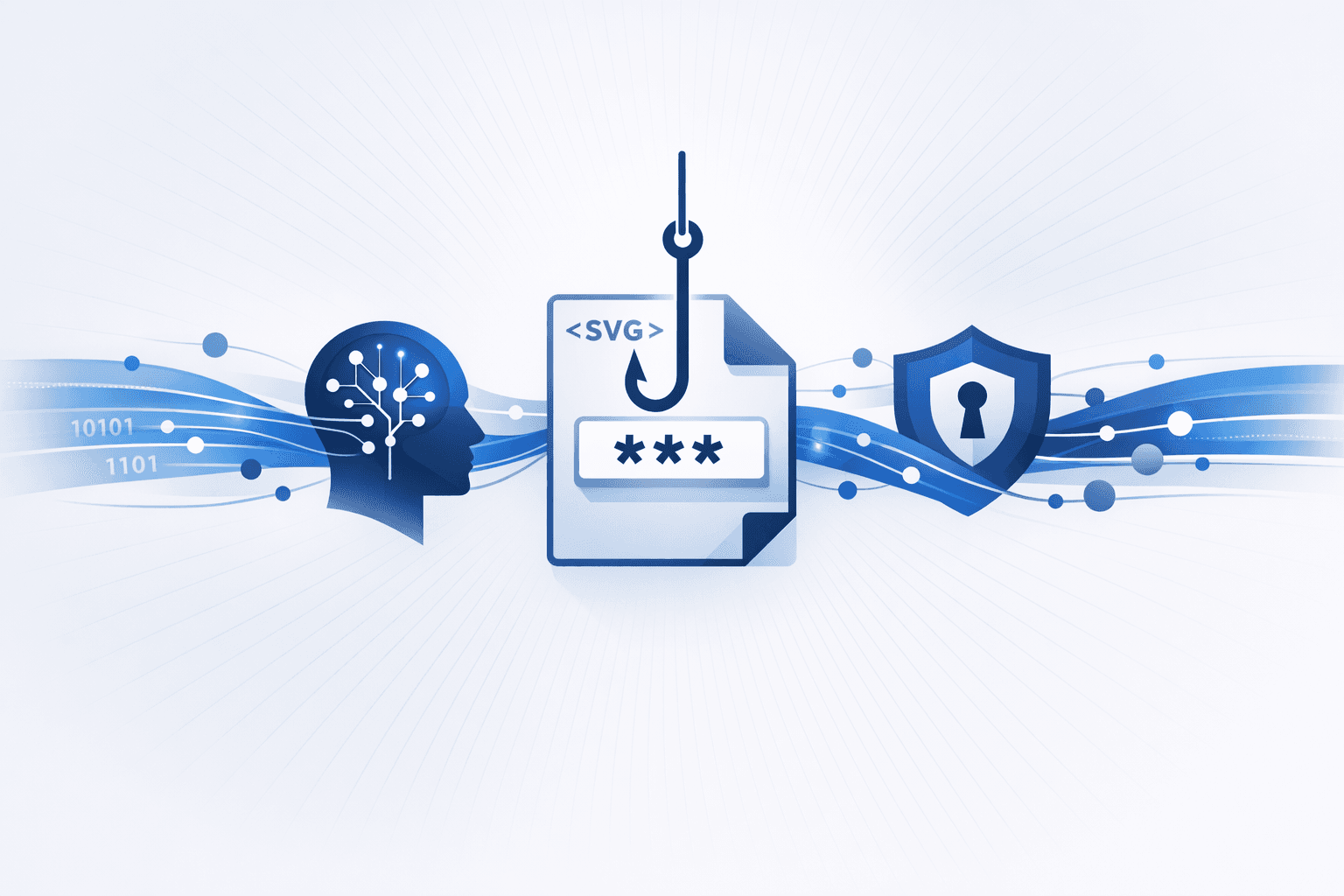
Microsoft Threat Intelligence identified a sophisticated phishing campaign targeting U.S.-based organizations, leveraging artificial intelligence to craft highly convincing and evasive attacks. The campaign was detected in late August 2025 and involved the use of compromised small business email accounts to distribute phishing emails. These emails masqueraded as legitimate file-sharing notifications, enticing recipients to open an attachment that appeared to be a PDF but was actually a Scalable Vector Graphics (SVG) file. The attackers exploited the SVG format's flexibility, embedding dynamic and interactive code that could bypass many traditional security tools. Instead of using standard obfuscation techniques, the malicious payload was hidden within the SVG file by encoding it with a sequence of business-related terms, such as 'revenue,' 'operations,' and 'risk,' making the file appear as standard business data. This approach allowed the attackers to disguise the true intent of the file, which was to redirect users to a fake sign-in page designed to harvest credentials. Microsoft noted that the code within the SVG was likely generated or enhanced using large language models (LLMs), a form of AI that can produce complex, human-like text and code, further complicating detection efforts. The phishing emails also employed a self-addressed tactic, where the sender and recipient addresses matched, with actual targets hidden in the BCC field to evade basic detection heuristics. SVG files are particularly attractive to attackers because they are text-based, scriptable, and support features like invisible elements, encoded attributes, and delayed script execution, all of which can be used to sidestep static analysis and security scanning. Microsoft responded by using its own AI-powered security tools to analyze and block the campaign, highlighting the growing trend of AI versus AI in cybersecurity defense and offense. The campaign underscores the increasing adoption of AI by threat actors to automate the creation of convincing phishing lures and obfuscated malware. The use of compromised business email accounts added legitimacy to the phishing attempts, increasing the likelihood of successful credential theft. The incident demonstrates the evolving threat landscape, where attackers continuously adapt their methods to outpace security defenses. Organizations are advised to enhance their email security protocols, educate users about the risks of unexpected file attachments, and deploy advanced detection tools capable of analyzing complex file formats like SVG. The campaign serves as a warning that traditional security measures may be insufficient against AI-driven threats, necessitating a proactive and adaptive security posture. Microsoft’s public disclosure of the attack provides valuable intelligence for defenders to recognize and mitigate similar threats in the future. The incident also highlights the importance of monitoring for unusual email behaviors, such as self-addressed messages and unexpected file types. As AI becomes more accessible to both attackers and defenders, the arms race in cybersecurity is expected to intensify, with increasingly sophisticated attacks targeting organizations of all sizes.
Jun 29, 2026
Cybercriminals are increasingly leveraging artificial intelligence and advanced social engineering techniques to conduct sophisticated phishing campaigns targeting both individuals and organizations. Recent reports highlight a surge in phishing attacks that utilize AI and machine learning to craft highly personalized and convincing lures, making detection more challenging for traditional security tools. Attackers are now able to scrape social media for personal data, generate emails in a target’s native language, and automate the creation of malicious content, all with minimal effort. One notable campaign tracked since February targets social media and marketing professionals by impersonating well-known brands such as Tesla, Red Bull, and Ferrari, enticing victims to upload resumes under the guise of job opportunities. These emails employ subtle psychological tactics, such as reducing urgency to build trust, and use multi-step processes to create an illusion of legitimacy. Another observed campaign used AI to obfuscate malicious payloads within SVG files, making them harder for security filters to detect. In this case, attackers sent phishing emails from compromised small business accounts, posing as file-sharing notifications, and used self-addressed email tactics to bypass basic detection heuristics. If recipients opened the attached file, they were redirected to credential-stealing websites. Microsoft researchers noted that the complexity and structure of the malicious code suggested it was generated by a large language model, rather than written by a human. The adoption of AI by threat actors is part of a broader trend, with both defenders and attackers racing to outpace each other in the use of transformative technologies. Security experts emphasize the importance of a layered defense, recommending strong passwords, multi-factor authentication, regular software updates, and ongoing user training to identify and report suspicious content. The rise of AI-driven phishing has increased the frequency and sophistication of attacks, with some security centers now detecting a malicious email every 42 seconds. Organizations are urged to remain vigilant, as even basic threat actors can now execute complex attacks with the help of AI tools. The evolving threat landscape underscores the need for proactive monitoring, rapid incident response, and continuous education to mitigate the risks posed by these advanced phishing campaigns. As attackers continue to refine their methods, defenders must adapt by leveraging AI for detection and response, and by fostering a security-aware culture among users. The convergence of AI and phishing represents a significant escalation in cyber risk, demanding heightened attention from both technical and non-technical stakeholders.
Jul 12, 2026
Security researchers reported multiple **phishing evasion** techniques designed to defeat modern email and AI-assisted defenses rather than relying only on traditional lure quality. One campaign analyzed by KnowBe4 used **graymail-style content padding** and extreme whitespace insertion to manipulate NLP-based email security tools, placing benign promotional text, legitimate signatures, and trusted links far below the visible phishing lure so scanners would weigh the message as less malicious. A separate LevelBlue-tracked trend showed attackers abusing enterprise **URL rewriting** and *Safe Links*-style protections by sending phishing through compromised accounts, causing security gateways to generate trusted wrapped URLs that could then be reused in campaigns targeting **Microsoft 365** users. The activity reflects a broader shift toward exploiting the gap between what users see and what automated systems inspect. In the URL-rewriting abuse, operators tied to **Tycoon2FA** and **Sneaky2FA** built multi-layer redirect chains across several trusted vendor domains to obscure final destinations and steal credentials and MFA session cookies through adversary-in-the-middle infrastructure, enabling account takeover, internal phishing, data theft, and sometimes ransomware follow-on activity. Related research from LayerX showed a different but thematically aligned evasion method in which **font rendering and CSS** make webpages display malicious commands to users while AI assistants parsing the underlying HTML see only harmless text, underscoring that attackers are increasingly targeting AI and trust-based inspection layers as part of phishing and social-engineering operations.
Jun 29, 2026