
Loading story…
LastPass warned of an active phishing campaign impersonating the service with fake “infrastructure maintenance” notifications that pressure users to “back up” their password vaults within 24 hours. The emails are crafted to create urgency and direct recipients to click a “Create Backup Now” link, with the apparent goal of hijacking accounts and stealing vault master passwords; LastPass emphasized it will never ask customers to provide their master password or demand immediate action under a tight deadline.
LastPass’ Threat Intelligence, Mitigation, and Escalation (TIME) team assessed the campaign as starting around January 19, 2026, and observed messages sent from addresses including support@lastpass[.]server8 and support@sr22vegas[.]com (with additional reported senders support@lastpass[.]server7 and support@lastpass[.]server3). Reported infrastructure used in the lure included an Amazon S3 URL group-content-gen2.s3.eu-west-3.amazonaws[.]com/5yaVgx51ZzGf that redirected to mail-lastpass[.]com; LastPass said it is working with third-party partners to take down the malicious infrastructure.
Get the infrastructure and lures behind it.
5 events from the most recent confirmed update back to the earliest known activity.
Subsequent reporting on 2026-01-21 and 2026-01-22 said the lookalike domain mail-lastpass[.]com was offline or had been taken down. This followed LastPass's stated efforts with third-party partners to remove the campaign's infrastructure.
As part of its public warning, LastPass disclosed known indicators associated with the campaign, including sender addresses, subject lines, domains, URLs, and IP addresses. These details were provided to help defenders identify and block the phishing activity.
On 2026-01-20, LastPass published a blog post warning customers that it was not requesting vault backups and would never ask for a master password. The company advised users to report suspicious emails to abuse@lastpass.com and said it was working with partners to disrupt the malicious infrastructure.
Observed phishing emails sent users through an Amazon S3-hosted URL before redirecting them to the lookalike domain mail-lastpass[.]com, where credentials could be harvested. Example lures and reporting indicate this infrastructure was active by 2026-01-20.
LastPass said its TIME team observed a phishing campaign starting around 2026-01-19, with emails impersonating LastPass maintenance notices and urging users to back up their vaults within 24 hours. The campaign used urgency, spoofed or lookalike sender addresses, and links intended to steal customers' master passwords.
Vulnerabilities, threat actors, malware, products, organizations, breaches, and observables Mallory has linked to this story. Indicator values are masked here and available in full in the app.
Indicator values are masked on this page. See the values in Mallory Domains, IPs, hashes, and URLs are exportable to your SIEM.
Get the infrastructure, lures, and IOCs behind this campaign, ready to push into your email and identity stack.
9 references tracked. Mallory keeps watching after this page renders.
malwarebytes.com
Open sourcetechrepublic.com
Open sourcesecpod.com
Open sourcescworld.com
Open sourcego.theregister.com
Open sourcebleepingcomputer.com
Open sourcethehackernews.com
Open sourcedarkreading.com
Open sourceblog.lastpass.com
Open sourceMap indicators from this story to your assets and identify affected systems in minutes.
Every observed campaign, victim, and pivot linked to actors named in this story.
Malware, exploits, and IOCs connected to the activity described here.
YARA, Sigma, and Snort rules deployed to your SIEM as soon as they’re published.
Get matching new stories delivered to your team as they break — not the next morning.
Ask questions about this story and take action on the answers.
Other stories Mallory is tracking that overlap on entities, sources, or topic labels.
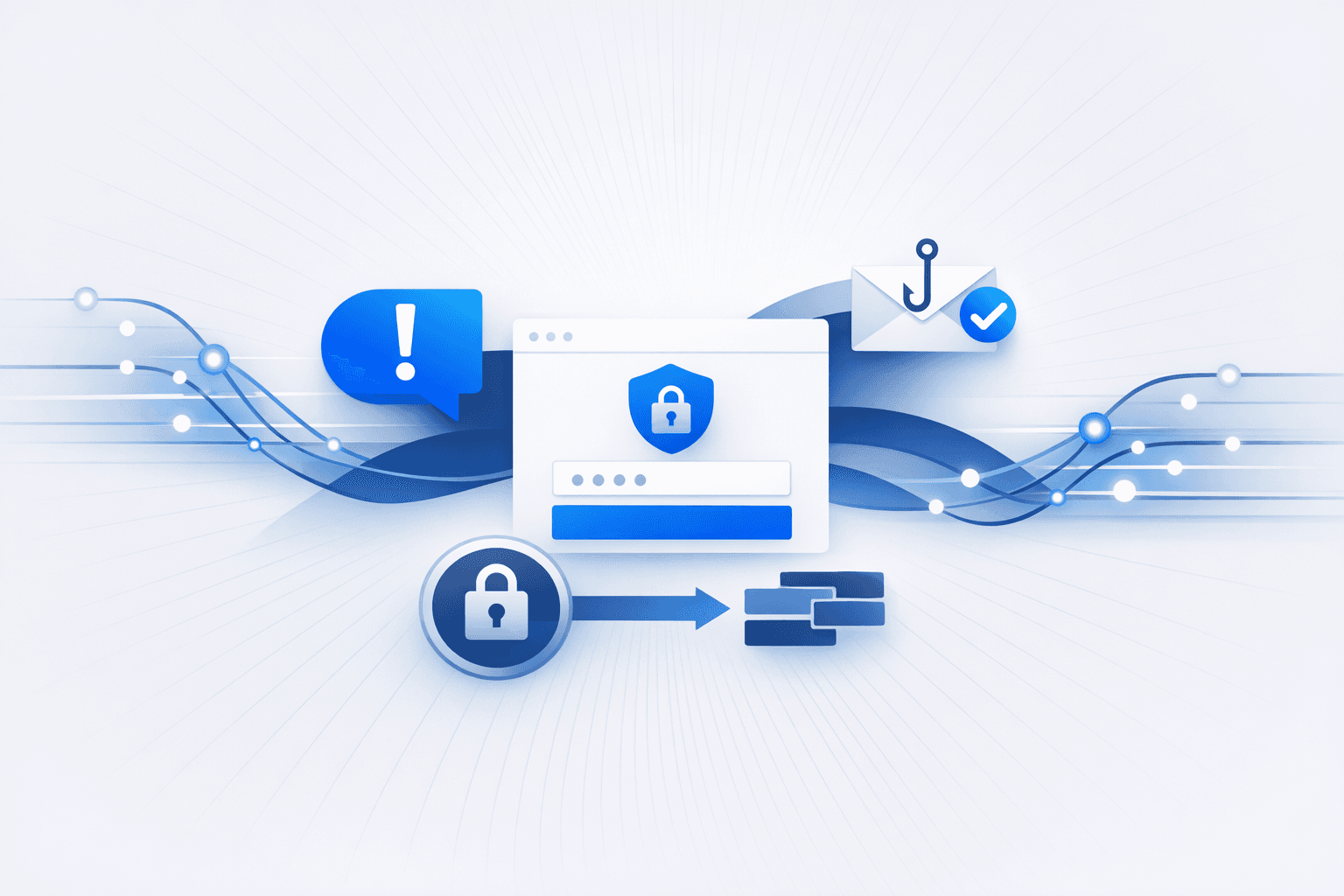
LastPass warned of an active **phishing campaign** using spoofed “security alert” and “support thread” emails that claim unauthorized access, master password changes, vault export attempts, account recovery, or new device registration. The messages abuse **display-name spoofing** (e.g., “LastPass Support”) to hide unrelated sender addresses—often from compromised sites or abandoned domains—and use urgent calls to action such as “report suspicious activity,” “disconnect and lock vault,” and “revoke device” to drive clicks. Victims who follow the links are directed to a fake LastPass SSO/login page hosted primarily on `verify-lastpass[.]com`, with additional lookalike/modified URLs redirecting to the same credential-harvesting site, aiming to steal users’ **master passwords** and account credentials. LastPass stated its own infrastructure was **not compromised**, is working with partners to take down the phishing domains, and reiterated it will **never** ask users for their master password; users are advised to report suspicious LastPass-branded emails to `abuse@lastpass.com`.
Jun 29, 2026
Threat actors have launched sophisticated phishing campaigns impersonating *LastPass* to trick users into revealing their master passwords and, in some cases, to install remote access tools. One campaign, attributed to the financially motivated group **CryptoChameleon (UNC5356)**, sends emails claiming a family member has requested access to the victim's LastPass vault via a fabricated death certificate, exploiting the service's emergency access feature. Victims are directed to fraudulent sites mimicking LastPass, where they are prompted to enter their credentials or passkeys. In some instances, attackers have also called victims while posing as LastPass staff to further legitimize the scam. A separate but related campaign targets users of both *LastPass* and *Bitwarden* with fake breach notifications, urging them to download a "secure" desktop version of the password manager. The download actually installs the Syncro remote monitoring and management (RMM) tool, which is then used to deploy ScreenConnect for remote access. This allows attackers to steal data, deploy additional malware, and potentially access password vaults. Both LastPass and Syncro have taken steps to warn users and disrupt the malicious infrastructure, emphasizing that no legitimate communication will ever request a master password and advising users to verify suspicious emails.
Jun 29, 2026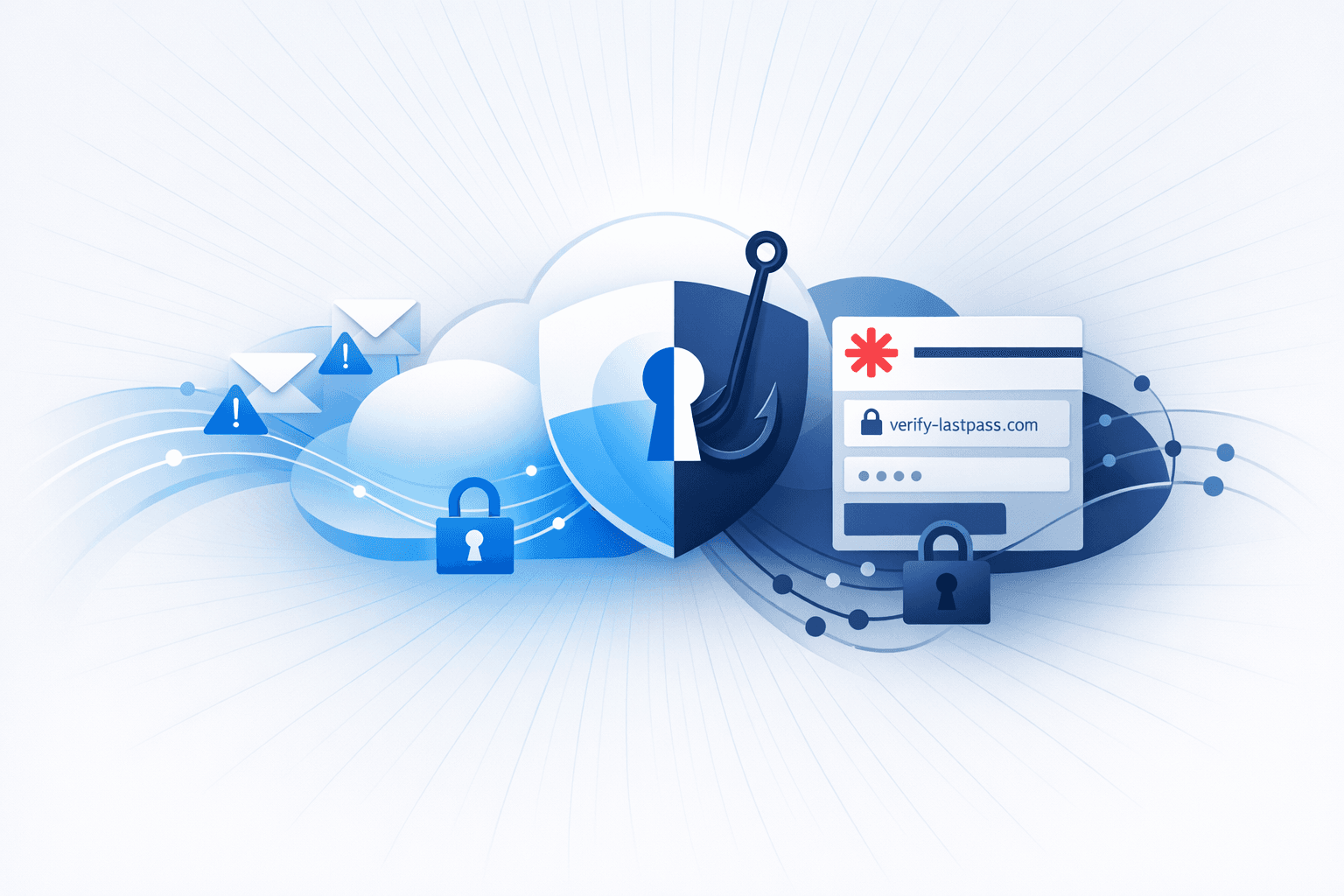
**LastPass** warned customers about an active phishing campaign using spoofed “security alert” emails that claim unauthorized access, vault export attempts, account recovery, or new device registration to pressure users into taking action. The messages spoof the LastPass display name (relying on many clients—especially mobile—showing only the display name) and direct victims to a fake SSO login page at `verify-lastpass[.]com` to steal credentials; LastPass reiterated it will **never** ask for a user’s master password and said it is working with partners to take down the phishing infrastructure. Separately, researchers reported a coordinated phishing operation that abuses **Google Cloud Storage (GCS)** to host redirector content on a legitimate Google domain (`storage.googleapis.com`) to help links evade email security controls. Analysis tied 25+ distinct lure emails (e.g., “storage full,” “antivirus expired,” and brand-themed reward scams) to a single GCS bucket (`whilewait`) hosting `comessuccess.html`, which functions as a gatekeeper/redirector that forwards victims to third-party malicious sites associated with credential and/or payment-card harvesting and potential malware delivery; the consistent destination across varied themes indicates centralized attacker-controlled cloud infrastructure.
Jun 29, 2026