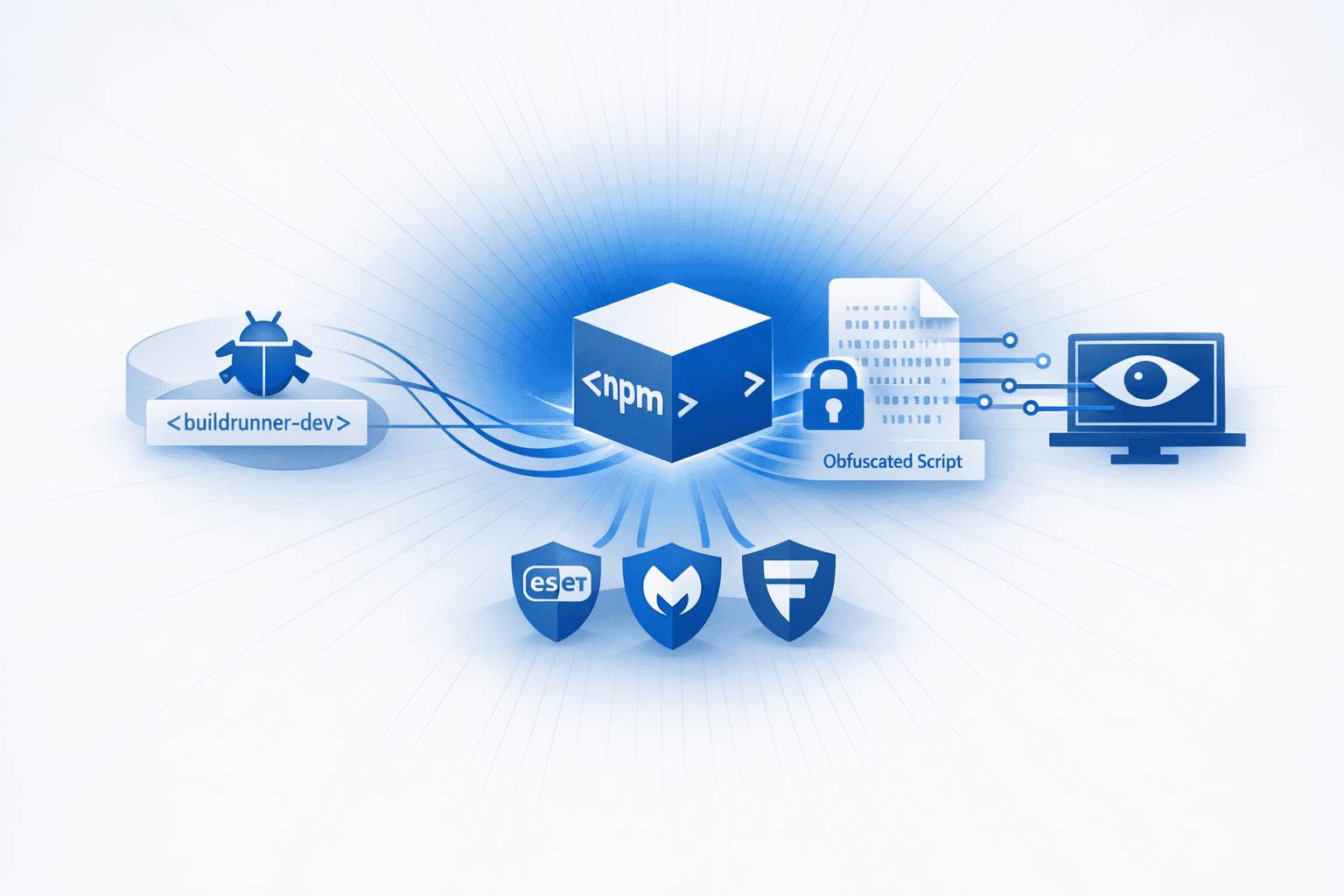
Threat researchers reported an npm supply-chain attack in which a typosquatted package (buildrunner-dev) delivered Pulsar RAT via a multi-stage Windows infection chain. The package executed a script that fetched a large, heavily obfuscated batch file (packageloader.bat) containing mostly “noise” to evade static detection, performed security-product checks (including ESET, Malwarebytes, and F-Secure), established persistence by copying itself as protect.bat into a hidden folder, and attempted privilege escalation/UAC bypass using fodhelper.exe.
Separate supply-chain reporting highlighted how package-name deception is evolving beyond human typos into “slopsquatting” (AI/hallucination squatting), where attackers register package names that LLMs commonly invent and then rely on developers installing them on AI recommendation. Documented tradecraft includes malicious postinstall scripts to exfiltrate secrets from developer environments (API keys, cloud tokens, npm auth tokens) and the use of URL-based dependencies to fetch external payloads at install time, allowing the published package to appear benign to naive scanners.


Mallory correlates global threat intelligence with your attack surface — know if you’re exposed before adversaries strike.
7 events from the most recent confirmed update back to the earliest known activity.
Subsequent reporting added that multiple PNGs hosted on ImgBB carried an AMSI-bypass script, a compressed .NET loader, and a steganographic image used as a live C2 channel for on-demand encrypted Pulsar RAT delivery.
Analysis showed 'buildrunner-dev' used a postinstall chain to fetch an obfuscated batch loader, establish persistence, attempt UAC bypass with fodhelper.exe, extract hidden code from PNG images, and inject Pulsar RAT into a legitimate process.
Aikido publicly described 'slopsquatting' as an AI-era evolution of typosquatting, documented real-world examples, and recommended controls such as publisher verification, dependency-tree scanning, and guardrails for autonomous package installation.
In February 2026, researchers discovered the npm package 'buildrunner-dev' typosquatting legitimate buildrunner-related packages to target developers through a supply-chain attack.
Researchers identified a malicious npm package named 'unused-imports', commonly confused with the legitimate 'eslint-plugin-unused-imports', as a real-world example of slopsquatting or hallucination-driven package abuse.
The hallucinated npm package name 'react-codeshift' spread through GitHub repositories and continued receiving downloads after the package name was claimed, showing how AI-generated package confusion can persist over time.
A hallucinated package name, 'huggingface-cli', appeared in AI-generated outputs and was installed broadly enough to accumulate tens of thousands of downloads, illustrating organic spread of non-existent package names into real developer workflows.
Vulnerabilities, threat actors, malware, products, organizations, and breaches Mallory has linked to this story.
3 references tracked. Mallory keeps watching after this page renders.
cybersecuritynews.com
Open sourcehackread.com
Open sourceaikido.dev
Open sourceMap indicators from this story to your assets and identify affected systems in minutes.
Every observed campaign, victim, and pivot linked to actors named in this story.
Malware, exploits, and IOCs connected to the activity described here.
YARA, Sigma, and Snort rules deployed to your SIEM as soon as they’re published.
Get matching new stories delivered to your team as they break — not the next morning.
Ask questions about this story and take action on the answers.