
Loading story…
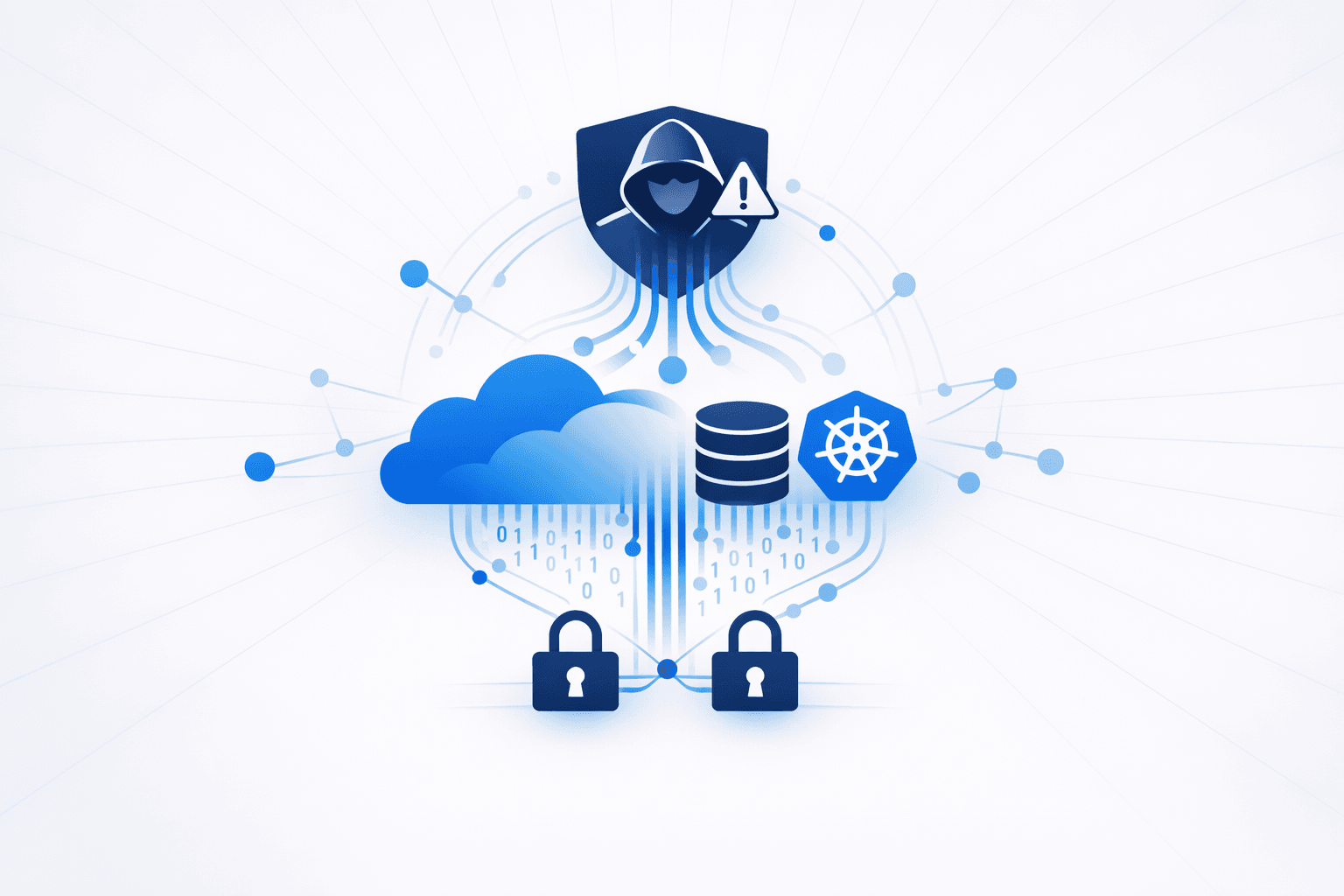
Security researchers reported multiple malware operations abusing exposed cloud services and misconfigurations to seize control of Kubernetes and containerized environments. FortiGuard Labs said the P2PInfect botnet compromised Google Kubernetes Engine clusters by targeting internet-exposed Redis instances, abusing replication through the SLAVEOF command and, in some cases, leveraging CVE-2022-0543 for remote code execution. The Rust-based malware uses a decentralized peer-to-peer architecture, non-standard ports, and long-lived dormant infections that can persist for months, creating a foothold for later delivery of ransomware, cryptominers, or other payloads.
Separate reporting tied the activity to a broader rise in cloud-focused criminal operations that exploit known flaws and weak configurations rather than zero-days. Cyble profiled TeamPCP as a large-scale actor targeting Docker APIs, Kubernetes components, Ray dashboards, and Redis to convert victim infrastructure into proxy, command-and-control, ransomware, and Monero mining nodes. Researchers also described a newer framework, PCPJack, that appears to piggyback on already compromised cloud environments by wiping TeamPCP artifacts, stealing secrets from AWS, Docker, Kubernetes, GitHub, Slack, Office 365, and other services, and exfiltrating encrypted data to Telegram while spreading worm-like across exposed Docker, Kubernetes, Redis, MongoDB, and RayML services.
Map this exposure pattern across your cloud, code, and identities.
7 events from the most recent confirmed update back to the earliest known activity.
A follow-up report said P2PInfect operators appeared to be running a botnet-for-hire model and had expanded beyond Redis misconfigurations to exploit the Metro4Shell vulnerability, with low-confidence speculation about possible RediShell use. The findings reinforced concerns that access obtained through the botnet could be sold to other criminals for ransomware or cryptomining deployment.
Researchers disclosed a new malware framework called PCPJack that targets exposed cloud environments, steals a wide range of credentials and secrets, and removes evidence of prior TeamPCP infections before taking over compromised systems. PCPJack was described as worm-like, spreading through exposed Docker, Kubernetes, Redis, MongoDB, and RayML services and exfiltrating encrypted data to Telegram.
Fortinet's FortiGuard Labs publicly reported that P2PInfect had expanded from earlier Redis-focused activity into Kubernetes environments, warning that compromised nodes could later be used for ransomware or cryptomining. The report also noted the botnet's decentralized peer-to-peer architecture and recommended reducing Redis exposure, tightening Kubernetes controls, and improving runtime monitoring.
Cyble published a threat actor profile describing TeamPCP's cloud-native intrusion methods, tooling, and monetization, and said the campaign had affected organizations across multiple countries and sectors, especially BFSI, consumer goods, and professional services. The profile emphasized opportunistic targeting of cloud-reliant environments and use of tools such as FRP, GO Simple Tunnel, Sliver, and XMRig.
FortiGuard Labs reported that at least one P2PInfect intrusion inside a GKE cluster remained active for roughly six months, showing the botnet's ability to maintain long-term access in enterprise cloud environments. The malware stayed largely dormant after enrollment, reducing the chance of detection while preserving access for later monetization.
From November 2025 through February 2026, FortiGuard Labs observed P2PInfect intrusions in Google Kubernetes Engine environments at several companies. Attackers abused internet-exposed Redis instances, including misconfigured replication via the SLAVEOF command and CVE-2022-0543, to gain code execution and enroll hosts into the botnet.
TeamPCP, also tracked as DeadCatx3, PCPcat, PersyPCP, and ShellForce, emerged in late 2025 as a cloud-focused threat actor exploiting exposed cloud infrastructure and common misconfigurations at scale. The group targeted services such as Docker APIs, Kubernetes components, Ray dashboards, and Redis, then repurposed compromised systems for proxying, scanning, command-and-control, ransomware, and Monero mining.
Vulnerabilities, threat actors, malware, products, organizations, breaches, and observables Mallory has linked to this story. Indicator values are masked here and available in full in the app.
Indicator values are masked on this page. View all 12 in Mallory Domains, IPs, hashes, and URLs are exportable to your SIEM.
See where this exposure pattern shows up across your cloud, code, supply chain, and non-human identities.
6 references tracked. Mallory keeps watching after this page renders.
securityonline.info
Open sourcecysecurity.news
Open sourcecybersecuritynews.com
Open sourcefortinet.com
Open sourcefeeds.fortinet.com
Open sourcecyble.com
Open sourceMap indicators from this story to your assets and identify affected systems in minutes.
Every observed campaign, victim, and pivot linked to actors named in this story.
Malware, exploits, and IOCs connected to the activity described here.
YARA, Sigma, and Snort rules deployed to your SIEM as soon as they’re published.
Get matching new stories delivered to your team as they break — not the next morning.
Ask questions about this story and take action on the answers.
Other stories Mallory is tracking that overlap on entities, sources, or topic labels.
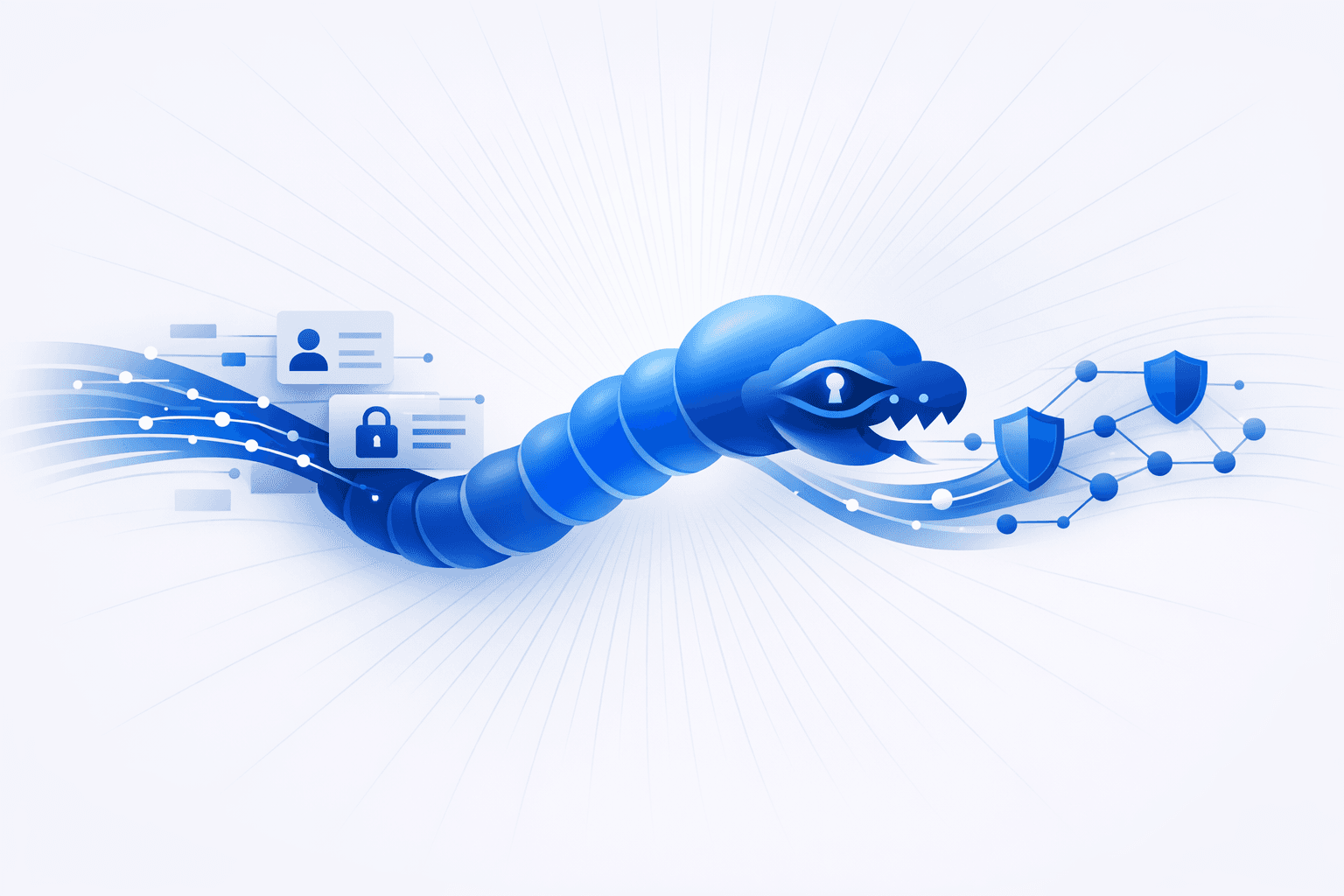
SentinelLABS reported that attackers are deploying **PCPJack**, a modular Linux- and Python-based cloud worm built to steal credentials at scale from exposed cloud infrastructure. The framework targets cloud, container, developer, productivity, and financial environments, then spreads laterally through **Docker**, **Kubernetes**, **Redis**, **MongoDB**, **RayML**, **SSH**, and vulnerable web applications. Researchers said the malware removes TeamPCP-related artifacts from compromised systems, indicating it is designed to replace or evict earlier TeamPCP infections rather than coexist with them. The campaign used a staging server hosting two related toolsets: the main PCPJack framework and a secondary credential-harvesting shell script paired with **Sliver** beacons. Stolen data was exfiltrated through **Telegram** and to a typosquatted CloudFront-like domain, suggesting an operation focused on credential theft and follow-on abuse rather than cryptomining. SentinelLABS found overlaps with historical TeamPCP targeting and tooling, but said the available evidence does not conclusively show that PCPJack operators are members of TeamPCP.
Jun 29, 2026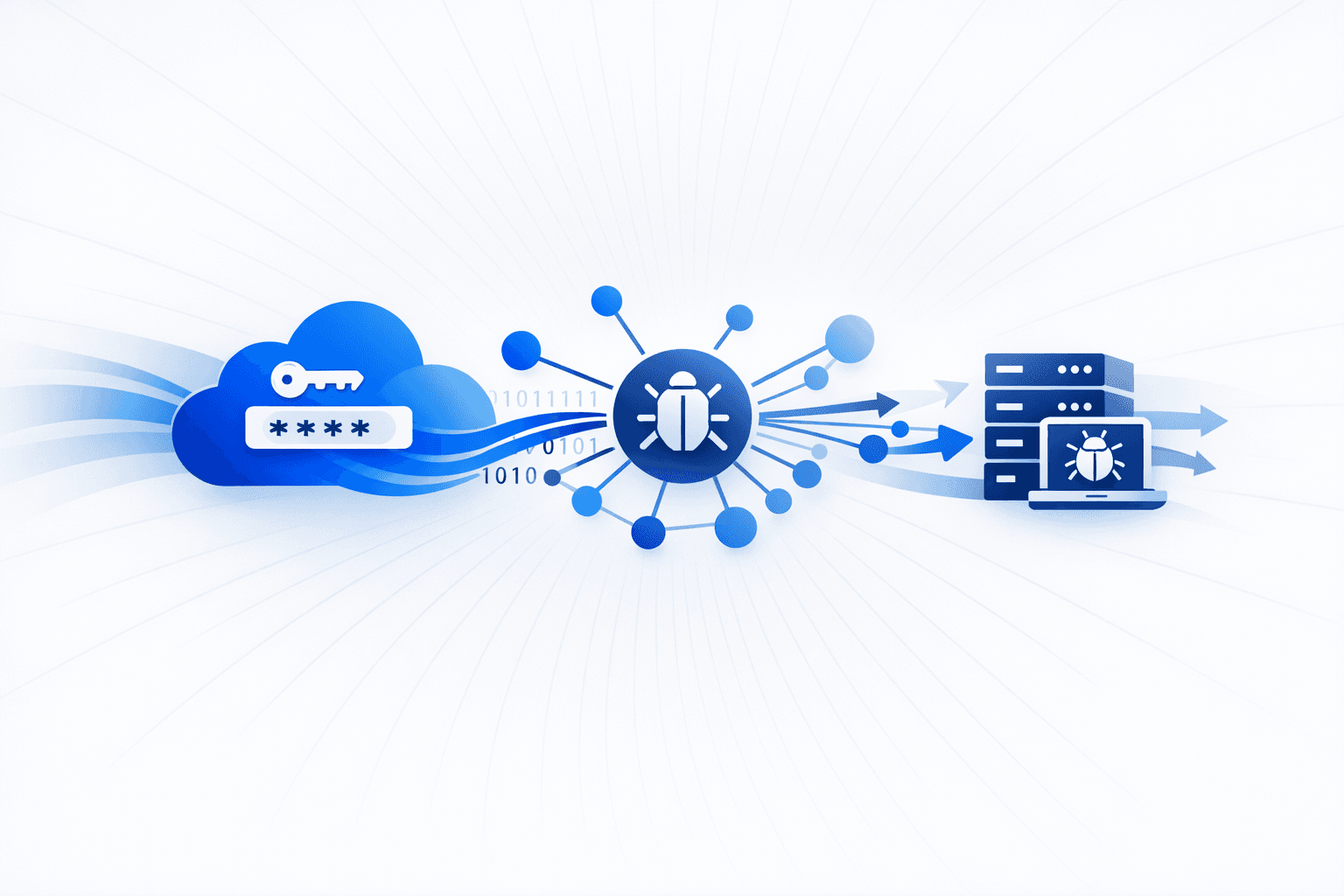
TeamTNT continued to evolve from a Linux-focused cryptojacking group into a broad cloud threat actor targeting exposed Redis, Docker, Kubernetes, Jupyter, Hadoop, PostgreSQL, Tomcat, Nginx, SSH, and other internet-facing services. Researchers tied the group to worm-like campaigns that rapidly scanned for vulnerable hosts, deployed **XMRig** miners, dropped **Tsunami**-based IRC bots including DDoS-capable variants, and used malicious container images on Docker Hub to spread payloads at scale. One TeamTNT-linked Docker Hub account reportedly served images pulled more than **150,000** times, while later campaigns showed the group abusing public registries, compromised accounts, and cloud-native tooling to infect newly exposed systems and report them back to command-and-control infrastructure. Across these operations, TeamTNT consistently paired monetization with aggressive credential theft and stealth. Investigations found the group harvesting **AWS**, Azure, GCP, Kubernetes, Git, NPM, Grafana, database, and storage secrets; stealing SSH keys and host data; and using tools such as Weave Scope, Peirates, BotB, MimiPenguin, Mimipy, `tmate`, and Gsocket to expand access and persistence. Analysts also documented detection evasion through log wiping, process hiding, `LD_PRELOAD` userland rootkits, the **Diamorphine** kernel rootkit, privileged containers with restart policies, and even disabling `runc` to lock out rival attackers, underscoring TeamTNT’s shift from opportunistic mining to sustained compromise of cloud and container environments.
Aug 15, 2026
Reporting describes several unrelated but contemporaneous malware operations targeting both Windows and Linux environments. In Taiwan, FortiGuard Labs observed targeted phishing using tax and e-invoice lures to deliver **Winos 4.0 (ValleyRat)** and plugins, with delivery chains including malicious `.LNK` files, **DLL sideloading**, and **BYOVD** using the vulnerable driver `wsftprm.sys`, supported by rapidly rotating domains and cloud-hosted infrastructure that reduces the effectiveness of static blocklists. Separately, Cato CTRL reported a new Windows loader, **Foxveil**, that stages and retrieves shellcode via trusted platforms (**Cloudflare Pages**, **Netlify**, and **Discord attachments**) and executes payloads using techniques including **Early Bird APC injection** (often into a fake `svchost.exe`) or self-injection, while persisting via Windows services or masqueraded binaries dropped into `SysWOW64`. Additional reporting covers distinct campaigns in other regions and platforms. A LATAM-focused intrusion chain uses fake bank receipt lures (double-extension such as `.pdf.js`) to deliver **XWorm v5.6**, employing oversized/obfuscated JavaScript, WMI-based process creation (`Win32_Process`) to launch hidden PowerShell, and abuse of a hardcoded **Cloudinary** URL for staging—capabilities consistent with credential theft and enabling follow-on ransomware. Trellix analysis described a separate **Monero** cryptomining operation distributed via pirated software installers that propagates through **USB/external drives** to reach even air-gapped systems, using multi-component “watchdog” self-healing behavior and aggressive defense-evasion. On Linux, LevelBlue detailed a new **SysUpdate** variant (packed `ELF64`) that performs host reconnaissance and uses strong C2 encryption; researchers built a **Unicorn Engine**-based emulation tool to reproduce key generation/encryption routines and decrypt captured C2 traffic for investigation and detection engineering.
Jun 29, 2026