
Loading story…
Researchers identified a FakeWallet campaign that placed at least 26 malicious iOS apps in Apple’s App Store, where they impersonated well-known cryptocurrency wallets including MetaMask, Ledger, Trust Wallet, Coinbase, TokenPocket, imToken, and Bitpie. The apps primarily targeted users in China, taking advantage of the fact that many legitimate crypto wallet apps were unavailable in the local App Store, and used typosquatting, fake branding, and phishing flows to redirect victims to browser-based credential theft pages or trojanized wallet installers. Investigators said the operation had likely been active since at least late 2025, and Apple was notified and removed several of the identified apps.
The malware used multiple techniques to steal wallet secrets from both hot-wallet and cold-wallet companion apps, including malicious dylib injection, executable hooking, provisioning profiles, and React Native code tampering. For hot wallets, the implants scraped mnemonic seed phrases and private keys directly from wallet interfaces; for Ledger-themed variants, the apps displayed convincing in-app prompts and fake verification pages to trick users into entering recovery phrases. Stolen data was RSA PKCS #1-encrypted, Base64-encoded, and sent to attacker-controlled servers, and researchers assessed the activity may be linked to the SparkKitty threat based on shared modules, Chinese-language artifacts, similar fake App Store-style distribution, and overlapping cryptocurrency theft objectives.

Track how attackers are adapting to this technology.
5 events from the most recent confirmed update back to the earliest known activity.
After identifying the malicious applications, researchers reported them to Apple. Several of the FakeWallet apps were subsequently removed from the App Store.
During their analysis of the campaign, researchers found overlap with SparkKitty modules and assessed that the threat actor may be linked to SparkKitty based on shared targeting, Chinese-language artifacts, and similar fake App Store-style distribution methods. They also observed related Android samples distributed through phishing sites.
In March 2026, researchers identified a large iOS-focused FakeWallet campaign involving more than twenty phishing apps, including 26 apps impersonating wallets such as MetaMask, Ledger, Trust Wallet, Coinbase, TokenPocket, imToken, and Bitpie. The apps redirected users to phishing pages or trojanized wallet installers designed to steal seed phrases and private keys.
Researchers assessed that the FakeWallet cryptocurrency-stealing campaign had been active since at least fall 2025. The operation used fake wallet branding and App Store-style distribution to target cryptocurrency users, primarily in China.
ESET reported a cryptocurrency-stealing campaign targeting Android and iPhone users via trojanized wallet apps and fake wallet websites, primarily aimed at Chinese users. The company said the activity dated back to at least May 2021 and involved impersonation of major wallet brands, malicious code inserted into otherwise functional apps, and broad distribution through fake sites, social media, and messaging channels.
Vulnerabilities, threat actors, malware, products, organizations, breaches, and observables Mallory has linked to this story. Indicator values are masked here and available in full in the app.
Indicator values are masked on this page. View all 74 in Mallory Domains, IPs, hashes, and URLs are exportable to your SIEM.
Follow how adversaries are adapting to this technology, and where it touches your stack today.
6 references tracked. Mallory keeps watching after this page renders.
thehackernews.com
Open sourcescworld.com
Open sourcebleepingcomputer.com
Open sourceeset.com
Open sourcesecurelist.com
Open sourcesecurelist.com
Open sourceMap indicators from this story to your assets and identify affected systems in minutes.
Every observed campaign, victim, and pivot linked to actors named in this story.
Malware, exploits, and IOCs connected to the activity described here.
YARA, Sigma, and Snort rules deployed to your SIEM as soon as they’re published.
Get matching new stories delivered to your team as they break — not the next morning.
Ask questions about this story and take action on the answers.
Other stories Mallory is tracking that overlap on entities, sources, or topic labels.

Rapid7 uncovered an active cryptocurrency fraud operation, tracked as **Operation ASTERIX**, after finding an exposed attacker server containing phone-number datasets, account-validation tools, phishing panels, Asterisk-based dialing infrastructure, and counterfeit wallet applications impersonating **Trezor**, **Ledger**, and **Exodus**. The campaign validated more than 100,000 phone numbers against cryptocurrency services including **Crypto.com** and **Kraken**, enriched confirmed leads with personal details, and then used coordinated phishing emails and vishing calls to direct victims to fake wallet software or recovery-phrase entry pages. The malware and infrastructure were built to steal wallet seed phrases and other victim data, with artifacts showing Telegram bot exfiltration, deceptive domains, trojanized installers, and macOS persistence via LaunchAgents. Rapid7 said the fake Trezor malware used Electron, process replacement, hidden windows, and local logging, while a trojanized **Claude Code** installer secretly deployed a fake **Ledger Live** payload alongside the legitimate tool to reduce suspicion. Recovered logs also showed the operator relied heavily on AI coding assistants including **GitHub Copilot**, **Claude Code**, and **Kimi** to develop, obfuscate, and host components of the scam infrastructure.
Aug 18, 2026
A malicious macOS app impersonating **Ledger Live** was distributed through Apple’s App Store and linked to the theft of more than **$9.5 million** in cryptocurrency from over **50 victims**. Investigators said the app used Ledger branding, fake credibility signals, and prompts for users’ seed or recovery phrases, allowing attackers to seize control of wallets and drain assets across multiple networks, including **Bitcoin, Ethereum, Solana, Tron, and XRP**. The fraudulent listing was reportedly published under **Leva Heal Limited** rather than Ledger and showed a suspicious version history that jumped rapidly from `1.0` to `5.0` within roughly two weeks. Blockchain investigator **ZachXBT** traced the stolen funds from intermediary wallets into more than **150 KuCoin deposit addresses**, after which they were laundered through a centralized mixing service known as **AudiA6**. Apple removed the app after user reports, and KuCoin said it froze the implicated accounts pending possible law enforcement action. The thefts, reported over a span of days in April, have intensified scrutiny of Apple’s app review process and underscored the continuing risk of fake wallet and financial apps appearing in trusted software marketplaces.
Jun 29, 2026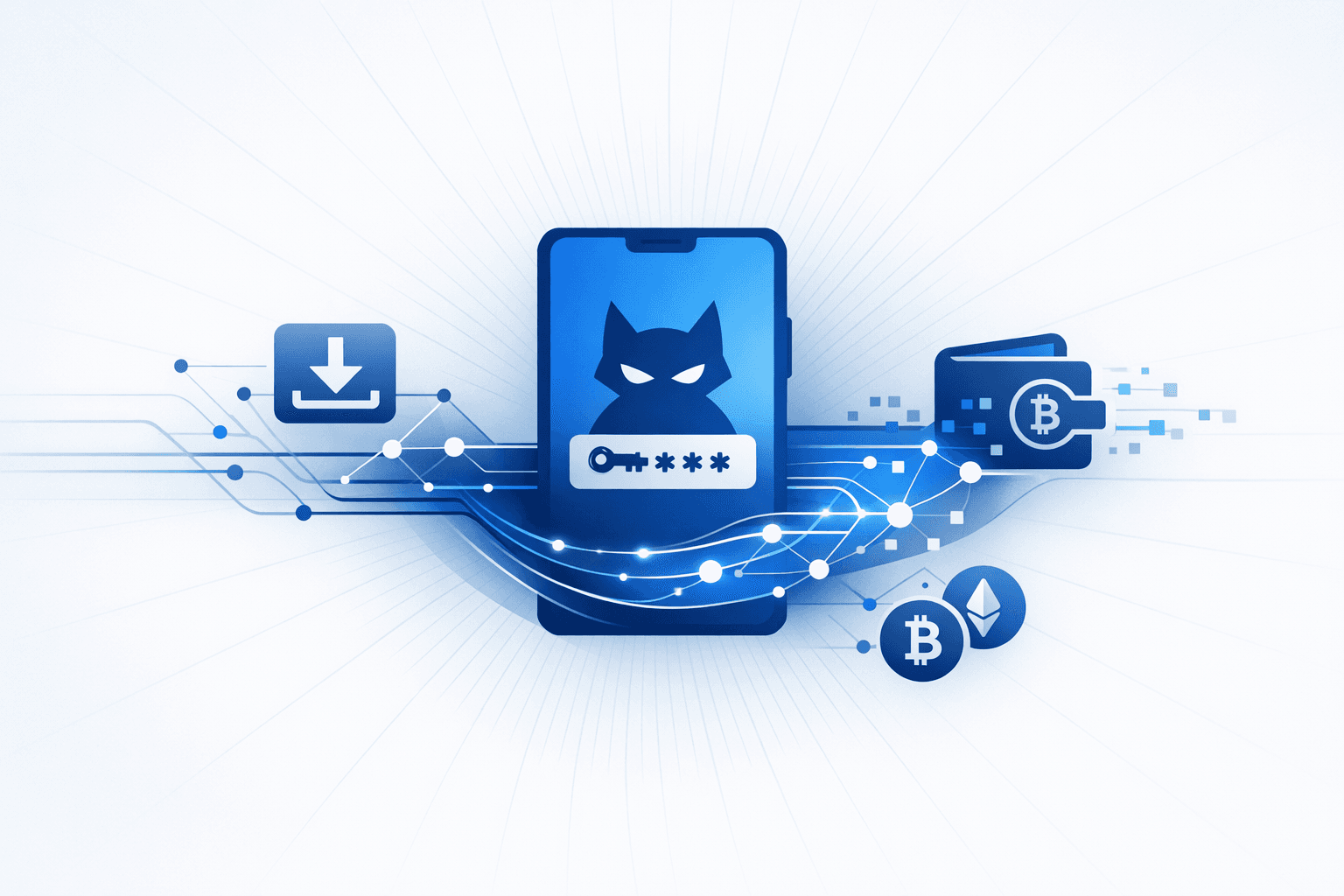
A new **SparkCat** malware variant was discovered in apps distributed through both the **Apple App Store** and **Google Play Store**, showing the mobile threat remains active and under development. Researchers found the malware embedded in seemingly legitimate applications, including enterprise messaging and food delivery apps, where it covertly scans users’ photo galleries for cryptocurrency wallet recovery phrases using **OCR** and sends matching images to attacker-controlled servers. Kaspersky identified two infected iOS apps and one infected Android app, with the campaign primarily targeting cryptocurrency users in Asia. The iOS variant searches for English mnemonic phrases, while the Android version looks for Japanese, Korean, and Chinese keywords and adds stronger obfuscation such as code virtualization and cross-platform languages. Researchers assess the operation is likely tied to the same Chinese-speaking threat actor previously linked to SparkCat.
Jun 29, 2026