
Loading story…
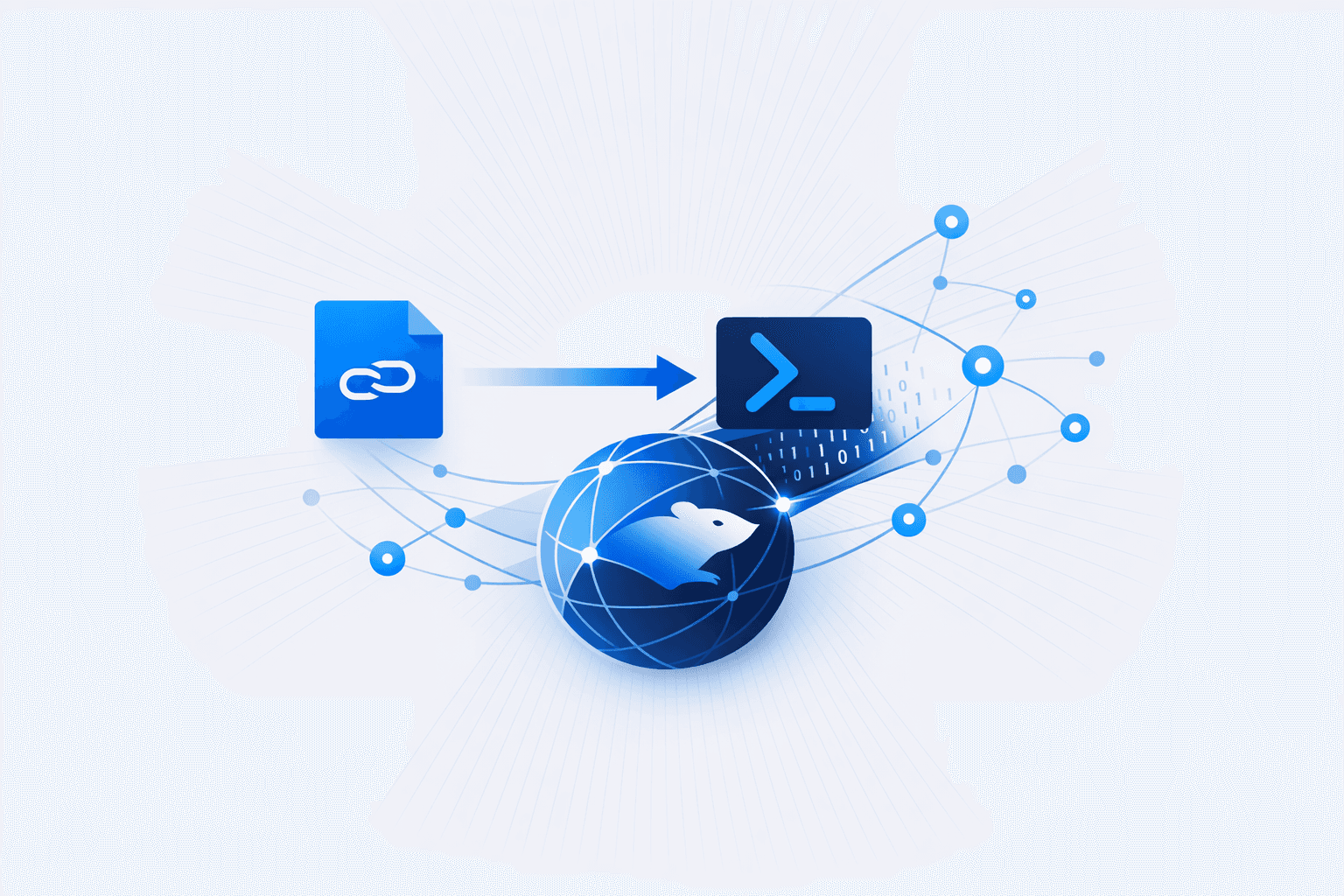
Researchers reported that APT37 targeted Korean users with spear-phishing emails posing as urgent Microsoft Account Team messages and cybersecurity advisories, delivering ZIP archives that contained malicious .lnk files. The shortcut files abused native Windows tools including cmd, PowerShell, and curl.exe to fetch a decoy document and staged payloads, ultimately installing NarwhalRAT, a Python-based remote access trojan compiled from Python code. Genians linked the activity to Korea-focused infrastructure and artifacts, including references to naverwhale, KakaoTalk-related handling, and Korean relay servers.
Once installed, NarwhalRAT established persistence through a scheduled task disguised as a Microsoft task, performed anti-VM checks, and enabled broad surveillance and control functions such as keylogging, screen capture, microphone recording, file transfer, USB data collection, and remote command execution. The malware used a dual command-and-control design that combined Korean relay domains with the pCloud API as a dead-drop resolver, complicating detection and tracking. Researchers urged defenders to strengthen EDR coverage for suspicious LNK-to-PowerShell execution chains, unusual scheduled task creation, unexpected curl.exe activity, and silent Python execution.
Get the infrastructure and lures behind it.
3 events from the most recent confirmed update back to the earliest known activity.
On June 15, 2026, Cyber Security News reported technical details of the campaign, including ZIP-delivered malicious LNK files abusing CMD, PowerShell, and curl.exe to install NarwhalRAT, along with persistence and anti-VM behavior.
On June 14, 2026, Bluesky posts by lazarusholic shared the Genians report and associated the NarwhalRAT phishing activity with APT37 and DPRK-linked operations.
On April 30, 2026, Genians published a threat intelligence report analyzing a spear-phishing campaign attributed to APT37 that used Microsoft-themed lures, malicious LNK files, and a Python-based NarwhalRAT with dead-drop C2 via pCloud and Korean relay infrastructure.
Vulnerabilities, threat actors, malware, products, organizations, breaches, and observables Mallory has linked to this story. Indicator values are masked here and available in full in the app.
Indicator values are masked on this page. View all 19 in Mallory Domains, IPs, hashes, and URLs are exportable to your SIEM.
Get the infrastructure, lures, and IOCs behind this campaign, ready to push into your email and identity stack.
10 references tracked. Mallory keeps watching after this page renders.
securityonline.info
Open sourcescworld.com
Open sourcethehackernews.com
Open sourcecybersecuritynews.com
Open sourcebsky.app
Open sourcegenians.co.kr
Open sourcegenians.co.kr
Open sourcegithub.com
Open sourceMap indicators from this story to your assets and identify affected systems in minutes.
Every observed campaign, victim, and pivot linked to actors named in this story.
Malware, exploits, and IOCs connected to the activity described here.
YARA, Sigma, and Snort rules deployed to your SIEM as soon as they’re published.
Get matching new stories delivered to your team as they break — not the next morning.
Ask questions about this story and take action on the answers.
Other stories Mallory is tracking that overlap on entities, sources, or topic labels.

Multiple recent intrusion reports describe **phishing-led Windows compromises** that rely on **weaponized `.LNK` shortcuts** to trigger **obfuscated PowerShell** execution, display decoy documents, and then fetch additional payloads from public cloud/code platforms. In South Korea, attackers distributed an LNK disguised as financial trading guidance that opens a decoy PDF while running PowerShell; subsequent stages perform anti-analysis/virtualization checks, establish persistence, and retrieve a masked executable from **GitHub** that decrypts code at runtime to run **MoonPeak** malware. Researchers assessed the activity as likely **North Korea–linked** based on GitHub commit metadata and naming patterns. A separate Russia-targeted campaign used business-themed archives containing decoy documents and a malicious LNK to pull a PowerShell loader that establishes persistence and then weakens defenses (including **Microsoft Defender exclusion changes** and use of **`defendnot`**), performs reconnaissance, and tampers with system tooling and file associations before deploying **Amnesia RAT** (fetched from **Dropbox**) and a **Hakuna Matata–derived ransomware** payload for encryption. By contrast, reporting on **KazakRAT** describes a different espionage operation in Kazakhstan/Afghanistan delivered via malicious **MSI** installers and using simple, unencrypted HTTP C2; it is not part of the LNK/PowerShell delivery chains described in the other incidents.
Jun 29, 2026
APT37, also tracked as **ScarCruft/RedEyes**, has continued delivering the **RokRAT** backdoor through spear-phishing campaigns that use malicious `.lnk` shortcut files, often packaged in ZIP or ISO archives and disguised as certificates, conference invitations, or other South Korea-focused policy and security documents. Researchers reported that the LNK files launch hidden `cmd` and PowerShell chains to extract decoy files, stage payloads from locations such as `%public%`, and retrieve additional components from cloud storage including **OneDrive** and **Dropbox**. The activity has primarily targeted South Korean users, especially people involved in North Korea-related issues, unification, military, education, and activist communities, while earlier RokRAT operations also used malicious HWP documents exploiting `CVE-2013-0808`. Once executed, RokRAT performs host reconnaissance, steals credentials and other user data, captures screenshots and process information, executes attacker commands, and can download further malware, while hiding command-and-control and exfiltration traffic inside trusted cloud services such as **pCloud**, **Yandex**, **Dropbox**, **OneDrive**, and previously **Twitter** and **Mediafire**. Multiple reports said the malware uses in-memory or fileless execution, anti-analysis checks, and HTTP headers masquerading as **Googlebot**, complicating detection by signature-based tools. Analysts linked the campaigns to APT37 through recurring malware code, infrastructure patterns, lure themes, and tradecraft, and noted that the group shifted from document-based delivery to LNK-driven infection chains after macro-blocking changes made older techniques less reliable.
Aug 15, 2026
FortiGuard Labs reported a high-severity cyber espionage campaign linked to North Korean state-sponsored actors that targets organizations in South Korea with phishing emails carrying malicious Windows `.lnk` files disguised as PDF documents. When opened, the shortcut launches PowerShell and other native Windows scripting tools while showing a decoy document, then performs anti-analysis checks for tools including Wireshark, Fiddler, x64dbg, Procmon, and `vmtoolsd`. Researchers said the operation has been active since at least 2024 and has evolved from earlier, less-obfuscated variants associated with XenoRAT into more sophisticated samples that embed decoding logic and payload data directly in the shortcut file. The malware establishes persistence through a Scheduled Task disguised as a technical paper and set to run every 30 minutes, then collects host data such as OS version, build number, process lists, and keep-alive logs. Operators used trusted GitHub accounts and private repositories as covert command-and-control and data-staging infrastructure, allowing malicious HTTPS traffic to blend with normal web activity while exfiltrating system information and retrieving follow-on instructions. Decoy filenames and metadata, including the "Hangul Document" naming convention, indicate deliberate targeting of South Korean companies and tradecraft aligned with clusters such as **Kimsuky**, **APT37**, and **Lazarus**.
Jun 29, 2026