
Loading story…
A malicious npm package, postcss-minify-selector-parser, impersonated the legitimate postcss-selector-parser library in a software supply-chain attack and installed a multi-stage Windows remote access trojan on developer machines. Researchers linked the package to postcss-minify-selector and aes-decode-runner-pro, all published under the name abdrizak, and found the malware executed on import, decoded an embedded payload, dropped a PowerShell downloader, and fetched additional components from nvidiadriver[.]net before launching Nuitka-compiled modules through a renamed Python launcher.
The recovered implant communicated with 95[.]216[.]92[.]207:8080 over encrypted HTTP POST traffic and supported remote shell access, file transfer, persistence, host profiling, and anti-VM checks. It also targeted Google Chrome saved logins and extension data, including newer app-bound encryption protections, while maintaining persistence through the HKCU Run registry key and tracking victims with files under %TEMP%. Defenders were advised to remove the malicious packages, inspect dependency trees and Windows artifacts such as %TEMP%\winPatch and chost.exe/loader.py execution, block the listed indicators, and rotate credentials from affected developer systems.

Trace attribution and downstream blast radius.
4 events from the most recent confirmed update back to the earliest known activity.
On publication of its research, JFrog reported the malicious packages were already detected by JFrog Xray and JFrog Curation under IDs XRAY-1002983, XRAY-1003986, and XRAY-989675. It advised users to remove the packages, inspect temp-folder and registry artifacts, block listed indicators, and rotate credentials from affected developer machines.
JFrog recovered the implant's command-and-control endpoint at 95[.]216[.]92[.]207:8080 and documented encrypted HTTP POST communications, remote shell, file transfer, host profiling, and anti-VM checks. The analysis also found persistence via the HKCU Run key and functionality to steal Chrome saved logins and extension data, including bypassing newer Chrome encryption protections.
JFrog decoded payloads from the malicious packages and found a multi-stage Windows infection chain in which imported package code dropped and executed a PowerShell downloader. The downloader fetched a payload from nvidiadriver[.]net, unpacked a bundled Python-based implant, and launched a RAT via a VBScript bootstrapper and renamed Python launcher.
A malicious npm package cluster centered on postcss-minify-selector-parser, with related packages postcss-minify-selector and aes-decode-runner-pro, was identified as impersonating the legitimate postcss-selector-parser ecosystem. JFrog linked the packages to the npm publisher name abdrizak and found they were designed to blend into JavaScript build workflows.
Vulnerabilities, threat actors, malware, products, organizations, breaches, and observables Mallory has linked to this story. Indicator values are masked here and available in full in the app.
Indicator values are masked on this page. View all 11 in Mallory Domains, IPs, hashes, and URLs are exportable to your SIEM.
See attribution and downstream blast radius, and whether this package or vendor reaches your builds.
2 references tracked. Mallory keeps watching after this page renders.
Map indicators from this story to your assets and identify affected systems in minutes.
Every observed campaign, victim, and pivot linked to actors named in this story.
Malware, exploits, and IOCs connected to the activity described here.
YARA, Sigma, and Snort rules deployed to your SIEM as soon as they’re published.
Get matching new stories delivered to your team as they break — not the next morning.
Ask questions about this story and take action on the answers.
Other stories Mallory is tracking that overlap on entities, sources, or topic labels.
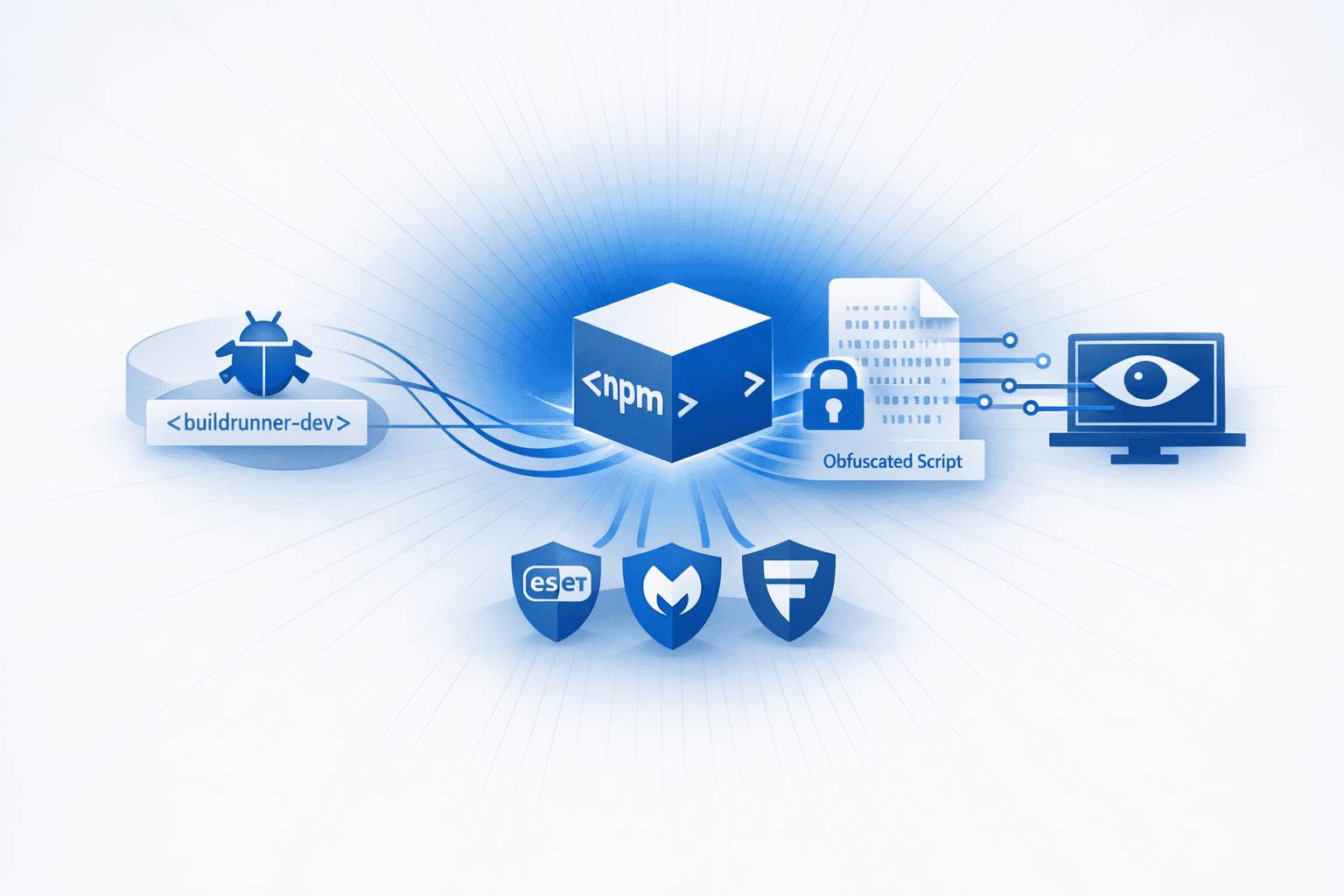
Threat researchers reported an **npm supply-chain attack** in which a typosquatted package (`buildrunner-dev`) delivered **Pulsar RAT** via a multi-stage Windows infection chain. The package executed a script that fetched a large, heavily obfuscated batch file (`packageloader.bat`) containing mostly “noise” to evade static detection, performed security-product checks (including **ESET**, **Malwarebytes**, and **F-Secure**), established persistence by copying itself as `protect.bat` into a hidden folder, and attempted privilege escalation/UAC bypass using `fodhelper.exe`. Separate supply-chain reporting highlighted how package-name deception is evolving beyond human typos into **“slopsquatting”** (AI/hallucination squatting), where attackers register package names that LLMs commonly invent and then rely on developers installing them on AI recommendation. Documented tradecraft includes malicious `postinstall` scripts to exfiltrate secrets from developer environments (API keys, cloud tokens, npm auth tokens) and the use of URL-based dependencies to fetch external payloads at install time, allowing the published package to appear benign to naive scanners.
Jun 29, 2026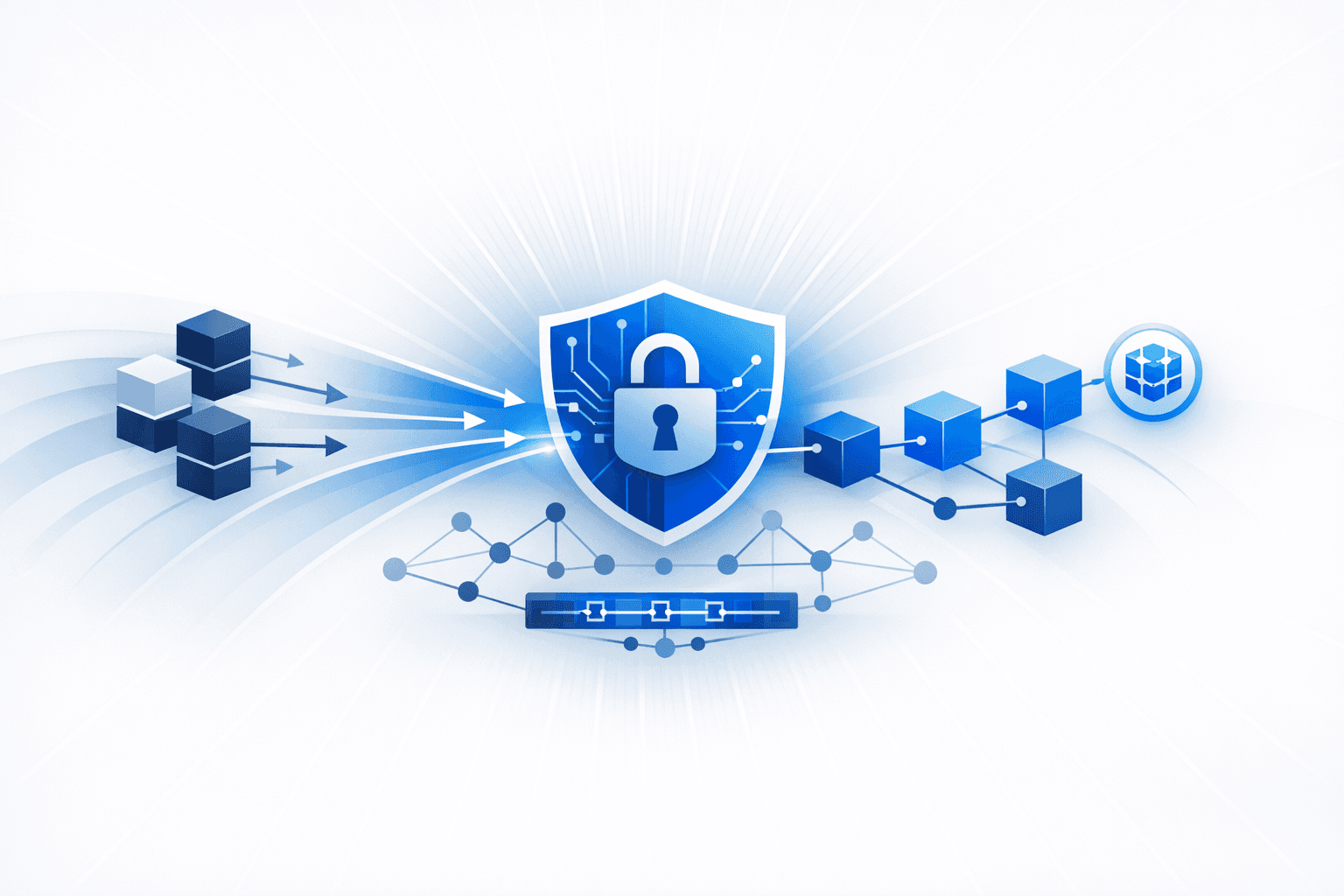
Researchers reported a broad software supply chain campaign targeting developers and cryptocurrency users through hijacked packages, browser extensions, and compromised maintainer accounts across ecosystems including **npm**, **Go**, **Chrome**, and **Packagist**. Socket linked the activity to North Korean actors associated with the **Contagious Interview** operation and identified 108 malicious packages and extensions spanning 162 release artifacts, while JFrog separately analyzed hijacked npm packages `html-to-gutenberg` `4.2.11` and `fetch-page-assets` `1.2.9` that were uploaded with malicious code. The activity appears to rely on account hijacking rather than compromise of GitHub itself, and some attacker infrastructure reportedly remains active even after certain packages were removed. The malware chain used unusual delivery and evasion techniques aimed at developer workstations, including a **VS Code folder-open task** instead of standard npm lifecycle scripts, JavaScript hidden in a fake font file, and encrypted payload retrieval from blockchain transaction data on **TRON**, **Aptos**, and **BNB Smart Chain**. Researchers said the campaign deployed components including **BeaverTail**, **DEV#POPPER RAT**, **OmniStealer**, a `socket.io` backdoor, and a Python infostealer to steal browser credentials, password-manager contents, cryptocurrency wallet data, developer secrets, and operating system credential-store material across **Windows**, **macOS**, and **Linux**. Security firms warned that affected developer systems and credentials should be treated as fully compromised.
Aug 3, 2026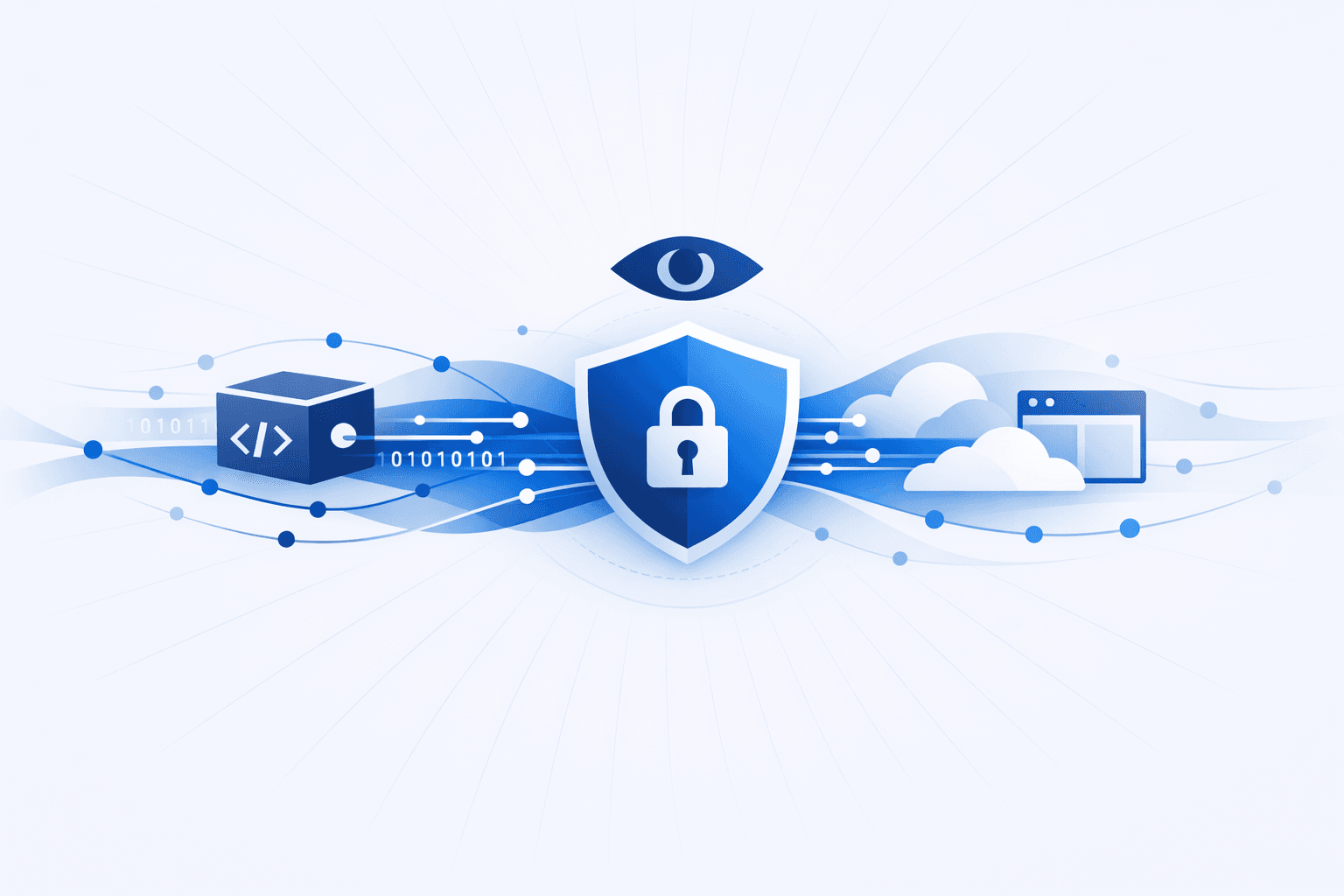
Security researchers have uncovered multiple campaigns involving malicious npm packages designed to steal developer credentials and sensitive information from Windows, macOS, and Linux systems. In one operation, ten typosquatted packages impersonated popular libraries such as TypeScript, discord.js, ethers.js, and others, using sophisticated obfuscation, fake CAPTCHA prompts, and postinstall hooks to deploy an information stealer that harvested credentials from system keyrings, browsers, and authentication services. The malware executed in a new terminal window to evade detection and sent stolen data, including IP addresses, to external servers. Another large-scale campaign, dubbed 'PhantomRaven,' involved 126 npm packages and over 86,000 downloads, targeting authentication tokens, CI/CD secrets, and GitHub credentials. These packages leveraged remote dynamic dependencies to fetch and execute payloads during installation, profiling infected devices and exfiltrating secrets for potential supply chain attacks. The attackers employed techniques such as slopsquatting, where AI-generated package recommendations led developers to install non-existent, malicious packages. Some packages impersonated tools from GitLab and Apache, and many remained available on npm at the time of reporting. The campaigns highlight the ongoing risks in the npm ecosystem, with attackers exploiting both user trust and platform weaknesses to compromise developer environments and CI/CD pipelines. Security experts warn that the theft of tokens and credentials could enable further attacks, including the introduction of malicious code into legitimate projects and broader supply chain compromises.
Jun 29, 2026