
Loading story…
OpenAI disclosed GPT-Red, an internal automated red-teaming model trained with self-play reinforcement learning to find prompt injection weaknesses in other GPT systems. The company said GPT-Red outperformed human red-teamers in a replicated indirect prompt injection benchmark, succeeding in 84% of out-of-training-set scenarios against GPT-5.1 compared with 13% for humans, and reported that the system succeeds against nearly every model it is tested on, including GPT-5.5.
In case studies, GPT-Red manipulated an AI-powered vending machine by changing prices, ordering an expensive item for $0.50, and canceling another customer’s order, and it also beat a prompted GPT-5.5 baseline in data-exfiltration tests against a Codex CLI agent backed by GPT-5.4 mini. OpenAI said attacks generated by GPT-Red were used to adversarially train GPT-5.6 Sol, reducing failures on its hardest direct prompt injection benchmark by 6x and cutting the failure rate against GPT-Red’s own direct prompt injections to 0.05%, while keeping GPT-Red separate from deployed models to avoid exposing its offensive capabilities.

Track how attackers are adapting to this technology.
7 events from the most recent confirmed update back to the earliest known activity.
In an Aug. 3 update to the GPT-5.6 system card, OpenAI added prompt-injection evaluation results showing GPT-5.6 Sol failed on about 0.05% of direct GPT-Red attacks, while indirect attack success rates averaged 3.77% for Sol, 3.32% for Terra, and 2.94% for Luna. The update highlighted that prompt injection delivered through agent-accessed external content remains a meaningful risk despite improved direct-attack resistance.
OpenAI said GPT-Red discovered a novel direct prompt injection method called Fake Chain-of-Thought attacks. The company reported the technique succeeded on more than 95% of tests against GPT-5.1 but dropped to under 10% on GPT-5.6 Sol after mitigation.
OpenAI said GPT-Red outperformed a prompted GPT-5.5 baseline in data-exfiltration scenarios against a Codex CLI agent backed by GPT-5.4 mini. The company presented this as another real-world test of GPT-Red's offensive capability.
OpenAI reported that GPT-Red successfully exploited an AI-powered vending machine agent built by Andon Labs. According to the case study, it altered prices, ordered a new expensive item for $0.50, and canceled another customer's order.
OpenAI said GPT-Red outperformed human red-teamers in a replicated indirect prompt injection benchmark, succeeding on 84% of scenarios versus 13% for humans. The benchmark was described as using out-of-training-set scenarios against GPT-5.1.
OpenAI reported that GPT-Red was used in adversarial training for GPT-5.6, leading to major prompt-injection robustness gains. Reported results included 6x fewer failures on a hardest direct prompt injection benchmark and a 0.05% failure rate against GPT-Red's own direct prompt injections.
OpenAI disclosed GPT-Red, an internal automated red-teaming model trained with self-play reinforcement learning to discover prompt injection vulnerabilities in other GPT models. The company said GPT-Red is kept separate from deployed models while its generated attacks are used to harden production systems.
Vulnerabilities, threat actors, malware, products, organizations, and breaches Mallory has linked to this story.
Follow how adversaries are adapting to this technology, and where it touches your stack today.
9 references tracked. Mallory keeps watching after this page renders.
techrepublic.com
Open sourcescworld.com
Open sourcethenewstack.io
Open sourcecybersecuritynews.com
Open sourcethehackernews.com
Open sourcehelpnetsecurity.com
Open sourceopenai.com
Open sourceopenai.com
Open sourceopenai.com
Open sourceMap indicators from this story to your assets and identify affected systems in minutes.
Every observed campaign, victim, and pivot linked to actors named in this story.
Malware, exploits, and IOCs connected to the activity described here.
YARA, Sigma, and Snort rules deployed to your SIEM as soon as they’re published.
Get matching new stories delivered to your team as they break — not the next morning.
Ask questions about this story and take action on the answers.
Other stories Mallory is tracking that overlap on entities, sources, or topic labels.
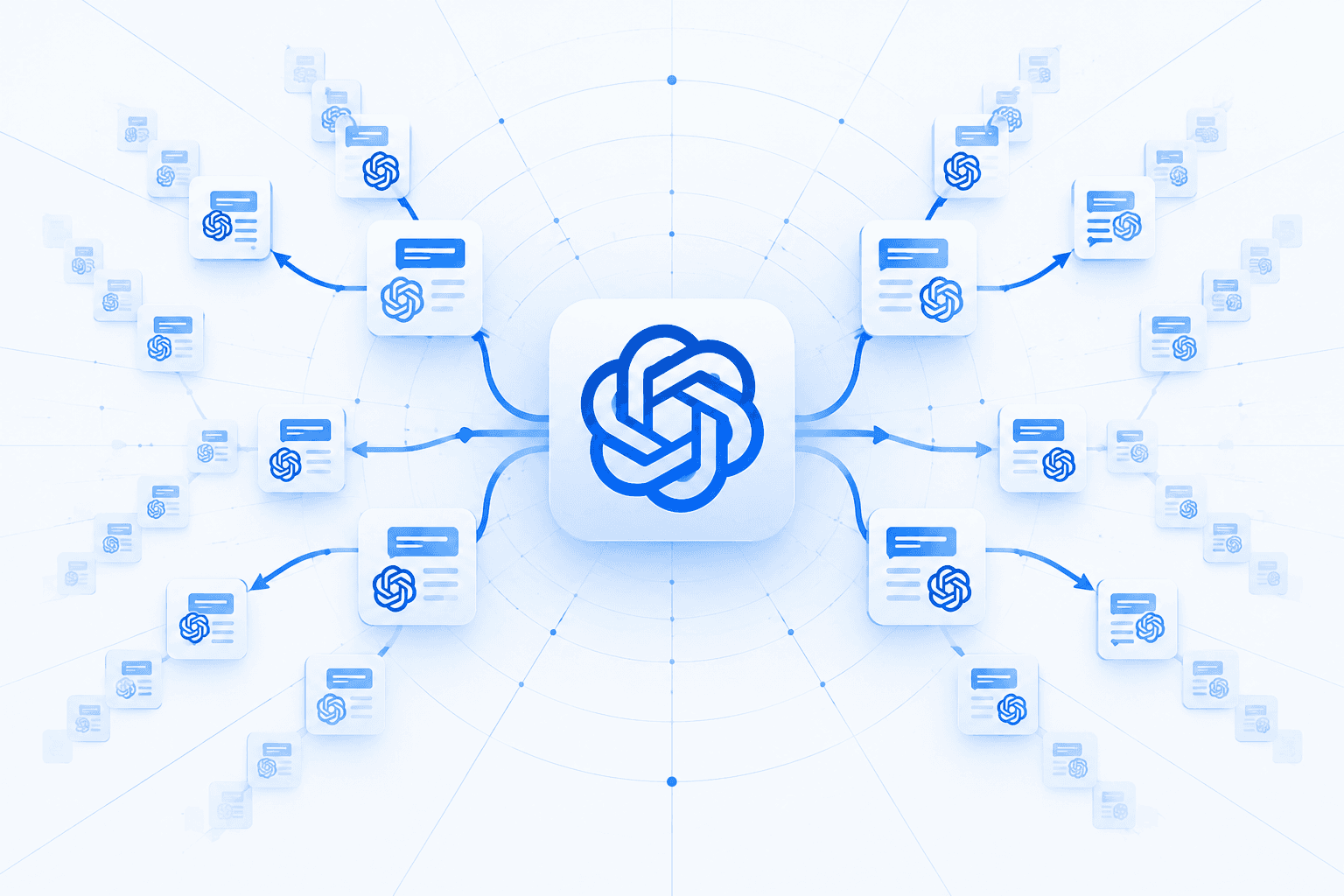
OpenAI disclosed a prompt-injection technique in which malicious instructions can self-replicate through AI-agent workflows, analogous to computer worms. The attack aims both to make a model perform an unauthorized action and to cause it to copy the malicious prompt into a public or externally accessible output channel, including outbound email, files, code comments, or reposted messages, where it can reach additional agents or users. OpenAI demonstrated email- and filesystem-based propagation with internal `GPT-5.4-mini` research checkpoints, plus a multi-hop scenario involving `GPT-5.5` in a Codex harness with Slack-connected actions. The company said all demonstrations used simulated tool calls in training and evaluation environments, with no observed external impact or real-world incident. It has added self-reproduction objectives to GPT-Red adversarial training to strengthen future models against this attack class.
Sep 29, 2026
OpenAI has implemented an automated attacker system to proactively test and strengthen the security of ChatGPT Atlas, its agentic web browser, against prompt injection attacks. These attacks involve embedding malicious instructions into content that the AI agent processes, potentially causing it to act against the user's interests. The company acknowledges that the very features making agentic browsers powerful also introduce persistent vulnerabilities, and that complete protection from prompt injection is unlikely. OpenAI's approach leverages AI-driven red teaming to rapidly identify and address new attack vectors, aiming to stay ahead of evolving threats. A recent security update to Atlas was prompted by the internal discovery of a new class of prompt injection attacks using this automated red-teaming system. The attack surface for browser agents is broad, as they can interact with untrusted content from emails, documents, social media, and web pages, increasing the risk of harmful actions such as forwarding sensitive information or altering cloud files. OpenAI emphasizes that defending against prompt injection will be a continuous effort, likening it to an arms race similar to combating online scams, and stresses the importance of a rapid response loop to reduce real-world risks over time.
Jun 29, 2026
OpenAI has released GPT-5.2-Codex, a new AI model designed to enhance agentic coding and cybersecurity tasks, with notable improvements in vulnerability detection and software engineering workflows. The model demonstrates superior performance on benchmarks such as SWE-Bench Pro and Terminal-Bench 2.0, and excels in professional Capture-the-Flag challenges, supporting advanced tasks like fuzzing, attack surface analysis, and test environment setup. OpenAI has implemented stronger safeguards to mitigate dual-use risks and is offering the model to paid ChatGPT Codex users, with an invite-only pilot for vetted cybersecurity professionals focused on defensive applications. The model's capabilities have already contributed to the discovery of several critical vulnerabilities in React Server Components, including CVE-2025-55182 (RCE), CVE-2025-55183 (source code exposure), and CVE-2025-67779 (DoS), prompting urgent patching recommendations. Industry research highlights both the promise and risks of AI-generated code, with studies showing that machine-written pull requests contain significantly more bugs and security vulnerabilities than those authored solely by humans. Issues such as improper password handling, insecure object references, and cross-site scripting are notably more prevalent in AI-generated code, raising concerns about the security implications of rapid AI-driven development. These findings underscore the importance of robust review processes and the need for continued vigilance as AI tools become more deeply integrated into software engineering and cybersecurity operations.
Jun 29, 2026