
Loading story…
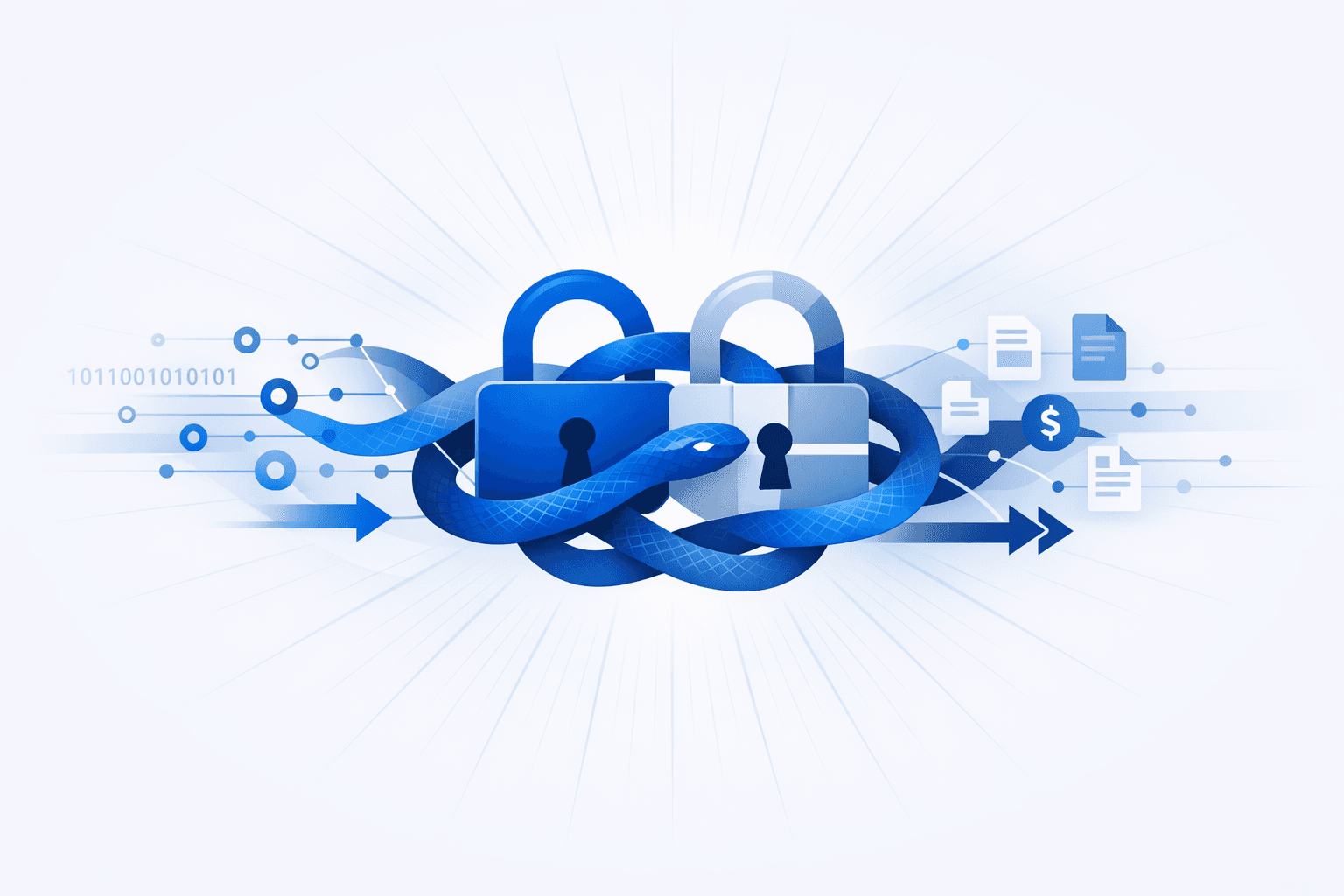
MedusaLocker has continued to evolve from its 2019 origins into a mature ransomware operation that targets enterprise networks through exposed or weakly secured RDP, stolen or brute-forced credentials, phishing, spam, and vulnerable VPN or edge devices. U.S. government reporting has described the threat as a ransomware-as-a-service model in which affiliates conduct intrusions and share proceeds with developers, while multiple technical profiles show the malware encrypting local disks, mapped drives, accessible SMB shares, and broader network resources after gaining a foothold. Later variants, including MedusaLocker v3 or BabyLockerKZ, also steal data to support double extortion and focus on maximizing damage inside victim environments rather than relying on external command-and-control traffic.
Across variants, MedusaLocker uses AES-256 encryption with RSA-2048 key protection, deletes shadow copies and backups to hinder recovery, and establishes persistence through scheduled tasks, roaming-profile executables, and registry-based mechanisms such as HKCU\SOFTWARE\PAIDMEMES or HKEY_CURRENT_USER\SOFTWARE\MDSLK\Self. Researchers and government agencies report additional behaviors including PowerShell execution, safe-mode reboots to impair defenses, UAC bypass, process termination to unlock files, ICMP network sweeping, CIDR-aware share discovery, hidden-volume mounting, and self-relaunch with a -network argument to widen encryption. The malware has used changing file extensions such as .meduza216 and varying ransom note names including How_to_back_files.html, HOW_TO_RECOVER_DATA, and related templates, with victims reported across healthcare, finance, government, and manufacturing.
TTPs, infrastructure, and targeting history in one profile.
15 events from the most recent confirmed update back to the earliest known activity.
Howler Cell published an analysis of MedusaLocker v3, also called BabyLockerKZ, describing a newer variant with embedded XOR-decrypted configuration, registry-based persistence, subnet parsing, and expanded network encryption behavior.
Cyble reported that MedusaLocker had targeted 24 victims worldwide since January 2023, with the United States the most affected country and healthcare, education, and government among the targeted sectors. The report also analyzed a variant appending the .itlock4 extension and described its privilege escalation, persistence, backup deletion, and network/SMB enumeration behavior.
The FBI, CISA, the U.S. Department of the Treasury, and FinCEN issued a joint advisory describing MedusaLocker as a likely ransomware-as-a-service operation and detailing its tactics, techniques, and indicators of compromise.
The joint U.S. government advisory stated that MedusaLocker actors had been observed as recently as May 2022.
Cisco Talos published a threat spotlight on MedusaLocker describing its network-aware encryption behavior, persistence via scheduled tasks, shadow copy deletion, and released Snort SIDs 53662 through 53665 for detection.
BleepingComputer published an early technical write-up on MedusaLocker describing its persistence via svchostt.exe and a scheduled task, shadow copy and backup deletion, mapped-drive access, and AES-plus-RSA encryption. The report also documented multiple extensions including .encrypted, .bomber, .boroff, .breakingbad, .locker16, .newlock, .nlocker, and .skynet, along with ransom notes HOW_TO_RECOVER_DATA.html or Readme.html using the contact emails sambolero@tutanoa.com and rightcheck@cock.li.
A MedusaLocker variant from the 12 June 2020 timeframe used the .EG extension, demanded 1 BTC, and included the Bitcoin address 1BkmiGWPLum8MzusqZsq6Tn7v4oUjqPLjC.
A separate MedusaLocker variant documented on 25 December 2019 used the .ReadInstructions extension and added a message claiming the victim network had been penetrated and confidential data stolen.
A MedusaLocker variant documented on 25 December 2019 used the .READINSTRUCTIONS extension and dropped the ransom note RECOVER_INSTRUCTIONS.html.
Variants documented in November 2019 used the .ReadTheInstructions extension and the ransom note INSTRUCTIONS.html.
Variants documented in late October 2019 used the .decrypme extension and dropped the ransom note HOW_TO_OPEN_FILES.html.
A MedusaLocker variant documented on 22 October 2019 used the .encrypted extension and the contact emails crypt2020@outlook.com and cryptt2020@protonmail.com.
A cited MedusaLocker sample carried a file creation timestamp of 5 October 2019, providing an explicit anchor for early malware development or packaging.
MedusaLocker activity became notable in early October 2019 as the ransomware family began drawing broader attention from researchers.
The earliest MedusaLocker samples referenced in the sources were detected in late September 2019, marking the beginning of observed activity for the ransomware family.
Vulnerabilities, threat actors, malware, products, organizations, breaches, and observables Mallory has linked to this story. Indicator values are masked here and available in full in the app.
Indicator values are masked on this page. View all 290 in Mallory Domains, IPs, hashes, and URLs are exportable to your SIEM.
See this adversary's TTPs, infrastructure, and targeting history, correlated against your exposure.
6 references tracked. Mallory keeps watching after this page renders.
cyderes.com
Open sourceblog.cyble.com
Open sourcecisa.gov
Open sourceblog.talosintelligence.com
Open sourcebleepingcomputer.com
Open sourceid-ransomware.blogspot.com
Open sourceMap indicators from this story to your assets and identify affected systems in minutes.
Every observed campaign, victim, and pivot linked to actors named in this story.
Malware, exploits, and IOCs connected to the activity described here.
YARA, Sigma, and Snort rules deployed to your SIEM as soon as they’re published.
Get matching new stories delivered to your team as they break — not the next morning.
Ask questions about this story and take action on the answers.
Other stories Mallory is tracking that overlap on entities, sources, or topic labels.
Mount Locker emerged as a corporate-targeting ransomware operation that stole data before encrypting files and then demanded multi-million dollar payments while threatening to leak stolen information on a Tor-hosted extortion site. Reporting on early victims said the group had already listed multiple organizations on its leak portal and published at least one victim’s files after nonpayment. The malware used **ChaCha20** for file encryption and an embedded **`RSA-2048`** public key to protect encryption material, dropped a ransom note named **`RecoveryManual.html`**, and appended a **`.ReadManual.ID`**-style extension to encrypted files. Reverse-engineering of Mount Locker samples and later variants showed the ransomware also included operational features for enterprise-wide impact, including command-line options for targeting hosts, suppressing logs, avoiding process termination controls, and encrypting network resources. Analysts reported that newer builds added worm-like lateral movement by enumerating domain or network systems, requiring **`/LOGIN=`** and **`/PASSWORD=`** parameters for propagation, copying itself to remote machines, creating services named in an **`Update{GetTickCount()}`** pattern, and in some cases launching remotely through **WMI** under **`ROOT\CIMV2`**. The malware was also described as killing selected services and processes before encryption to maximize disruption.
Aug 15, 2026
CISA, the FBI, and HHS issued an updated joint advisory warning that **Medusa ransomware** operators have compromised more than **500 organizations** as of April 2026, with heavy targeting of **critical infrastructure** and especially **healthcare and public health** entities. The agencies said the group evolved from a closed operation into a **ransomware-as-a-service** model in 2023, using double extortion by stealing data before encrypting systems. Officials said Medusa actors can exploit newly disclosed vulnerabilities within 24 hours, and in some cases were observed abusing flaws up to a week before public disclosure. The advisory said Medusa gains access through **initial access brokers**, reportedly offering up to **$1 million** for exclusive access, and has exploited vulnerabilities including `CVE-2024-1709`, `CVE-2023-48788`, GoAnywhere MFT flaws, and `CVE-2026-1731`. Once inside, operators use living-off-the-land techniques, credential dumping, stolen or vulnerable drivers, and legitimate remote monitoring and management tools to disable security controls, move laterally, steal sensitive data, and encrypt networks. Authorities also described aggressive extortion tactics such as rapid-payment discounts and paid deadline extensions, while urging organizations to patch quickly, segment networks, enforce phishing-resistant MFA, maintain offline immutable backups, and monitor for unauthorized RMM activity.
Aug 20, 2026
**LockerGoga** hit large organizations across the United States and Europe, including reported victims such as Norsk Hydro, Altran, Hexion, and MPM Holdings, while the FBI later warned that the threat overlapped with **MegaCortex** in targeting enterprise networks. Investigators said the operators typically gained initial access through exploits, phishing, SQL injection, and stolen credentials, then spent weeks or months moving laterally with tools such as **Cobalt Strike** before encrypting systems. The malware appended the `.LOCKED` extension, dropped ransom notes such as `README_LOCKED.txt`, and in some cases was signed with a revoked **Sectigo** certificate issued to **ALISA LTD**, likely to reduce detection. Researchers said LockerGoga blurred the line between ransomware and a wiper because later variants forcibly logged users off Windows systems, blocked them from logging back in, disabled network interfaces, changed local passwords, and could even clear Windows Event Logs and encrypt files in the Recycle Bin. Reporting indicated the malware did not appear to self-propagate, but once attackers had domain access they could disable security tools and deploy it broadly across compromised environments. The FBI urged organizations to maintain offline backups, patch exposed systems, enforce strong passwords and **MFA**, disable `SMBv1`, audit remote access and account creation, monitor **Active Directory** changes, and enable **PowerShell** logging to detect similar intrusions earlier.
Aug 15, 2026