
Loading story…
IcedID operators continued to adapt email-borne delivery chains by abusing hijacked conversation threads, compromised Microsoft Exchange accounts, and password-protected archives to make phishing messages appear legitimate. Across multiple campaigns, victims received PDFs, Word documents, or links to cloud-hosted payloads on Google Firebase or Google Cloud Storage, which led to ZIP archives containing ISO images, malicious LNK files, DLL loaders, or signed executables. Researchers tied parts of this activity to TA551/Shathak and reported targeting of organizations in the energy, healthcare, legal, and pharmaceutical sectors, with unpatched public Exchange servers and ProxyShell cited as a likely initial access path in some cases.

Get the infrastructure and lures behind it.
21 events from the most recent confirmed update back to the earliest known activity.
The April 11, 2023 IcedID installer downloaded a gzip payload, created persistence via a scheduled task, and stored a DLL plus license.dat under AppData. The infected host then communicated with IcedID command-and-control domains villageskaier[.]com and deadwinston[.]com over HTTPS.
On April 11, 2023, researchers observed an IcedID infection chain delivered through thread-hijacked emails with a PDF attachment. The PDF linked to a redirector that led to a Firebase-hosted password-protected ZIP containing a digitally signed EXE installer.
The August 11, 2022 TA551 IcedID infection was followed by DarkVNC and Cobalt Strike activity. The report identified related network communications for both post-compromise tools, though no binaries were saved to disk on the analyzed host.
On August 11, 2022, Monster Libra/TA551/Shathak distributed IcedID through malicious Word documents requiring macros. The infection chain downloaded an installer DLL and a gzip payload that created persistent IcedID components.
In 2022-03, Fortinet reported a spearphishing campaign targeting a fuel company in Kyiv, Ukraine, with a spoofed invoice email carrying a ZIP archive that unpacked an ISO containing an LNK and malicious DLL. The LNK launched regsvr32 to execute main.dll, which installed IcedID, performed host and domain reconnaissance, contacted multiple C2 servers, and established persistence as Arur.exe in the temp directory.
During analysis of the March 2022 campaign, researchers found many originating Exchange servers appeared unpatched and publicly exposed. They assessed ProxyShell as a plausible vector used to compromise those servers and send the phishing emails.
In mid-March 2022, Intezer observed a phishing campaign delivering IcedID through hijacked email conversations sent from compromised Microsoft Exchange accounts. The campaign used password-protected ZIP archives containing ISO files with an LNK and DLL, and beaconed to yourgroceries[.]top.
In January 2022, attackers sent a stolen email conversation using a different FROM address pattern as part of an IcedID phishing operation. Intezer later linked this to the same broader conversation-hijacking activity.
Beginning around October 20, 2020, TA551 changed the URL structures generated by its malicious macros. The report notes this as part of the campaign's evolving delivery tradecraft.
Starting July 14, 2020, observed TA551 waves delivered only IcedID as the primary payload. Unit 42 also characterized the broader shift as occurring after mid-July 2020.
A GitHub repository began tracking TA551 attack waves starting July 6, 2020. The repository recorded daily waves with hashes, filenames, and URLs.
On April 28, 2020, TA551 conducted an English-language campaign delivering Valak. This reflected the group's continued use of malspam to distribute different malware families before later shifting to IcedID.
On March 26, 2020, TA551 targeted a German-speaking recipient and delivered ZLoader instead of Ursnif. The macro retrieved a ZLoader DLL from a remote URL.
On December 19, 2019, a host infected with Ursnif through TA551 was also infected with IcedID and Valak as follow-on malware. This showed TA551-associated activity leading to multi-malware compromise.
On December 17, 2019, TA551 targeted a Japanese-speaking recipient with Ursnif malspam. The macro-based lure downloaded an EXE from attacker-controlled infrastructure.
On October 30, 2019, TA551 ran a German-language malspam wave delivering Ursnif. The infection chain again relied on a macro-enabled Word document that fetched an EXE installer.
On April 2, 2019, TA551 delivered Ursnif to an Italian-speaking target via a macro-enabled Word document. The document's macro retrieved an EXE payload from attacker infrastructure.
On February 4, 2019, TA551 sent an English-targeted malspam campaign delivering Ursnif using a macro-enabled Word document. The macro downloaded an EXE installer from a remote URL.
The references state that IBM X-Force originally reported or discovered IcedID as a banking trojan. It was initially described as targeting banks and other financial or commerce-related organizations.
Recent lab execution of IcedID samples showed BackConnect traffic to 45.61.137[.]159 and 193.149.176[.]100 over TCP port 443. The report states this was a new port for IcedID BackConnect traffic, which had previously used TCP port 8080.
Researchers observed a new IcedID phishing campaign that abused Google Cloud Storage and Google Firebase links to deliver a ZIP archive containing an ISO payload. The infection chain used cmd.exe, isoburn.exe, and regsvr32.exe, and the infected host contacted command-and-control domains including bredofenction[.]com.
Vulnerabilities, threat actors, malware, products, organizations, breaches, and observables Mallory has linked to this story. Indicator values are masked here and available in full in the app.
Indicator values are masked on this page. View all 101 in Mallory Domains, IPs, hashes, and URLs are exportable to your SIEM.
Get the infrastructure, lures, and IOCs behind this campaign, ready to push into your email and identity stack.
10 references tracked. Mallory keeps watching after this page renders.
intezer.com
Open sourcedshield.org
Open sourceisc.sans.edu
Open sourceisc.sans.edu
Open sourcefortinet.com
Open sourcesplunk.com
Open sourceunit42.paloaltonetworks.com
Open sourcesecurityintelligence.com
Open sourceMap indicators from this story to your assets and identify affected systems in minutes.
Every observed campaign, victim, and pivot linked to actors named in this story.
Malware, exploits, and IOCs connected to the activity described here.
YARA, Sigma, and Snort rules deployed to your SIEM as soon as they’re published.
Get matching new stories delivered to your team as they break — not the next morning.
Ask questions about this story and take action on the answers.
Other stories Mallory is tracking that overlap on entities, sources, or topic labels.
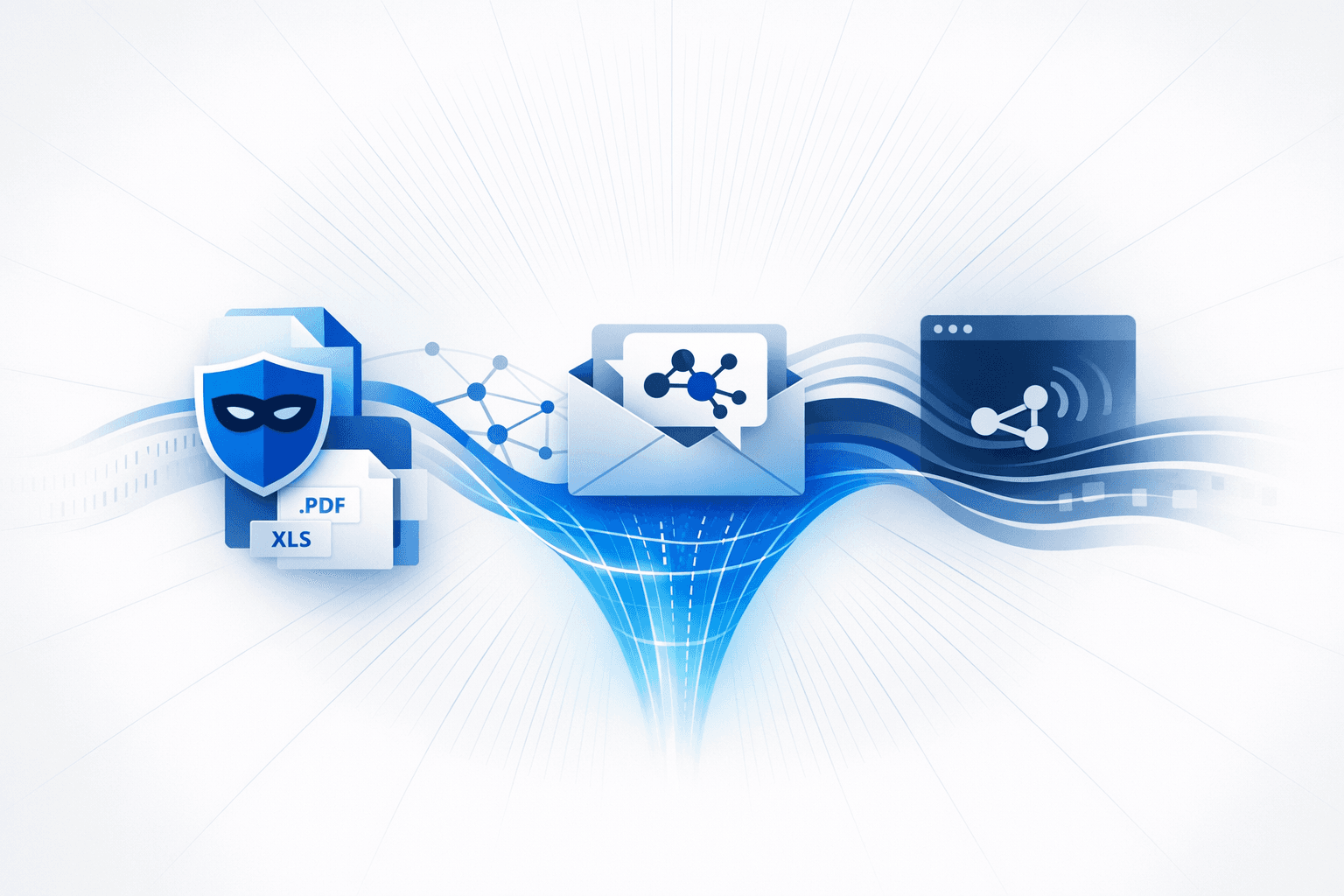
Researchers and incident responders detailed multiple **IcedID** intrusion chains that used phishing, hijacked email threads, contact-form abuse, and compromised mail infrastructure to deliver the malware through deceptive attachments and loaders. Campaigns sent password-protected ZIPs, ISO and LNK chains, macro-enabled Office files, and JavaScript or HTA downloaders, while also abusing legitimate services such as Google Sites and trusted email conversations. Several delivery paths relied on **masquerading** techniques, including DLLs disguised as `.jpg` files, fake GZip wrappers, and steganographic payloads hidden in PNG images, with follow-on execution through tools and binaries such as `mshta.exe`, `rundll32`, `regsvr32.exe`, WScript, and PowerShell. Once executed, IcedID unpacked encrypted configurations and payloads, injected into legitimate processes, established persistence with scheduled tasks, and contacted command-and-control infrastructure including URI paths such as `/news/`. Technical analyses showed the malware using custom encryption, custom PE formats, RC4-decrypted PNG loaders, anti-analysis checks, and browser-hook or secondary payload components, while incident reporting tied infections to rapid post-compromise activity including **Cobalt Strike** deployment, credential theft from LSASS, Active Directory reconnaissance, SMB and RDP lateral movement, and use as an access broker for ransomware or espionage operations, including attacks against Ukrainian government entities.
Aug 15, 2026
Researchers and security organizations reported that **IcedID** campaigns used phishing emails with invoice-themed lures, compromised business email accounts, and malicious Microsoft Office attachments to infect victims. One campaign sent password-protected ZIP files containing Word documents with heavily obfuscated macros, while another relied on Excel `xls` and `xlsm` files using **Excel 4.0 macros**. In both cases, victims were prompted to enable macros, allowing the documents to retrieve second-stage malware from compromised or attacker-controlled infrastructure.
Aug 15, 2026
Researchers reported that **IcedID** (also known as **BokBot**) continued to evolve from a banking trojan into a multi-stage malware platform widely used to establish initial access for ransomware intrusions. Across observed campaigns, phishing emails delivered password-protected ZIP archives, malicious Word or Excel documents, or zipped JavaScript files that launched HTA scripts and DLL loaders through tools such as `rundll32`, `regsvr32`, and `mshta.exe`. Analysts documented several loader techniques, including disguised DLLs saved with `.jpg` extensions, registry-stored configuration data derived from victim-specific bot IDs, and even PNG steganography used to hide encrypted shellcode. Later reporting also described PhotoLoader and GzipLoader variants, including a newer GzipLoader build that added dynamic API resolution and XOR-based stacked-string encryption while dropping earlier SSL-pinning behavior, changes that risked breaking older pattern-based detections. Incident responders and threat researchers linked IcedID infections to financially motivated intrusion clusters that rapidly escalated to **MAZE** and later **EGREGOR** ransomware. Mandiant said UNC2198 repeatedly leveraged access originating from the MOUSEISLAND → PHOTOLOADER → ICEDID chain, then deployed tooling including **SYSTEMBC**, **WINDARC**, **Cobalt Strike BEACON**, **METERPRETER**, **KOADIC**, and **PowerShell EMPIRE** for discovery, lateral movement, and privilege escalation, including observed abuse of `CVE-2020-0787`. In multiple cases, attackers used **BloodHound**, moved laterally over WinRM and RDP, exfiltrated data with **RCLONE**, and encrypted victim environments within days. Defenders published YARA rules, unpacking workflows using **Qiling**, registry- and network-based hunting methods, and configuration extractors to recover domains, campaign IDs, and other indicators from packed IcedID samples.
Aug 15, 2026