Mallory
← Back to News
remote-access-implantphishing-campaign-intelligenceloader-delivery-mechanismstate-sponsored-espionage

Phishing Campaigns Used ISO Attachments and Cloud Infrastructure to Spread RATs

Malware Intelligence · 4 sources · Updated 3mo ago · First seen Oct 26, 2021
Phishing Campaigns Used ISO Attachments and Cloud Infrastructure to Spread RATs

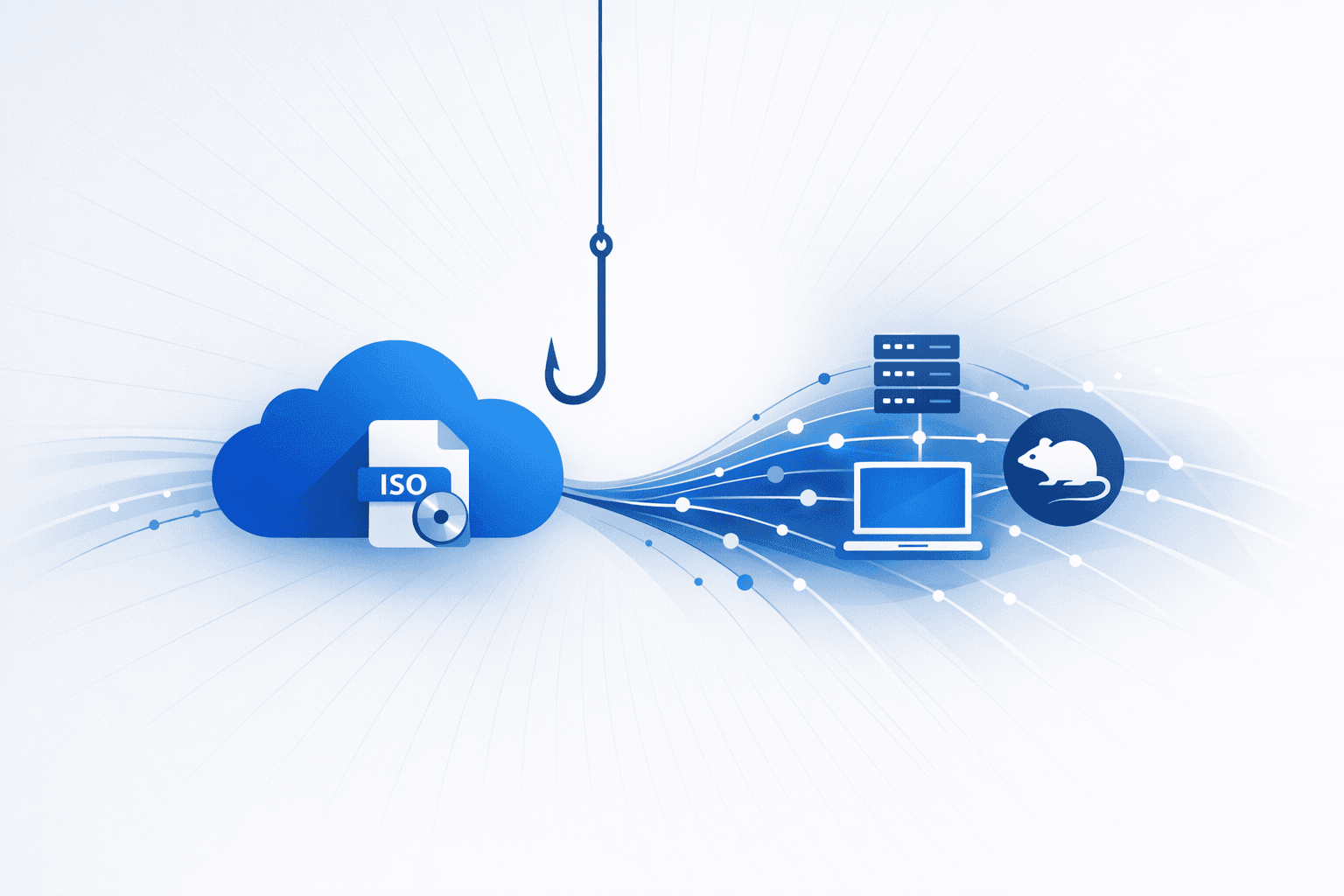
Multiple malware campaigns delivered remote access trojans including NanoCore, NetWire, AsyncRAT, Quasar RAT, and PlugX through phishing lures and staged payloads behind legitimate-looking files. Cisco Talos reported a campaign that used malicious ZIP archives containing ISO images and heavily obfuscated JavaScript, batch, or VBScript loaders to fetch additional malware from Microsoft Azure and Amazon Web Services, while DuckDNS domains supported delivery and command-and-control. Fortinet separately documented travel-themed lures such as itinerary and booking files that pushed AsyncRAT and NetWire, often requiring victims to manually launch executables hidden inside ZIP or ISO containers; the use of ISO files helped bypass Mark-of-the-Web protections and reduced security scrutiny.

Fortinet also linked a separate espionage operation attributed to APT10 to DLL side-loading with the legitimate Java component jjs.exe, loading a malicious jli.dll, decrypting svchost.bin, and injecting shellcode into svchost.exe to deploy PlugX and a modified Quasar RAT. That activity used persistence via a service or a Run key named "Windows Updata", and relied on typosquatted infrastructure such as update.microsofts.org, update.kaspresksy.com, and cahe.microsofts.org. CISA has also tracked Quasar as an open-source remote administration tool, underscoring how both commodity and state-linked actors continue to rely on RAT malware, cloud-hosted staging, dynamic DNS, and deceptive attachment formats to gain and maintain access.

Hunt this familyPull IOCs and campaign context straight into your stack.
Get the IOCs
Event timeline

How this story unfolded

Events from the most recent confirmed update back to the earliest known activity.

7 events · Apr 2019 – May 2022
  1. May 2022

    Reservation-themed phishing targeted Colombian military organization

    Fortinet described a spearphishing attack against a military organization in Colombia using the subject line “Solicitud de Reserva para Mayo 2022” and an ISO attachment named RESERVA.ISO. When mounted and executed, the attachment delivered Quasar RAT communicating with opensea-user-reward[.]serveusers[.]com.

    Threat Actors Prey on Eager Travelers | FortiGuard Labs
  2. Feb 2022

    Travel-themed AsyncRAT sample observed

    FortiGuard Labs observed another travel-themed AsyncRAT sample named Booking details.exe in early February 2022. The sample was part of a broader campaign using travel lures and connected to znets[.]ddns[.]net and dnets[.]ddns[.]net.

    Threat Actors Prey on Eager Travelers | FortiGuard Labs
  3. Oct 26, 20215y ago

    Cisco Umbrella classified campaign DuckDNS domains as malicious

    Cisco reported that Cisco Umbrella classified the malicious DuckDNS domains used in the NanoCore, NetWire, and AsyncRAT campaign as malicious on Oct. 26, 2021. The domains supported payload delivery and command-and-control.

    Nanocore, Netwire and AsyncRAT spreading campaign uses public cloud infrastructure
  4. Oct 26, 20215y ago

    NanoCore sample built in observed campaign

    Cisco Talos said NanoCore samples in the campaign used leaked version 1.2.2.0 and included a build date of Oct. 26, 2021. Talos also observed DuckDNS-based NanoCore command-and-control domains associated with the activity.

    Nanocore, Netwire and AsyncRAT spreading campaign uses public cloud infrastructure
  5. Oct 2021

    Cisco Talos first observed RAT campaign abusing cloud infrastructure

    Cisco Talos discovered a phishing campaign around October 2021 delivering NanoCore, NetWire, and AsyncRAT through malicious ZIP attachments containing ISO images and script loaders. The campaign used Azure, AWS, and DuckDNS infrastructure to host payloads and command-and-control services.

    Nanocore, Netwire and AsyncRAT spreading campaign uses public cloud infrastructure
  6. May 2021

    NetWire C2 domain seen in use

    Fortinet stated that the domain kingshakes1[.]linkpc[.]net appears to have been used by NetWire RAT since at least May 2021. In the travel-themed campaign, a JavaScript-delivered NetWire sample connected to this domain for command and control.

    Threat Actors Prey on Eager Travelers | FortiGuard Labs
  7. Apr 2019

    APT10 activity observed in Southeast Asia

    FortiGuard Labs reported suspected new activity by APT10 in April 2019 in Southeast Asia, with analyzed samples originating from the Philippines. The campaign used DLL side-loading via jjs.exe and malicious jli.dll to load and inject malware payloads.

    Uncovering New Activity By APT10 | FortiGuard Labs
Linked entities

Related entities

Vulnerabilities, threat actors, malware, products, organizations, breaches, and observables Mallory has linked to this story. Indicator values are masked here and available in full in the app.

Open in app →

Threat actors

1 linked

Affected products

1 linked
Quasar Rat

Observables

201 linked

Indicator values are masked on this page. View all 201 in Mallory Domains, IPs, hashes, and URLs are exportable to your SIEM.

Do you run this?Pull the IOCs, campaigns, and victimology behind this family, ready to push into your SIEM and EDR.
Hunt This Malware
Mallory platform

See the full picture, correlated to your attack surface.

This page covers what’s public. Mallory adds the parts that aren’t: which of your assets are affected, which threat actors are using it right now, and what to deploy next.

Exposure mappingMap indicators from this story to your assets and identify affected systems in minutes.
Threat actor evidenceEvery observed campaign, victim, and pivot linked to actors named in this story.
Associated malwareMalware, exploits, and IOCs connected to the activity described here.
Detection signaturesYARA, Sigma, and Snort rules deployed to your SIEM as soon as they’re published.
Scheduled alertsGet matching new stories delivered to your team as they break, not the next morning.
AI threadsAsk questions about this story and take action on the answers.