
Loading story…
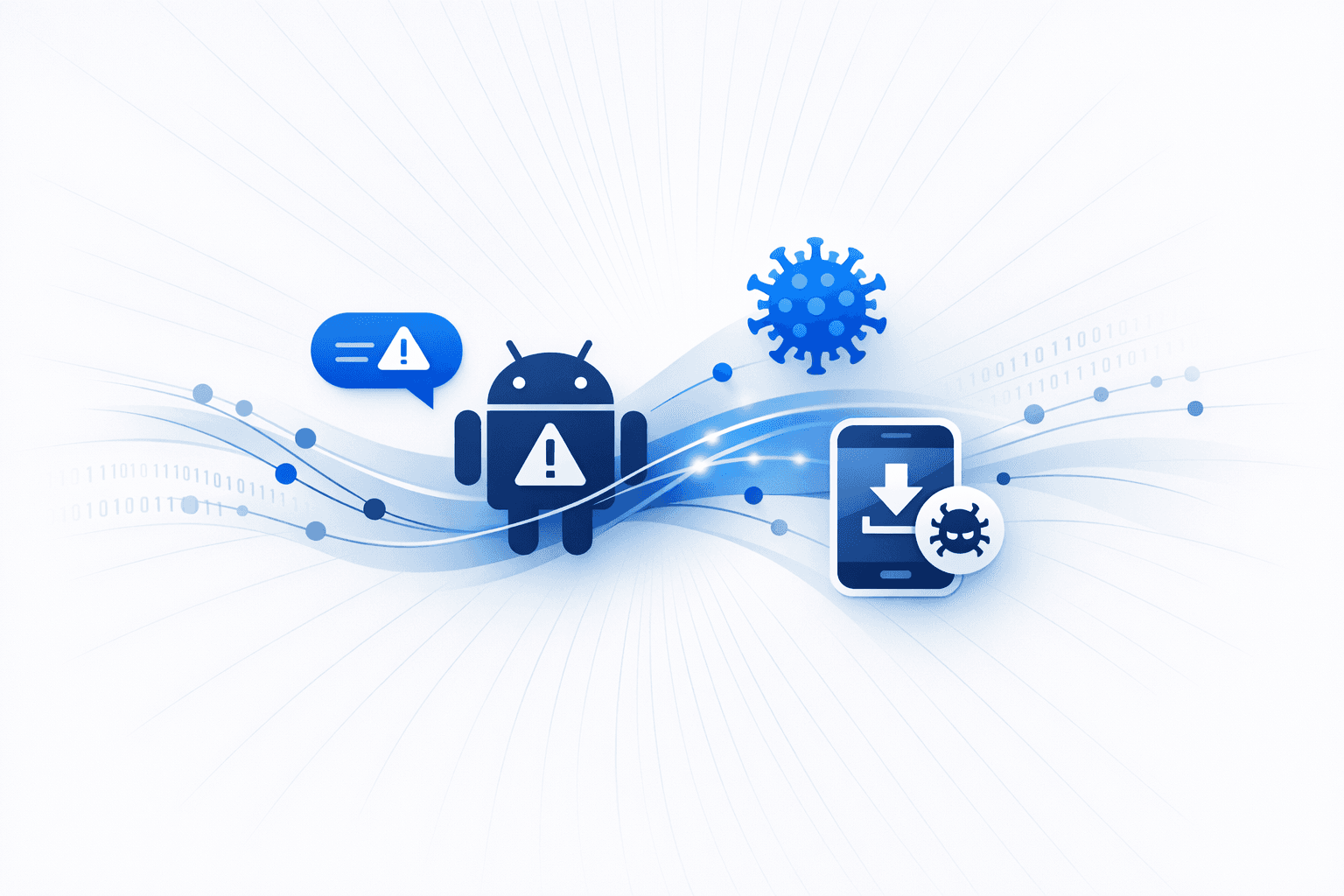
Threat actors used COVID-19-themed lures to push Android malware through SMS phishing and unofficial download sites, targeting users with fake alerts, safety tools, and public-health claims. Proofpoint reported that the TangleBot campaign sent text messages in the United States and Canada themed around coronavirus information and power outages, directing Android users to links that served a malicious APK and a fake Adobe Flash Player update prompt. Separately, researchers documented a fake "Corona Safety Mask" app and similar coronavirus-themed Android packages that were distributed outside official app stores and promoted through deceptive websites and messages.
Once installed, the malware gave operators extensive access to infected devices. TangleBot supported surveillance and device control features including keylogging, SMS and call control, screen capture, camera and microphone access, GPS tracking, clipboard access, and overlay injection, while using obfuscation and Telegram-based command-and-control discovery to hinder analysis. The other Android trojan focused on propagation by requesting permission to read contacts and send SMS messages, harvesting address books and sending malicious texts with download links to additional victims; researchers also warned the app appeared capable of evolving toward broader fraud or theft functions.
Get the infrastructure and lures behind it.
3 events from the most recent confirmed update back to the earliest known activity.
Proofpoint first detected the TangleBot mobile malware campaign in early September 2021. The campaign targeted Android users in the United States and Canada with SMS lures themed around COVID-19 notifications and power outages.
Proofpoint published technical analysis of TangleBot, describing its fake Flash update installation flow, Telegram-based command-and-control discovery, extensive surveillance and device-control features, and obfuscation methods. Proofpoint also said it worked with Google so Google Play Protect would detect the malware and released EmergingThreats detection rules for related activity.
Researchers described an Android malware campaign that used coronavirus-themed lures, including the fake "Corona Safety Mask" app and other bogus COVID-19 apps, to trick users into sideloading malicious APKs from unofficial domains. The malware harvested contacts and sent malicious SMS messages with download links to propagate further.
Vulnerabilities, threat actors, malware, products, organizations, breaches, and observables Mallory has linked to this story. Indicator values are masked here and available in full in the app.
Indicator values are masked on this page. See the values in Mallory Domains, IPs, hashes, and URLs are exportable to your SIEM.
Get the infrastructure, lures, and IOCs behind this campaign, ready to push into your email and identity stack.
2 references tracked. Mallory keeps watching after this page renders.
Map indicators from this story to your assets and identify affected systems in minutes.
Every observed campaign, victim, and pivot linked to actors named in this story.
Malware, exploits, and IOCs connected to the activity described here.
YARA, Sigma, and Snort rules deployed to your SIEM as soon as they’re published.
Get matching new stories delivered to your team as they break — not the next morning.
Ask questions about this story and take action on the answers.
Other stories Mallory is tracking that overlap on entities, sources, or topic labels.
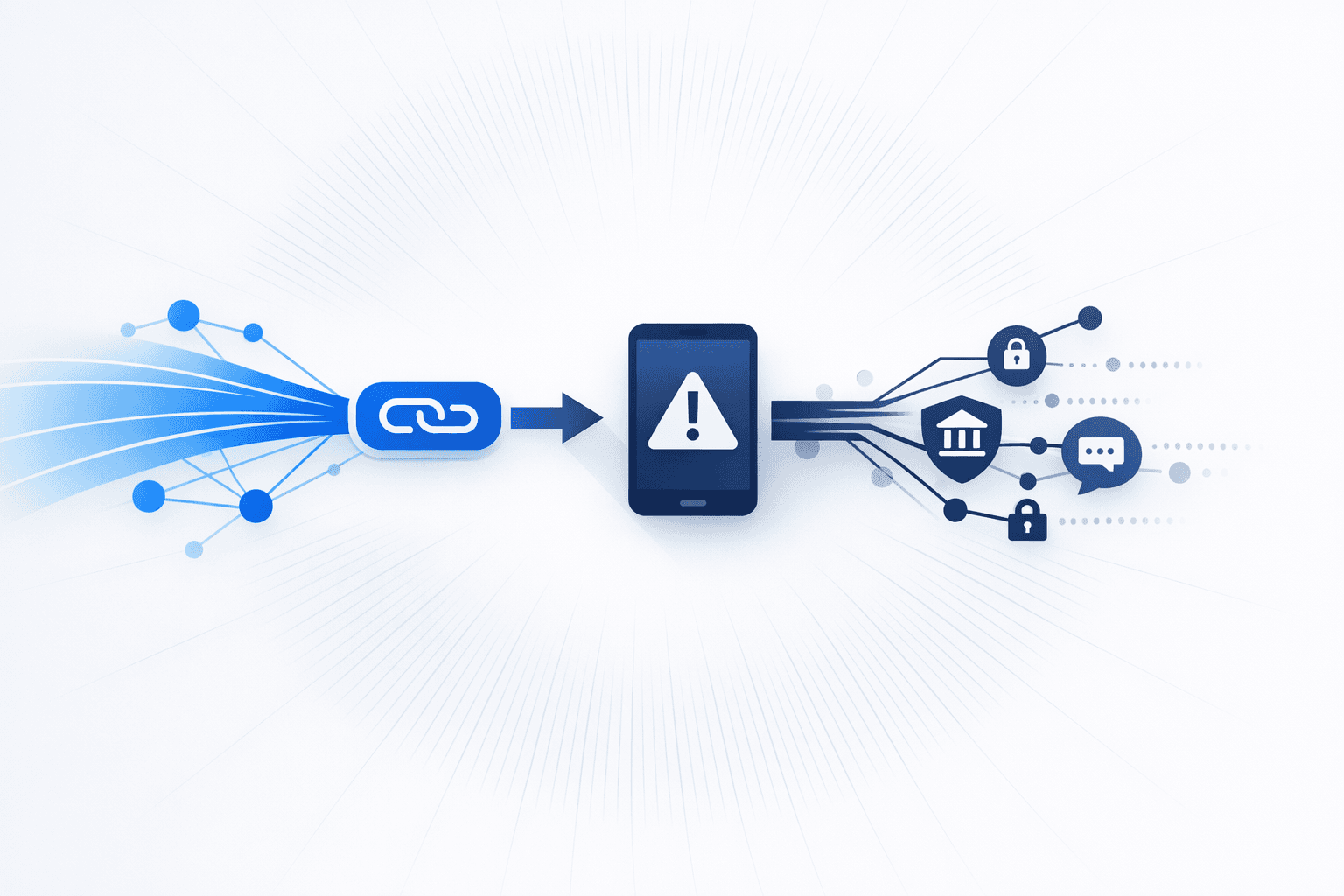
Researchers reported that monetized URL shortener services and fake download pages were used to push **Android/FakeAdBlocker** and other malicious Android apps disguised as ad blockers or popular applications. Victims were funneled through aggressive advertising chains and prompted to install APKs with misleading names such as `adBLOCK app.apk`, after which the malware hid its icon, contacted command-and-control infrastructure, and fetched additional payloads. ESET said the campaign generated more than **150,000** Android downloads in the first half of 2021, while iPhone users were steered into fraudulent calendar-subscription scams rather than direct malware installs. The Android infections did not stop at adware. Researchers said the delivery chains also deployed banking trojans including **Cerberus**, **Ginp**, and **TeaBot**, alongside SMS trojans and other payloads, making the outcome dependent on the victim's region and the operators' current configuration. Separate reporting on Cerberus and Ginp described both as mobile banking malware families, and Bitdefender documented similar lures using mockups of well-known apps to spread **TeaBot** and **FluBot**, underscoring a broader ecosystem in which deceptive mobile install flows are used to distribute credential theft, financial fraud, and messaging abuse malware on Android.
Aug 14, 2026
Multiple reports highlight evolving **Android** threats that abuse SMS/telephony access and advanced evasion to enable fraud, surveillance, and account takeover. CloudSEK described a shift from repackaged apps to **runtime manipulation** using the *LSPosed* framework, where a malicious module (e.g., **Digital Lutera**) hooks `SmsManager` and `TelephonyManager` to undermine India’s **UPI SIM-binding** controls. The technique can intercept registration tokens and 2FA, spoof device identity/phone number, and exfiltrate data to **Telegram**; it also uses **Socket.IO** for real-time C2 and can remotely inject fabricated SMS entries into the device’s “Sent” database to make bank backends believe a SIM is present on a different device, enabling scalable payment fraud and account takeover. Separately, Acronis TRU (reported by Hackread) identified a **fake Red Alert** rocket-warning app distributed via SMS lures impersonating Israel’s Home Front Command; the trojanized app displays legitimate alerts to reduce suspicion while requesting extensive permissions to steal **GPS location**, **SMS/OTP**, contacts, installed-app inventory, and on-device account details, then exfiltrates data to a remote server, including via **certificate spoofing** and UI tricks to appear Play Store-installed. Zimperium reported a new Android RAT, **SurxRAT**, that can download and run **LLM modules** from third-party repositories to automate phishing and social engineering and to interact with apps/UI for credential theft and data exfiltration, reinforcing the need for behavior-based mobile detection, tighter app controls, and stronger integrity enforcement (e.g., *Play Integrity API* with `MEETS_STRONG_INTEGRITY`) where applicable.
Jun 29, 2026
Multiple reports describe **social-engineering campaigns** that use trusted-looking lures (meeting invites, public-safety alerts, and official-looking documents) to drive victims to install malware or disclose credentials. Microsoft researchers reported a wave of **fake Zoom/Teams/Adobe update sites** reached via meeting-invite and document lures; the downloaded executables were signed with a **compromised EV code-signing certificate** (issued to *TrustConnect Software PTY LTD*) and acted as droppers for **remote monitoring and management (RMM) tools**, enabling persistent access. Separately, ClearSky described a suspected **Russian espionage** phishing operation targeting Ukraine that delivers a ZIP containing a Ukrainian-language border-crossing “permit” document, installing a loader (**BadPaw**) and a backdoor (**MeowMeow**) with file manipulation capabilities and sandbox/VM evasion; attribution was assessed as high confidence to a Russian state-aligned actor and low confidence to **APT28**. Mobile-focused lures were also reported: CloudSEK detailed **SMS phishing** targeting Israeli civilians with a trojanized **Red Alert** rocket-warning app, using a multi-stage loader chain to deploy spyware with **banking trojan** capabilities and exfiltrate **SMS, contacts, and location** to attacker infrastructure—raising concerns about surveillance and erosion of trust in official alerting. Other items in the set are either broader research or consumer-oriented scam advisories: a Zimperium write-up on the Android **“Massiv”** IPTV-app disguise highlights overlay-based banking fraud techniques, while Kaspersky’s mobile threat landscape report provides 2025 ecosystem statistics; two OnlineThreatAlerts posts describe generic **smishing** patterns (Amazon “refund” and flood-warning texts) without tying to a specific, evidenced campaign or new technical findings.
Jun 29, 2026