
Loading story…
Researchers tied a broader cyber-espionage operation to North Korea-linked actors after uncovering Android spyware variants known as KevDroid and a Windows backdoor dubbed PubNubRAT on infrastructure including cgalim[.]com. The Android malware stole contacts, SMS, account data, device information, screenshots, audio, video, and call recordings, and in some cases attempted rooting through CVE-2015-3636. Investigations also found trojanized Android apps themed around the PyeongChang Winter Games and Bitcoin Ticker Widget, while Windows infections used Korean-language lure documents exploiting CVE-2017-11882 to download malware capable of file theft, command execution, process termination, and screenshot capture.
The activity aligned with a longer-running campaign tracked as Operation Rocket Man, which targeted South Korean organizations, North Korea-related groups, defense entities, and individuals through spear phishing, watering-hole attacks, social-network phishing, torrent-delivered malware, malicious HWP and DOC files, Android APKs, and fake security software. Analysts linked campaigns from 2013 to 2018 through shared domains, malware code, PDB paths, metadata, and command-and-control patterns, including use of hacked Korean websites, cloud services such as Dropbox, Yandex, pCloud, and later PubNub, as well as exploits including CVE-2018-4878 and CVE-2017-8759; false Chinese-language artifacts were assessed as likely deception.

TTPs, infrastructure, and targeting history in one profile.
9 events from the most recent confirmed update back to the earliest known activity.
In August 2018, ESRC discovered a new spear-phishing campaign in which the attacker impersonated a Korean corporate HR representative. The operation used hacked Korean websites and links disguised as attached files, and the malware impersonated a PC security program while using PubNub for command-and-control.
Talos found a second KevDroid Android RAT variant at the same cgalim.com URL in February 2018. This variant added capabilities such as camera and audio recording, web history theft, file theft, and rooting via CVE-2015-3636.
In January 2018, attackers compromised the Korean website ebsmpi.com and made it mimic the Chinese 360 Total Security download page to distribute malware. The campaign delivered Ant_3.5.exe, Ant_4.5.exe, and desktops.ini, reusing the same encryption and infection flow later seen in August 2018.
ESRC connected the Operation Rocket Man activity to a spear-phishing case in September 2017 through shared account names, OLE code patterns, and metadata. The report also tied endlesspaws.com to a 2017 spear-phishing campaign and noted use of CVE-2017-8759 in attacks associated with this infrastructure.
ESRC linked the recurring C2 domain endlesspaws.com to a 2015 watering-hole campaign targeting South Korea-based North Korea-related websites. The domain later reappeared in additional Geumseong121 operations.
ESRC assessed that the North Korea-linked group Geumseong121 had been conducting sustained intrusion operations against South Korean targets since around 2013. Early activity included malware families that used AOL Instant Messenger as a command-and-control channel.
ESRC published a report naming the long-running campaign 'Operation Rocket Man' and attributing it to Geumseong121. The report tied together activity from 2013 through 2018 using shared infrastructure, malware code, PDB paths, metadata, and command-and-control patterns, and assessed Chinese-language artifacts as likely false flags.
Palo Alto Networks Unit 42 published analysis linking KevDroid and related Android downloader apps to the North Korean Reaper group, also known as APT37. The report described trojanized PyeongChang Winter Games and Bitcoin Ticker Widget apps that downloaded spyware from cgalim.com and exfiltrated data to hakproperty.com.
Cisco Talos published research on previously undocumented Android and Windows malware families it named KevDroid and PubNubRAT. The report described Android spyware hosted at cgalim.com and a Windows infection chain using a Korean-language RTF lure exploiting CVE-2017-11882 to deliver PubNub-based RAT payloads.
Vulnerabilities, threat actors, malware, products, organizations, breaches, and observables Mallory has linked to this story. Indicator values are masked here and available in full in the app.
Indicator values are masked on this page. View all 73 in Mallory Domains, IPs, hashes, and URLs are exportable to your SIEM.
See this adversary's TTPs, infrastructure, and targeting history, correlated against your exposure.
3 references tracked. Mallory keeps watching after this page renders.
blog.alyac.co.kr
Open sourceresearchcenter.paloaltonetworks.com
Open sourceblog.talosintelligence.com
Open sourceMap indicators from this story to your assets and identify affected systems in minutes.
Every observed campaign, victim, and pivot linked to actors named in this story.
Malware, exploits, and IOCs connected to the activity described here.
YARA, Sigma, and Snort rules deployed to your SIEM as soon as they’re published.
Get matching new stories delivered to your team as they break — not the next morning.
Ask questions about this story and take action on the answers.
Other stories Mallory is tracking that overlap on entities, sources, or topic labels.

North Korean threat actors have expanded from distinct intrusion sets into overlapping cyber operations that mix espionage, financial theft, and targeted ransomware while reusing malware, infrastructure, and delivery tradecraft. Research across Lazarus, Kimsuky, APT43, and related DPRK-linked clusters shows campaigns against governments, think tanks, defense-linked individuals, banks, cryptocurrency firms, and South Korea-focused political and academic targets. Analysts tied these operations to spear-phishing with Word, HWP, ZIP, and password-protected archive lures; trojanized cryptocurrency software in the **AppleJeus** family; bank intrusions associated with **Bluenoroff** and SWIFT fraud; and crypto theft campaigns such as **CryptoCore**. Trellix also linked several narrowly targeted ransomware families to North Korea’s financial cyber apparatus, reinforcing the regime’s dual use of cyber operations for intelligence collection and revenue generation. Recent reporting shows attribution is becoming harder because DPRK operators increasingly share tools and infrastructure across sub-clusters and adapt quickly to evade detection. Kimsuky campaigns used **AppleSeed**, **AlphaSeed**, **GoldDragon**, and **DEEP#GOSU** infection chains with cloud-hosted staging, `mshta.exe`, PowerShell, VBS, Dropbox, Google Docs, fake Blogspot pages, and strict victim-validation logic, while a later Korea-focused phishing operation combined Facebook, email, and Telegram to deliver obfuscated JSE malware. Separate analysis described a late-2023 crypto supply-chain intrusion delivering the **Durian** Golang RAT with signs of collaboration between Kimsuky and Andariel, and another case where **PEBBLEDASH**, long associated with Lazarus, appeared alongside Kimsuky-linked infrastructure. Researchers concluded that malware names alone no longer reliably identify the operator and that accurate attribution now depends on reconstructing the full intrusion chain, infrastructure, targeting, and strategic objective.
Aug 15, 2026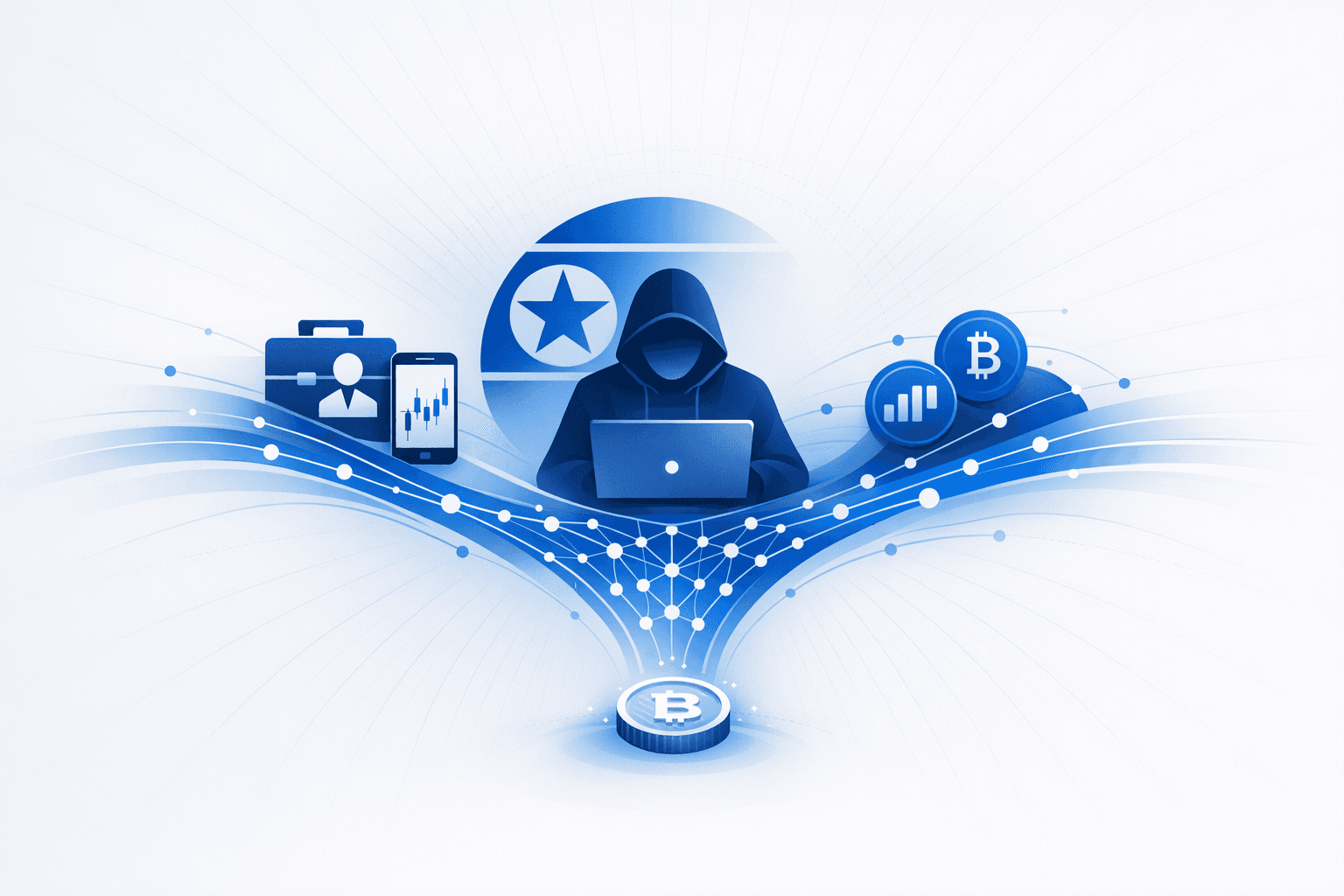
North Korean threat actors expanded beyond traditional espionage into large-scale cryptocurrency theft and intrusion campaigns, with research presented at Black Hat identifying **1,640 organizations in 57 countries** touched by the activity and roughly **700 to 800** showing clearly malicious compromise. Investigators said some intrusions reached **root-level access** on servers and **AWS accounts**, while attackers also abused third-party contractors to reach government, healthcare, and private-sector victims. The activity was linked broadly to DPRK operations including **Lazarus Group**, which researchers said continues to pair social engineering with crypto theft and laundering to generate revenue believed to support sanctions evasion and state priorities. Separate reporting tied the shift to specific DPRK espionage clusters now targeting crypto users and firms directly. **Konni** was described as moving from South Korea-focused Windows espionage to a global **macOS** campaign using fake recruiter or document lures, **AppleScript**, `LaunchAgents`, **TCC** abuse, and payloads including **FileRATClient** and an **EggShell** variant. **Kimsuky** was reported to have operated a fake trading platform, **Tralert FX**, distributing a trojanized desktop app through direct download and the Microsoft Store before deploying a customized **Xeno RAT** via GitLab staging; researchers said that campaign affected more than **250 victim IPs across 28 countries**.
Aug 25, 2026
North Korea–aligned operators, including **Lazarus** (aka **HIDDEN COBRA**), are running multiple social-engineering-led intrusion campaigns aimed at stealing sensitive technology and establishing durable access. Reporting on **Operation DreamJob** describes fake job-offer lures used to compromise European drone manufacturers and defense contractors, with tooling and infrastructure designed to evade traditional defenses and support cyber-espionage against UAV-related intellectual property. Separately, a developer-focused operation dubbed **“Fake Font”** uses fake recruiter outreach and malicious GitHub repositories to trick engineers into opening projects that abuse *Visual Studio Code* automation (via `.vscode/tasks.json`) and disguised payloads (e.g., `.woff2` “font” files) to execute multi-stage malware that ultimately deploys the **InvisibleFerret** Python backdoor for credential and crypto-wallet theft and long-term access. A distinct DPRK-linked campaign reported by Darktrace targets South Korean users with spear-phishing that delivers a JSE script masquerading as an HWPX document and then abuses **VS Code tunnels** as a covert C2 channel over trusted Microsoft infrastructure, complicating detection in developer-heavy environments. Other items in the set describe unrelated activity: phishing abuse of *Vercel* to deliver remote-access tooling, exploitation of **CVE-2025-51683** (blind SQLi) in the *Mjobtime* time-tracking app to reach MSSQL `xp_cmdshell`, a hospitality-focused **DCRat** campaign using **ClickFix** and `MSBuild.exe`, a generic CSS exfiltration technique write-up, and Trend Micro research on the **PeckBirdy** LOLBins framework used by China-aligned intrusion sets—none of which are part of the DPRK developer/defense recruitment-themed operations above.
Jun 29, 2026