
Loading story…
FortiGuard Labs said the DeathRansom ransomware campaign is strongly tied to Vidar stealer activity and several other malware operations through shared infrastructure, naming conventions, and recurring attribution artifacts. Researchers found Vidar samples attempting to access Bitbucket paths under the profile name scat01 and likely retrieving DeathRansom variants named in the Wacatac_YYYY-MM-DD_HH-MM.exe format. The same cluster was also linked to Azorult, Evrial stealer, 1ms0rryStealer, and Supreme miner, with repeated use of identifiers including the nickname scat01, the email vitasa01@yandex.ru, and the domain gameshack[.]ru. FortiGuard assessed that false Slovak and Nepali language artifacts were likely planted to mislead investigators, while other evidence pointed to a Russian-speaking operator associated with the online persona SoftEgorka and likely connected to Egor Nedugov from the Rostov-on-Don/Aksay area.
Separate technical profiling described DeathRansom, also detected in some cases as Wacatac, as a ransomware family that evolved from early variants that sometimes only mimicked encryption into later builds that performed real file encryption. The malware primarily targeted English-speaking users, dropped a read_me.txt ransom note, demanded Bitcoin payment through attacker-controlled email addresses, and checked systems against a whitelist of CIS-region languages before running. Analysts documented multiple delivery paths, including RDP compromise, spam, malicious downloads, botnets, exploits, malvertising, fake updates, and trojanized installers, and noted changing cryptographic implementations involving Curve25519/ECDH, Salsa20, RSA-2048, AES, and SHA-256. The reporting also noted code or family relationships with EZDZ-Locker, TechandStrat, HelloKitty, FiveHands, DCRTR, and STOP ransomware.

TTPs, infrastructure, and targeting history in one profile.
11 events from the most recent confirmed update back to the earliest known activity.
AhnLab ASEC reported discovering the DEATHRansom ransomware family being distributed in South Korea on November 20, 2019. The report said the malware encrypted files without changing extensions, dropped read_me.txt ransom notes, and was detected by AhnLab V3 with file- and behavior-based signatures.
The ID Ransomware profile lists Wacatac_2019-11-20_23-34.exe among associated DeathRansom filenames, documenting another dated sample from the campaign.
FortiGuard cited a DeathRansom-related sample named Wacatac_2019-11-20_00-10.exe as part of the campaign's naming pattern and infrastructure overlap with Vidar.
An update dated 20 November 2019 states that DeathRansom variants were then actually encrypting files rather than merely pretending to, using Curve25519 ECDH, Salsa20, RSA-2048, AES-256 ECB, and XOR without adding an extension.
Researchers documented a DeathRansom-related sample using the filename Wacatac_2019-11-20_00-10.exe, including a distribution URL on webparroquia.es for that file.
A Vidar sample attempted to access an inaccessible file named Wacatac_2019-11-16_17-03.exe, which FortiGuard assessed was likely another DeathRansom variant.
FortiGuard identified a Bitbucket download path under the scat01 profile for a file named Wacatac_2019-11-16_14-06.exe, which researchers associated with the DeathRansom campaign.
The ID Ransomware profile places notable DeathRansom activity in mid-November 2019, describing early variants that used the DEATHRANSOM ransom note branding and in some cases only pretended to encrypt files while appending the .wctc extension.
FortiGuard found a connections log from May 2019 showing a Vidar stealer sample referencing the Bitbucket directory used under the profile name "scat01," an early infrastructure link later tied to DeathRansom activity.
FortiGuard Labs published research concluding that DeathRansom was strongly linked to Vidar stealer and other malware operations through shared infrastructure, naming conventions, and attribution artifacts, and tied the activity to the personas scat01 and SoftEgorka.
The ID Ransomware profile lists Wacatac_2019-11-21_02-59.exe as an associated filename, showing continued dated sample generation in the DeathRansom campaign.
Vulnerabilities, threat actors, malware, products, organizations, breaches, and observables Mallory has linked to this story. Indicator values are masked here and available in full in the app.
Indicator values are masked on this page. View all 34 in Mallory Domains, IPs, hashes, and URLs are exportable to your SIEM.
See this adversary's TTPs, infrastructure, and targeting history, correlated against your exposure.
4 references tracked. Mallory keeps watching after this page renders.
fortinet.com
Open sourceasec.ahnlab.com
Open sourceid-ransomware.blogspot.com
Open sourcevirustotal.com
Open sourceMap indicators from this story to your assets and identify affected systems in minutes.
Every observed campaign, victim, and pivot linked to actors named in this story.
Malware, exploits, and IOCs connected to the activity described here.
YARA, Sigma, and Snort rules deployed to your SIEM as soon as they’re published.
Get matching new stories delivered to your team as they break — not the next morning.
Ask questions about this story and take action on the answers.
Other stories Mallory is tracking that overlap on entities, sources, or topic labels.
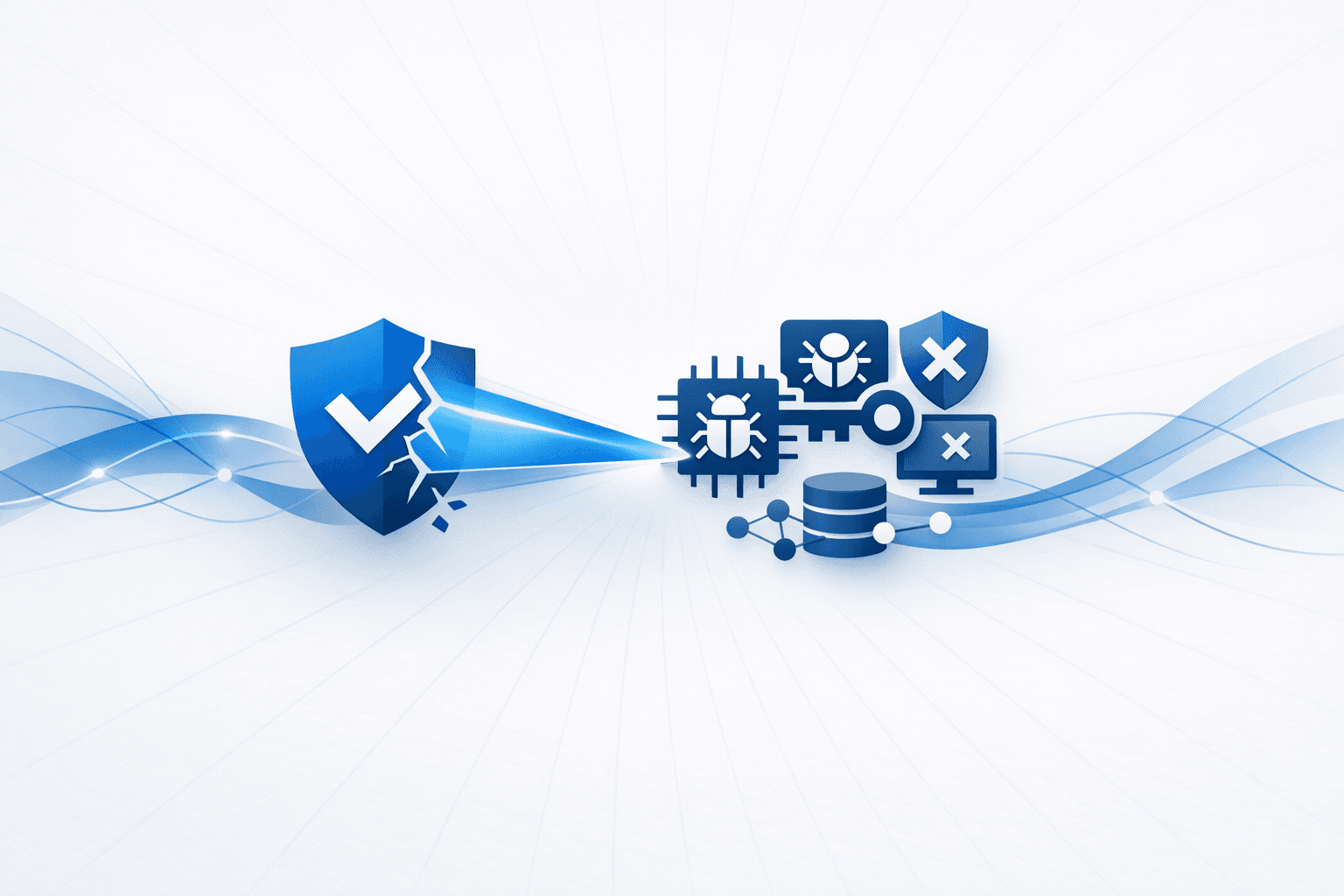
Ransomware operators have been observed using **bring-your-own-vulnerable-driver (BYOVD)** techniques and custom anti-security tools to shut down endpoint protections before encrypting enterprise networks. Kaspersky documented a MedusaLocker intrusion in Brazil in which attackers accessed an SMTP server over RDP with valid administrative credentials, used **Mimikatz** to extract NTLM hashes, and moved laterally with pass-the-hash via PowerShell-based WMI and SMB execution before deploying a new AV-killer tool, `All.exe`. That tool loaded a renamed **TechPowerUp `ThrottleStop.sys`** driver (`ThrottleBlood.sys`), exploited vulnerable IOCTLs for physical memory read/write, hijacked kernel execution through `NtAddAtom`, and repeatedly terminated products from Microsoft Defender, CrowdStrike, SentinelOne, Sophos, Symantec, Bitdefender, ESET, Avast, AVG, McAfee, Panda, Quick Heal, and Kaspersky; the driver issue was assigned **`CVE-2025-7771`**. A separate report on **The Gentlemen** ransomware described a similar pattern in enterprise attacks across the Asia-Pacific region, where the group likely gained entry through an exposed FortiGate device or stolen credentials, then conducted Active Directory reconnaissance, used **PsExec** for lateral movement, established persistence with **AnyDesk**, abused **GPO** and **NETLOGON** for domain-wide deployment, and exfiltrated data with **WinSCP** for double extortion. TrendAI said the group evolved from generic anti-AV tooling to customized variants tailored to the security products installed in each victim environment, while also disabling Windows Defender and recovery mechanisms before dropping `README-GENTLEMEN.txt` and encrypting files with the `.7mtzhh` extension. Together, the incidents show ransomware crews increasingly pairing credential abuse and lateral movement with vulnerable-driver abuse and bespoke defense evasion to maximize encryption success.
Aug 21, 2026
**Sodinokibi**, also known as **REvil** and **BlueCrab**, was distributed through multiple intrusion paths while its operators and affiliates steadily refined payload delivery and defense evasion. Researchers documented infections delivered via malspam, spear-phishing, compromised websites, exposed or stolen **RDP** access, and exploitation of vulnerabilities including `CVE-2019-2725`, `CVE-2018-13379`, and `CVE-2019-11510`. In South Korea, attackers also abused vulnerable WordPress sites for **SEO poisoning**, planting fake forum pages that pushed victims to download ZIP archives containing malicious JavaScript, which then fetched additional scripts, launched PowerShell, loaded a .NET injector in memory, and executed the ransomware through a Delphi-based loader. The operation paired technical sophistication with aggressive monetization. Analysts reported frequent changes to JavaScript obfuscation, command-and-control paths, PowerShell execution methods, process injection techniques, and target process names to reduce antivirus detection, alongside logic to disable security tooling and delete **Volume Shadow Copies** before encryption. IBM described the group’s use of **Curve25519**, **ECDH**, **Salsa20**, **AES**, and **SHA-3** in its encryption workflow, as well as its **double-extortion** model of stealing data and threatening publication on **The Happy Blog**. The ransomware was linked to a broad affiliate ecosystem, represented **22%** of IBM X-Force incident response engagements in 2020, and was reported to heavily impact organizations in the United States, United Kingdom, Australia, and Canada.
Aug 14, 2026
The **Egregor** ransomware operation carried out double-extortion attacks by stealing sensitive data, encrypting victim systems, and threatening to publish stolen information on a leak site if victims refused to pay. Researchers linked Egregor to an ecosystem associated with **Sekhmet** and possible former **Maze** affiliates, with additional reported ties to **ProLock** and **LockBit**. Victims cited in reporting included **GEFCO**, **Barnes & Noble**, and **Ubisoft**, while the group’s leak site reportedly listed **152 victim companies** across industries including information technology, construction, retail, consumer goods, and automotive. Intrusions commonly began with **phishing** or **RDP exploitation**, after which attackers used **Cobalt Strike** for payload delivery and in some cases leveraged **QBot** and living-off-the-land tools such as `bitsadmin`. The malware used heavily obfuscated DLL payloads with **Salsa20**-encrypted configuration data, required a sample-specific launch key passed with the `-p` parameter, and encrypted files with **ChaCha** and **RSA-2048**. Researchers also observed the group using **Rclone** with attacker-supplied configuration data to exfiltrate stolen files, while the ransomware appeared to avoid encrypting systems configured with several CIS-region languages.
Jul 12, 2026