
Loading story…
Researchers across multiple reports documented continued KONNI activity using spear-phishing lures tied to geopolitics, cryptocurrency, and regional news, with malware delivered through malicious Word documents, VBA macros, staged DLL payloads, and fake software components. Campaigns used North Korea-themed decoys such as CNN and Yonhap articles, later shifted to Russian-language and Huobi-themed documents, and commonly installed both 32-bit and 64-bit payloads, persisted through rundll32.exe, Windows Run registry keys, scheduled tasks, and downloader chains that fetched additional malware from attacker-controlled HTTP, FTP, and staged web infrastructure disguised as legitimate sites.
Technical analysis showed the malware family evolving from earlier XOR-protected communications to ZIP-compressed, RC4-encrypted, Base64-encoded exfiltration, while retaining capabilities including reconnaissance, file theft, screenshot capture, keylogging, clipboard theft, and payload execution. Later reporting linked the KONNI ecosystem to broader North Korea-aligned operations, citing overlaps with Kimsuky/Thallium in infrastructure, malware formats, credentials, and delivery tradecraft, and describing newer campaigns in South Korea that used compromised KakaoTalk accounts, multiple RAT families, and stolen Google credentials to abuse Android Find Hub for device tracking and remote wiping of victims’ phones.

TTPs, infrastructure, and targeting history in one profile.
19 events from the most recent confirmed update back to the earliest known activity.
Genians said another compromised KakaoTalk account was used on September 15, 2025, to distribute malicious files in a simultaneous wave. The campaign relied on trusted contacts' messenger sessions to spread malware.
Genians reported that on September 5, 2025, a compromised KakaoTalk account belonging to a South Korea-based counselor was used to send a malicious file to a North Korean defector student. The malware was disguised as a "stress-relief program."
Cyber and Ramen noted that Black Lotus Labs linked the infrastructure online-manual.c1[.]biz to a possible Konni campaign in late November 2021. This provided external context for assessing the downloader sample as likely Konni-related.
Cyber and Ramen reported that the DLL malware sample "downloader.dll" was first identified around October 2021. The sample masqueraded as a Foxit Reader extension and contacted online-manual.c1[.]biz to download and unpack a follow-on payload.
ESRC discovered the malicious Russian-language Word document during security monitoring on August 16, 2019. The sample used VBA macros and an ObjectPool stream to abuse certutil.exe, fetch staged payloads from handicap.eu5[.]org, unpack a CAB archive, and connect to FTP infrastructure.
The malicious Word document "О ситуации на Корейском полуострове и перспективах диалога между США и КНДР.doc" had a recorded final modified time of 2019-07-12 09:30:39 UTC. ESRC later assessed the file as part of the Konni malware series.
In June 2019, ESRC published analysis asserting that Konni likely had a strong operational relationship with Kimsuky/Thallium. The report cited overlapping malware traits, archive passwords, export names, decryption routines, infrastructure, and FTP credential patterns.
ESRC identified a May 2019 Konni campaign using a malicious Word document themed as "Huobi Research Weekly (Vol.62) 2019.05.13-2019.05.19.doc." The macro downloaded 1.dat and a decoy DOCX from naoei3-tosma.96[.]lt, then executed the payload and established persistence as ChromSrch.dat.
ESRC linked a later Konni sample to an earlier document named geopol18.doc with a modified time of 2019-01-21 23:36:00 UTC. The earlier sample used Russian-language lure content, Korean codepage 949, a similar macro pattern, and clean.1apps[.]com for staged delivery.
ESRC described a July 2018 phishing campaign impersonating a Korean cryptocurrency exchange that delivered a ZIP archive containing "공지사항.png.vbs." The script used ago2.co[.]kr as C2 and downloaded a benign image plus a Base64-encoded malicious DLL.
ESRC reported that a 2018 Konni phishing document named "_확인 자료.doc" used the C2 domain filer1.1apps[.]com. The report linked this infrastructure to other Konni BlueSky samples.
Fortinet said the malicious Word document reused text from CNN's article "12 things Trump should know about North Korea," which was published on August 9, 2017. That article served as the lure content for the campaign.
Fortinet reported that the installer used in a later KONNI variant carried a PE compilation timestamp of August 8, 2017, if unaltered. The sample dropped 32-bit and 64-bit KONNI DLLs and executed them via rundll32 persistence.
Fortinet reported that the embedded 32-bit and 64-bit KONNI DLLs in the August 2017 installer carried compilation timestamps of July 11, 2017, if unaltered. The DLLs retained file theft, reconnaissance, screenshot, keylogging, and clipboard theft capabilities.
Talos identified a new KONNI distribution campaign on 4 July 2017. The malware used a Yonhap News decoy, dropped 32-bit and 64-bit payloads, established Run-key persistence, and communicated with the new C2 domain member-daumchk[.]netai[.]net.
Talos said the July 2017 KONNI campaign appeared directly related to North Korea's missile launch on 3 July and the ensuing discussion of missile capabilities. The lure document copied a Yonhap article published the same day.
Fortinet stated that the KONNI remote access Trojan was first publicly reported in May 2017. This marks the earliest explicit public disclosure date in the provided references.
ESRC reported that Konni had conducted spear-phishing campaigns since around 2014, initially using North Korea-themed lure documents. Fortinet separately noted the malware family was believed to have been active for more than three years by 2017.
Genians published analysis of a KONNI-linked campaign in which attackers stole Google credentials, queried victims' locations through Find Hub, and remotely wiped Android devices. The report described this as the first confirmed case it had observed of a state-sponsored actor abusing Find Hub for remote wipe and location tracking in an APT campaign.
Vulnerabilities, threat actors, malware, products, organizations, breaches, and observables Mallory has linked to this story. Indicator values are masked here and available in full in the app.
Indicator values are masked on this page. View all 107 in Mallory Domains, IPs, hashes, and URLs are exportable to your SIEM.
See this adversary's TTPs, infrastructure, and targeting history, correlated against your exposure.
6 references tracked. Mallory keeps watching after this page renders.
genians.co.kr
Open sourcecyberandramen.net
Open sourceblog.alyac.co.kr
Open sourceblog.alyac.co.kr
Open sourceblog.fortinet.com
Open sourceblog.talosintelligence.com
Open sourceMap indicators from this story to your assets and identify affected systems in minutes.
Every observed campaign, victim, and pivot linked to actors named in this story.
Malware, exploits, and IOCs connected to the activity described here.
YARA, Sigma, and Snort rules deployed to your SIEM as soon as they’re published.
Get matching new stories delivered to your team as they break — not the next morning.
Ask questions about this story and take action on the answers.
Other stories Mallory is tracking that overlap on entities, sources, or topic labels.

Hackers linked to North Korea used a compromised email account belonging to a staff member of Russia’s Ministry of Foreign Affairs to spear-phish Russian diplomatic targets, including the Russian embassy in Indonesia and Deputy Foreign Minister Sergey Alexeyevich Ryabkov. The operation, tracked by Cluster25 and Lumen Black Lotus Labs and attributed to the **Konni/APT37** threat actor, used lures themed around New Year greetings and COVID-19 vaccination-status documents, along with spoofed **Mail.ru** and **Yandex** hostnames, to steal credentials and deliver **Konni RAT**. The campaign fits a longer pattern of **Konni** activity documented over multiple years. Earlier research showed the malware evolving from an information stealer into a more capable remote access trojan with persistence, file transfer, command execution, and screenshot capture, typically spread through malicious email attachments and social engineering. Analysts have also reported newer Konni variants used in campaigns targeting Russia, reinforcing that the intrusion against Russian diplomatic entities was part of a sustained espionage effort built on reused malware, tailored decoys, and recurring focus on government and embassy-linked victims.
Aug 15, 2026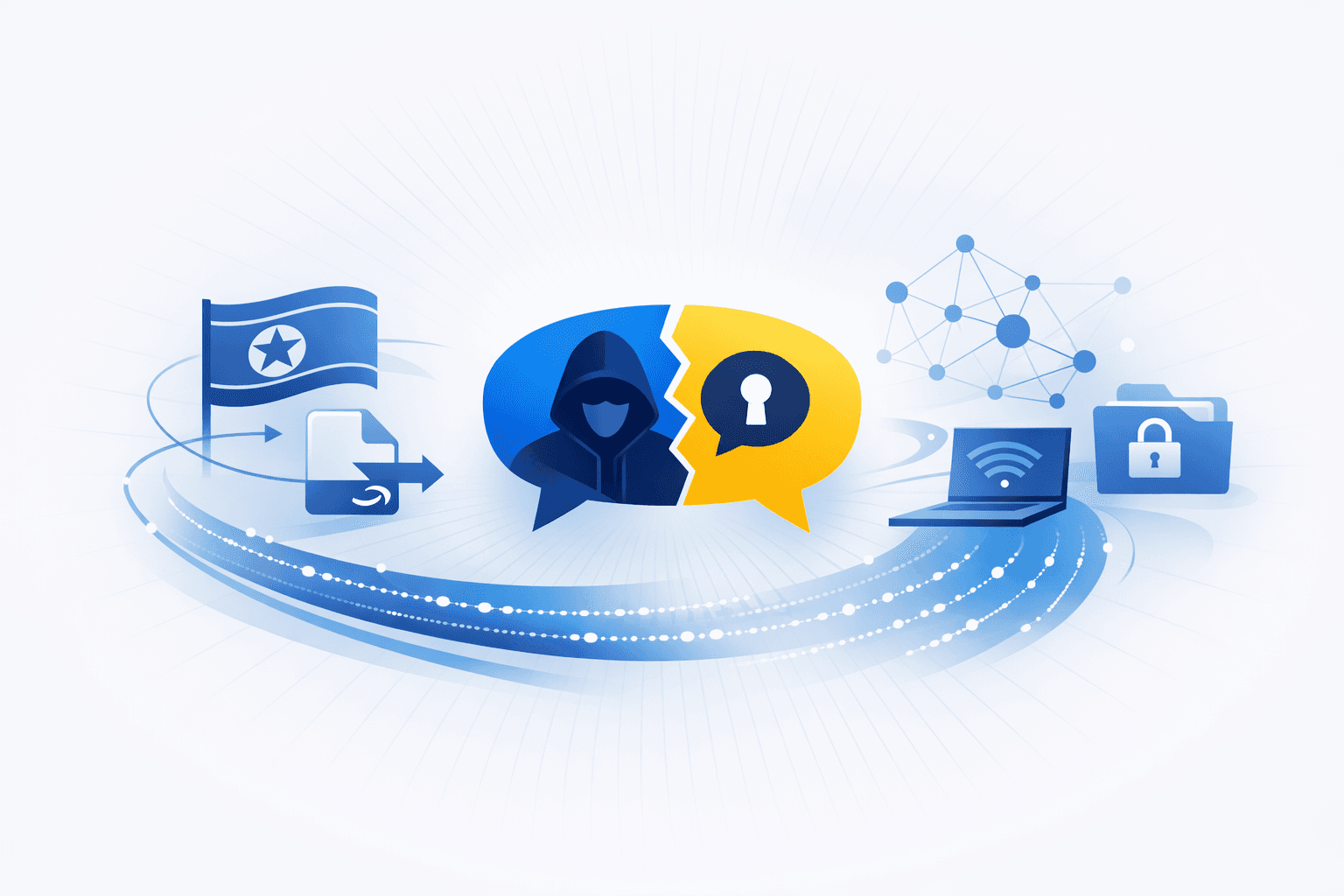
**Konni APT** conducted a multi-stage spear-phishing campaign that used North Korea-themed lures, including fake notices appointing targets as North Korean human rights lecturers, to deliver a malicious `LNK` file and install remote-access malware. After initial compromise, the malware remained on victim systems for an extended period, collecting internal documents, user information, and other sensitive data while maintaining covert access. The campaign stood out because the attackers moved beyond email-based intrusion and abused the victim’s already authenticated *KakaoTalk* PC session to expand the operation. After gaining unauthorized access to the victim’s *KakaoTalk* application, the threat actor selectively chose contacts from the friend list and sent them additional malicious files disguised as North Korea-related planning or video proposal documents, effectively turning trusted victims into secondary distribution nodes. Genians’ analysis described the operation as a combined pattern of long-term persistence, information theft, and account-based re-propagation, while follow-on reporting highlighted the use of social engineering tailored to the target’s interests and the value of behavior-based endpoint detection to identify the malicious `LNK`, remote-control activity, and messenger-account abuse.
Jul 8, 2026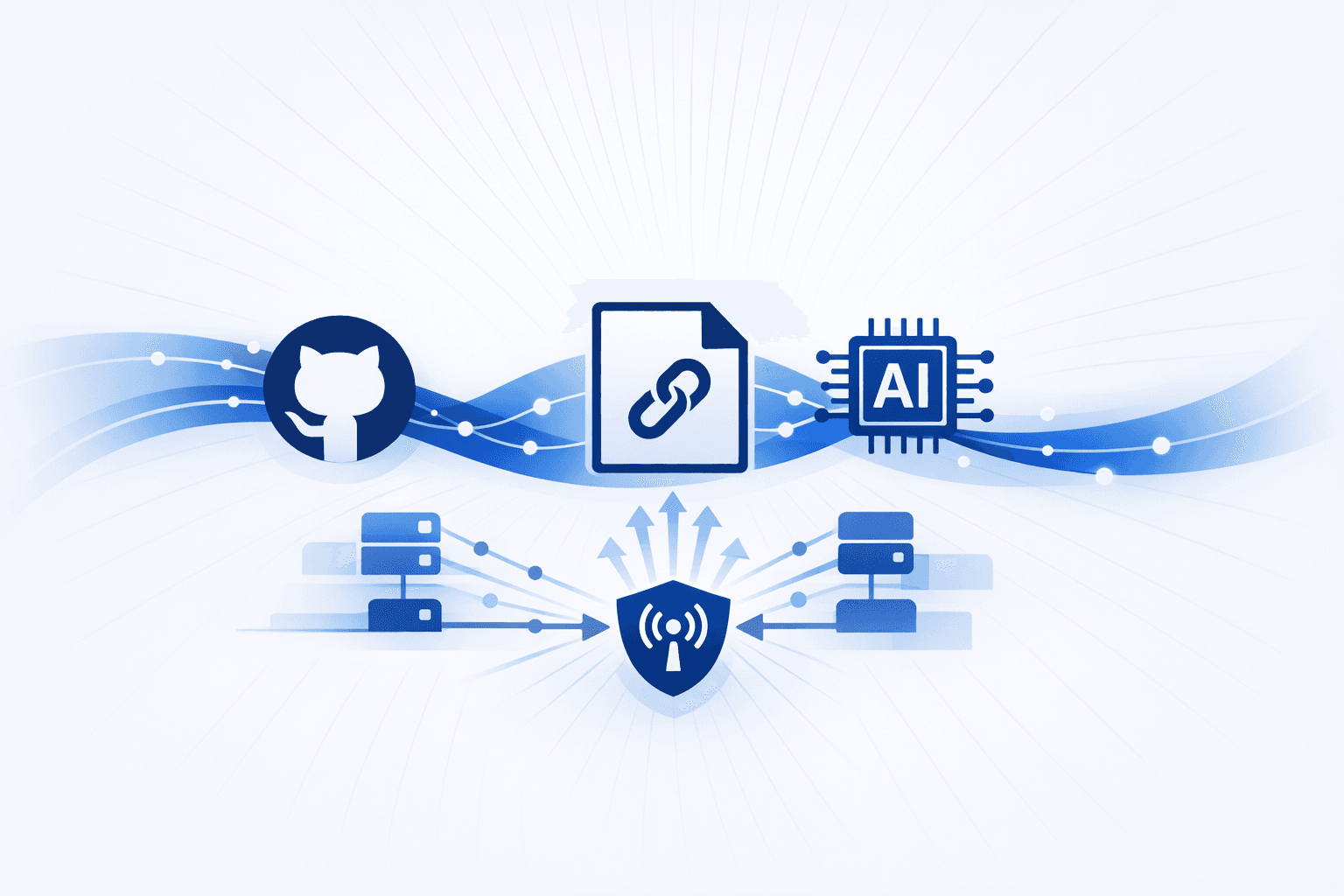
Researchers linked a North Korean **Kimsuky** intrusion cluster to spearphishing campaigns that deliver ZIP archives containing malicious `.lnk` files, which launch obfuscated PowerShell, open decoy PDF documents, and create persistence through scheduled tasks. The activity, tracked by Genians as **Operation GitPower**, also used public **GitHub** and **GitLab** repositories as command-and-control channels and malware staging infrastructure, including encrypted `.NET` **AsyncRAT** payloads disguised as image files. Fortinet separately reported DPRK-linked campaigns using the same combination of LNK-based infection chains and GitHub-backed C2, reinforcing the pattern across related operations. Investigators said the operators appear to be expanding beyond conventional malware delivery and are actively experimenting with **AI-enabled tradecraft**. Artifacts showed local LLM environments built with tools including **Ollama**, **GPT4All**, and **Msty**, along with RAG-style document handling, AI agent development libraries, and **Whisper** speech-to-text components, suggesting a research-and-integration phase focused on malware development, document analysis, and attack automation rather than training original models. Attribution was supported by overlaps with prior Kimsuky techniques, Korean-language artifacts, North Korean lexical patterns, Arirang manufacturer strings, and use of **Astrill VPN**.
Aug 18, 2026