
Loading story…
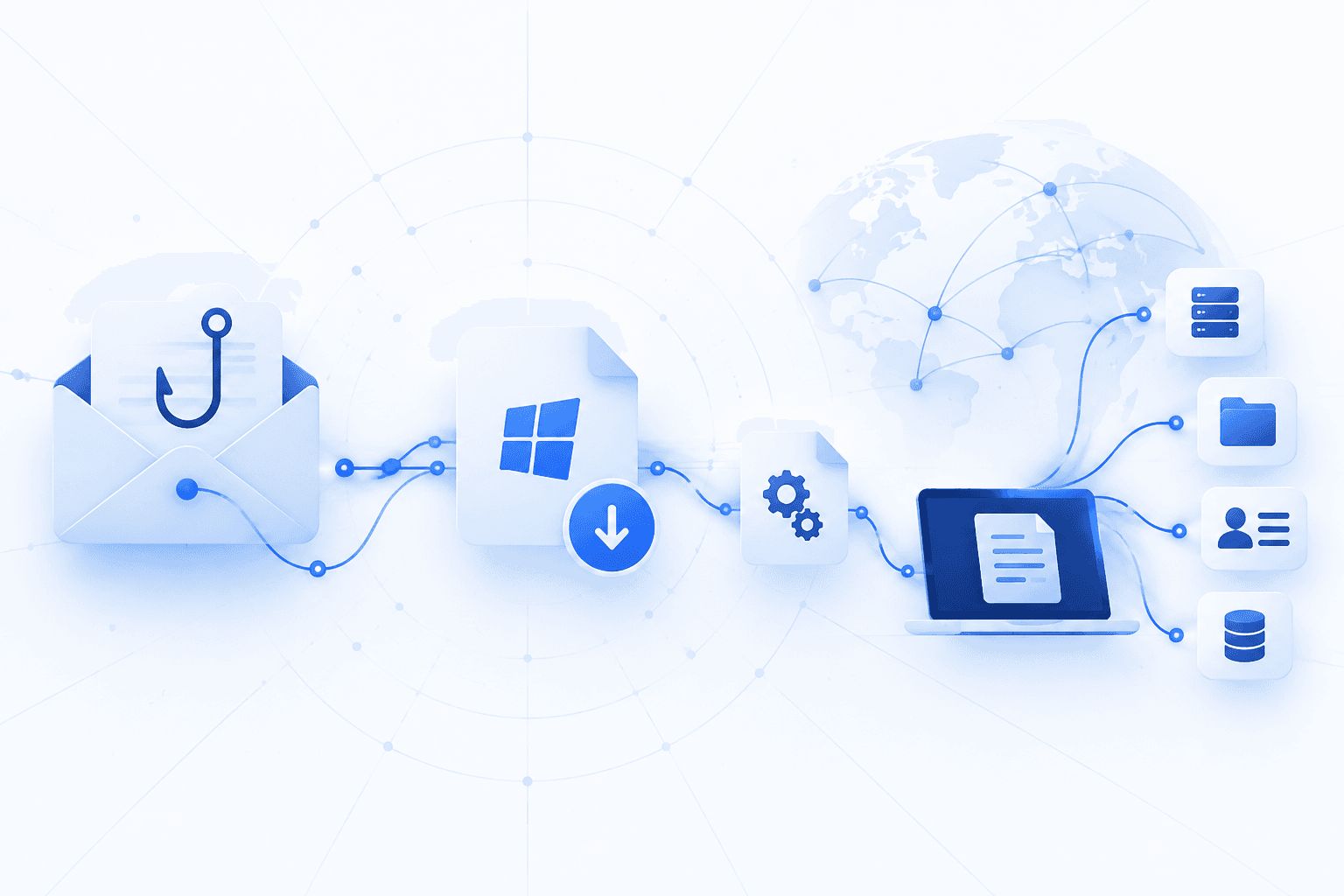
A new DarkMe remote-access Trojan campaign has shifted from the exploit-led delivery associated with Water Hydra to straightforward phishing. Lures disguised as image links served executable .PIF files, which launched a remote MSI installer and a multistage Visual Basic 6 loader chain. The chain registers a COM object and invokes it through rundll32.exe /sta {CLSID}, checks for sandbox-like processes, creates persistence through a custom Locked:// URI handler, and process-hollows the signed Microsoft clspack.exe binary.
The final payload combines remote-access and infostealing functions: it can collect cryptocurrency-wallet data, take screenshots, enumerate installed antivirus products, manipulate files, and run commands. It communicates over custom TCP command-and-control on port 7712; observed infrastructure included thatawful[.]boutique resolving to 67.43.50[.]11:7712. Organizations should block the identified infrastructure, investigate .PIF downloads and suspicious remote MSI execution, and hunt for the rundll32.exe /sta COM-launch pattern and unauthorized Locked:// registry protocol handlers.
Pull IOCs and campaign context straight into your stack.
5 events from the most recent confirmed update back to the earliest known activity.
The final DarkMe payload was configured to decrypt the C2 domain thatawful[.]boutique and communicate over hardcoded TCP port 7712; the observed endpoint was 67.43.50[.]11:7712. It could steal cryptocurrency-wallet data, capture screenshots, enumerate antivirus products, manipulate files, and execute commands.
A DarkMe campaign used phishing links masquerading as image files rather than prior zero-day delivery methods; one link delivered image.pif, which invoked msiexec to retrieve propi.msi. The multi-stage VB6 loader chain registered a COM object, established Locked:// registry persistence, and hollowed Microsoft-signed clspack.exe to run the final RAT/stealer.
Attackers distributed Efimer in a June email campaign impersonating lawyers and falsely alleging trademark infringement. Attached archives ultimately delivered the Requirement.wsf installer, which established persistence and downloaded a Tor proxy for C2 communication.
Trend Micro reported that Water Hydra targeted traders using CVE-2024-21412, a Microsoft Defender SmartScreen bypass zero-day. DarkMe had previously been associated with Water Hydra, subject to attribution caveats.
Kaspersky assessed that early Efimer versions likely emerged around October 2024 and initially spread through compromised WordPress websites. The malware functioned as a ClipBanker and cryptocurrency stealer, using Tor for command-and-control communications.
Vulnerabilities, threat actors, malware, products, organizations, breaches, and observables Mallory has linked to this story. Indicator values are masked here and available in full in the app.
Indicator values are masked on this page. View all 48 in Mallory Domains, IPs, hashes, and URLs are exportable to your SIEM.
Pull the IOCs, campaigns, and victimology behind this family, ready to push into your SIEM and EDR.
3 references tracked. Mallory keeps watching after this page renders.
huntress.com
Open sourcetrendmicro.com
Open sourcesecurelist.com
Open sourceMap indicators from this story to your assets and identify affected systems in minutes.
Every observed campaign, victim, and pivot linked to actors named in this story.
Malware, exploits, and IOCs connected to the activity described here.
YARA, Sigma, and Snort rules deployed to your SIEM as soon as they’re published.
Get matching new stories delivered to your team as they break — not the next morning.
Ask questions about this story and take action on the answers.
Other stories Mallory is tracking that overlap on entities, sources, or topic labels.

Multiple campaigns are using phishing emails and archive-based lures to deliver remote access malware through stealthy, multi-stage infection chains. Point Wild documented **Remcos RAT**, **DesckVB RAT**, and a Rust-based **COVERT RAT** being delivered through ZIP attachments, weaponized `LNK` files, obfuscated JavaScript droppers, and hidden PowerShell execution, often with decoy documents to mask activity. The payloads were loaded filelessly through .NET reflection and in-memory execution, with operators abusing legitimate binaries and services such as `aspnet_compiler.exe`, GitHub, and paste or web-hosting platforms to stage malware while evading detection. Reported command-and-control infrastructure included `192.3.27.141:8087`, `172.245.246.77:8080`, and `181.231.253.69:4444`, while observed artifacts included `C:\ProgramData\remcos\logs.dat`, `C:\ProgramData\colors\logs.dat`, and payload names such as `ALTERNATE.dll`, `ClassLibrary3.dll`, `Keylogger.dll`, and `msedge_proxy.exe`. Separate reporting showed the same tradecraft extending beyond custom RATs to commodity remote-access software and credential theft. A campaign targeting Russian aerospace and aviation organizations used invoice-themed phishing and spoofed domains to install a portable **AnyDesk** instance for unattended access, maintain persistence with a scheduled task, minimize visibility with Tray Minimizer, and exfiltrate configuration data through a command-line SMTP mailer; Seqrite linked the activity to **Rare Werewolf (Librarian Ghouls)**. Securonix research cited by Trojan Killer described **VEIL#DROP** using fake document-style JavaScript files, Blogspot-hosted staging, PowerShell download cradles, XOR decoding, and in-memory .NET loading to deploy **PureLog Stealer**, which targets browser credentials, cookies, session tokens, wallet data, and host information. Across the campaigns, the common pattern is phishing-led initial access followed by LOLBins, PowerShell, staged downloads, persistence, and covert data theft or long-term remote control.
Jul 12, 2026
Multiple active malware campaigns are delivering **remote access trojans (RATs)** using deceptive lures and multi-stage execution chains designed to evade endpoint defenses. Malwarebytes reported a campaign dubbed **DEAD#VAX** that distributes a file masquerading as a “PDF” but actually delivered as a **virtual hard disk (`.vhd`)** hosted via **IPFS**; when opened, Windows mounts the VHD and the victim is tricked into launching a **Windows Script File (`.wsf`)** that ultimately deploys **AsyncRAT**. The chain includes anti-analysis checks and **process injection** into Microsoft-signed binaries such as `RuntimeBroker.exe`, `OneDrive.exe`, `taskhostw.exe`, and `sihost.exe`, enabling hands-on-keyboard remote control while minimizing obvious on-disk artifacts. Separately, reporting described **DesckVB RAT v2.9**, a modular **.NET** RAT using an obfuscated **WSH JavaScript** stager followed by **PowerShell**-based anti-analysis checks and an in-memory (“fileless”) loader, emphasizing persistence and a plugin-based architecture for post-compromise capabilities. Another campaign distributes **ValleyRAT** disguised as a legitimate *LINE* installer, targeting **Chinese-speaking users**; it attempts to weaken defenses by using PowerShell to add broad **Windows Defender exclusions**, performs sandbox checks (e.g., mutex/file-locking behaviors), and uses advanced injection (reported as **PoolParty Variant 7** via Windows I/O completion ports) to hide within trusted processes while stealing credentials and maintaining C2 communications.
Jun 29, 2026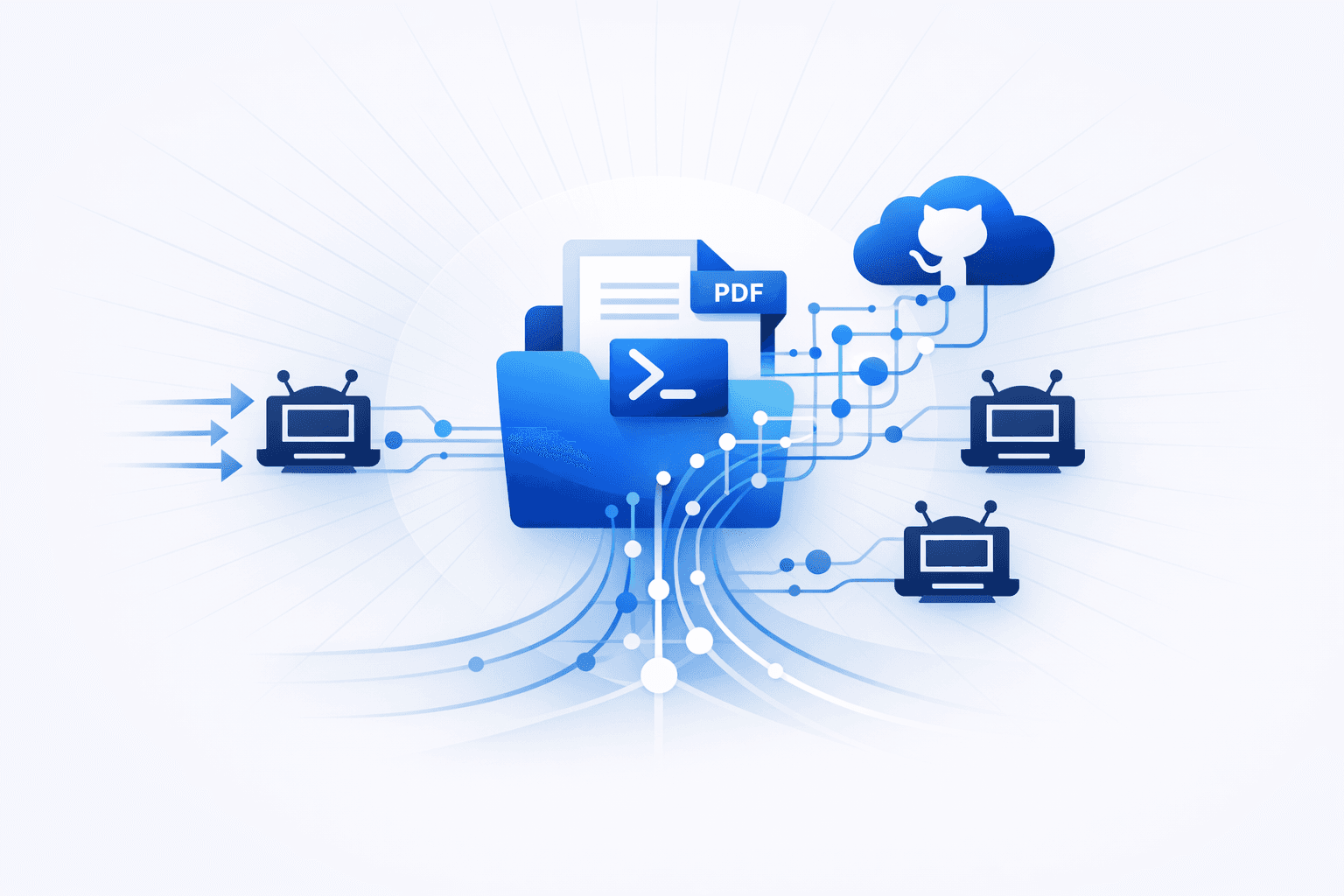
Security researchers reported several unrelated **remote access trojan (RAT)** delivery campaigns using different initial access vectors and lures. Seqrite Labs described “**Operation Covert Access**,” a spear‑phishing operation targeting Argentina’s judiciary with a ZIP attachment containing a convincing court-resolution decoy; execution is triggered by a malicious `LNK` masquerading as a PDF, which launches hidden PowerShell to fetch additional stages from a GitHub repository, culminating in a custom **Rust-based RAT** that attempts to blend in by renaming itself (e.g., `msedge_proxy.exe`). Separately, AhnLab Security Intelligence Center reported South Korea-focused activity distributing **RemcosRAT** through illegal online gambling-related tools and trojanized *VeraCrypt* installers, using embedded malicious VBS scripts and a multi-stage chain that ultimately deploys a RAT capable of surveillance and data theft (e.g., keylogging, screenshot/webcam/mic capture, credential/data harvesting). Another campaign documented by ReliaQuest abused **LinkedIn private messages** to deliver a bundled legitimate application alongside a malicious DLL for **DLL sideloading**, enabling RAT deployment under the guise of a trusted process; the reporting emphasized that social platforms can serve as effective phishing channels beyond email and that the technique is portable to other commonly used business messaging platforms.
Jun 29, 2026