Mallory
← Back to News
ai-enabled-threat-activityai-platform-securitystate-sponsored-espionagephishing-campaign-intelligence

Google Warns Fully Autonomous Cyberattacks Could Emerge Within Three to Six Months

Emerging Technology Risk · 2 sources · Updated 4h ago · First seen Nov 17, 2026

Google Warns Fully Autonomous Cyberattacks Could Emerge Within Three to Six Months

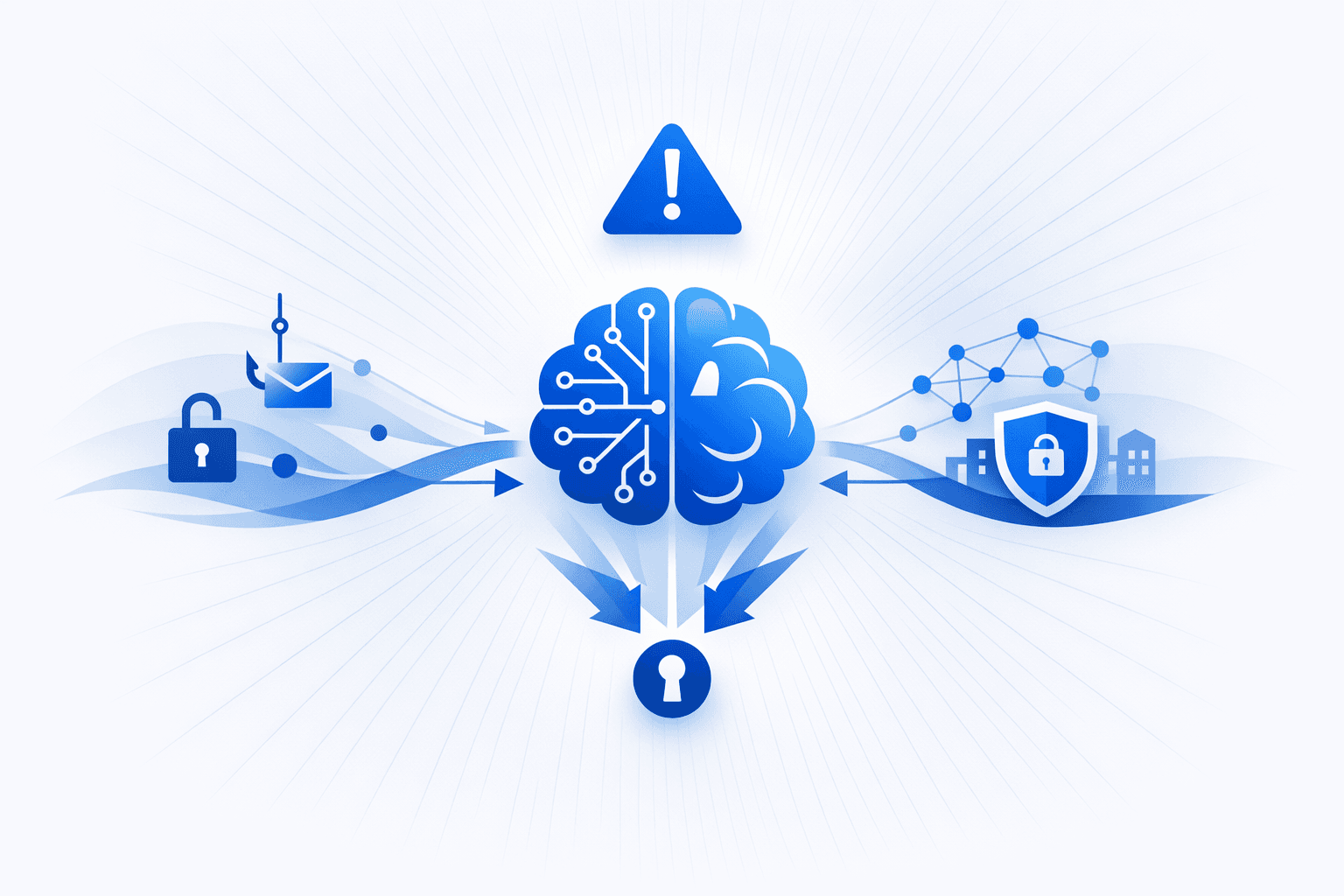
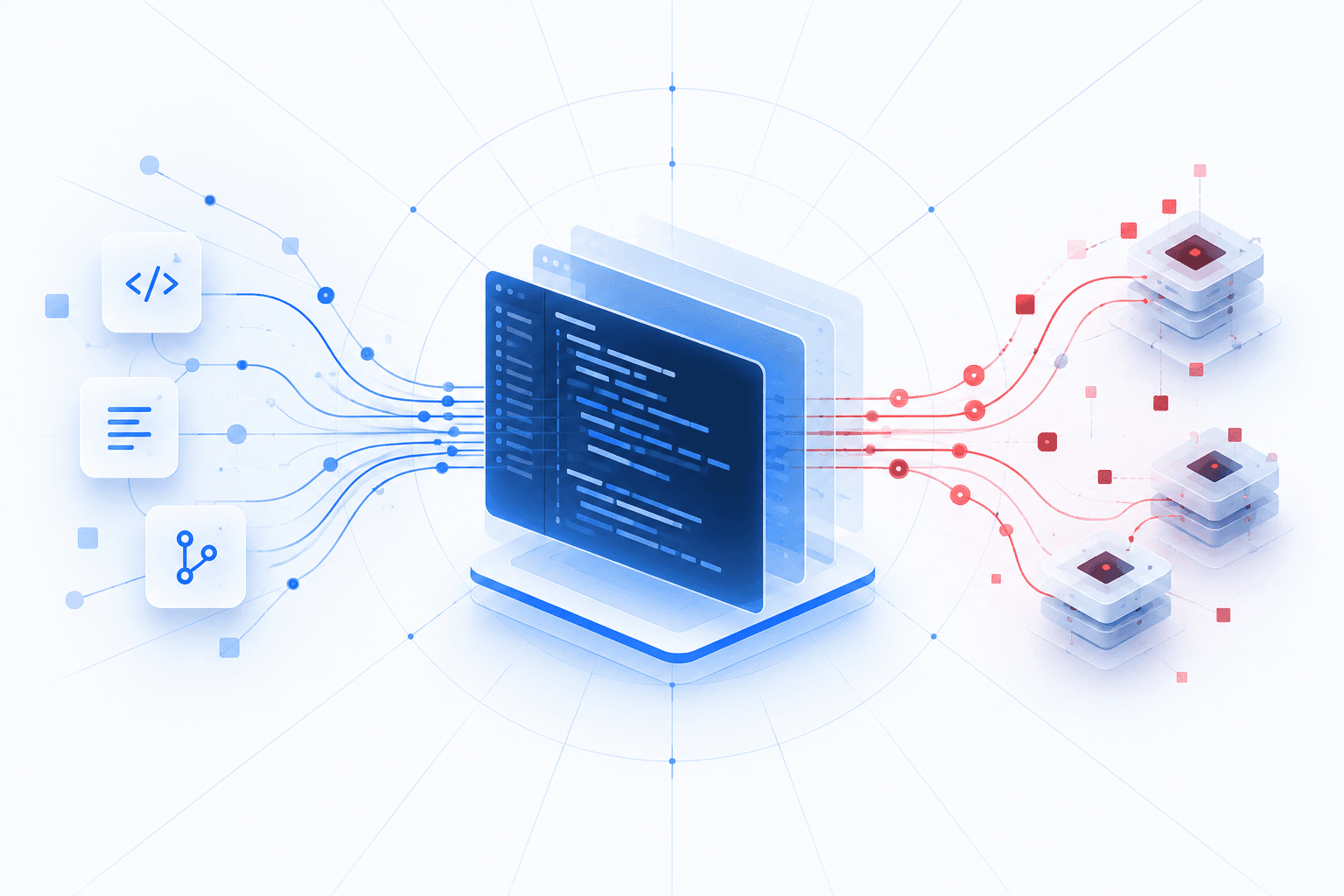
Google Threat Intelligence Group (GTIG) and Mandiant report that threat actors are operationalizing multi-agent AI frameworks to accelerate intrusions, vulnerability research and exploitation, warning that sophisticated, fully autonomous attacks could emerge within three to six months. Frameworks including ARTEX, CAIRN, CyberStrikeAI and PentAGI coordinate agents across intrusion stages, automate patch analysis and exploit execution, generate single-use payloads, and adjust tactics using execution feedback. Observed operations currently prioritize speed over stealth and leave conspicuous forensic artifacts, although GTIG expects concealment to improve.

The findings also document broader AI misuse: state-linked actors are applying language models to reconnaissance, social engineering and stolen-data analysis, while phishing providers and influence operators automate customized lures, personas and content distribution. Suspected MIDNIGHT NEPTUNE activity manipulated coding-assistant configurations to deliver the SOMBERMEME backdoor, and LLMJacking incidents generated fraudulent cloud and AI charges reaching $1 million before remediation. Google says it disrupted associated accounts and infrastructure and deployed specialized ARTEX detection rules; Mandiant released defensive guidance. Defenders should prioritize rapid detection and containment, monitor coding-assistant configuration changes and cloud AI spending, and exploit the forensic traces these frameworks currently leave.
New surface, new adversariesTrack how attackers are adapting to this technology.
Track this risk
Event timeline

How this story unfolded

Events from the most recent confirmed update back to the earliest known activity.

28 events · 2026 – Nov 16, 2026
  1. Reported Nov 17, 202614h ago

    Mandiant releases defenses against LLM-enabled offensive tooling

    Mandiant released a hardening guide and defensive framework intended to counter the speed and scale advantages of AI-enabled attackers.

    Fully Autonomous Agentic Attacks Are Three Months Away, Google Warns - Infosecurity Magazine
  2. Reported Nov 17, 202614h ago

    Google deploys ARTEX-specific behavioral and volumetric detections

    Google's security operations team deployed specialized behavioral and volumetric rulepacks to detect ARTEX use.

    Fully Autonomous Agentic Attacks Are Three Months Away, Google Warns - Infosecurity Magazine
  3. Reported Nov 17, 202614h ago

    FBI warns of increasing ARTEX use in attacks

    The FBI warned about increasing use of ARTEX in attacks during the week preceding the November 17 report.

    Fully Autonomous Agentic Attacks Are Three Months Away, Google Warns - Infosecurity Magazine
  4. Reported Nov 17, 202614h ago

    ARTEX attacks affect South Korean financial institutions

    South Korean financial institutions were identified as victims of attacks involving the ARTEX agentic offensive framework.

    Fully Autonomous Agentic Attacks Are Three Months Away, Google Warns - Infosecurity Magazine
  5. Reported Nov 16, 20261d ago

    Google disables malicious assets and strengthens Gemini safeguards

    Google reported disabling assets associated with the observed malicious activity and updating Gemini safeguards to address the misuse.

    GTIG AI Threat Tracker: Agentic Threat Activity Crosses a Significant Threshold | Google Cloud Blog
  6. Reported Nov 16, 20261d ago

    Suspected MIDNIGHT NEPTUNE weaponizes Claude Code startup configuration

    After initial compromise, suspected MIDNIGHT NEPTUNE modified repository .claude/settings.json files so Claude Code startup would trigger a SOMBERMEME backdoor download. The actor also created GitHub personal access tokens named after Microsoft Copilot to disguise lateral movement.

    GTIG AI Threat Tracker: Agentic Threat Activity Crosses a Significant Threshold | Google Cloud Blog
  7. Reported Nov 16, 20261d ago

    Suspected MIDNIGHT NEPTUNE targets cryptocurrency organizations with recruiter lures

    Suspected MIDNIGHT NEPTUNE activity targeted cryptocurrency organizations in North America and Europe using fraudulent recruiter personas with SynthID-marked imagery. Fake meeting platforms presented ClickFix lures that induced victims to execute staging scripts.

    GTIG AI Threat Tracker: Agentic Threat Activity Crosses a Significant Threshold | Google Cloud Blog
  8. Reported Nov 16, 20261d ago

    PRC-linked actors abuse LLM infrastructure for staging and data theft

    GTIG observed PRC-linked actors using LLM platforms and file-hosting backends for staging, dead-drop command and control, and exfiltration. Activities included hosting lure archives and transferring stolen intranet documents.

    GTIG AI Threat Tracker: Agentic Threat Activity Crosses a Significant Threshold | Google Cloud Blog
  9. Reported Nov 16, 20261d ago

    Competing attackers abuse the same credentials for LLM access

    In one Mandiant investigation, two attackers used the same legitimate credentials, while a suspected botnet or proxy service generated millions of LLM API calls in approximately 24 hours. Credential revocation prevented the other actor from completing its intended LLM abuse.

    GTIG AI Threat Tracker: Agentic Threat Activity Crosses a Significant Threshold | Google Cloud Blog
  10. Reported Nov 16, 20261d ago

    LLMJacking actor exploits LiteLLM sandbox escape to gain administrative access

    In one investigation, an actor exploited LiteLLM sandbox escape CVE-2026-40217 to elevate limited-access Virtual Keys into full administrative credentials.

    GTIG AI Threat Tracker: Agentic Threat Activity Crosses a Significant Threshold | Google Cloud Blog
  11. Reported Nov 16, 20261d ago

    Commercial contractor develops influence platform for over 100,000 accounts

    GTIG identified a commercial contractor developing a multi-provider influence platform designed to manage more than 100,000 accounts. Its supporting infrastructure included cloud phone farms, device spoofing, proxies, disposable email addresses and automated account aging.

    GTIG AI Threat Tracker: Agentic Threat Activity Crosses a Significant Threshold | Google Cloud Blog
  12. Reported Nov 16, 20261d ago

    Exposed exploit_agent server reveals automated exploitation and victim data

    GTIG discovered an exposed staging server hosting exploit_agent, a multi-agent framework designed to analyze patches, identify vulnerabilities, develop exploits and execute them without human intervention. The server held exfiltrated data and attack scripts, with telemetry suggesting targeting of French media, entertainment and education websites.

    GTIG AI Threat Tracker: Agentic Threat Activity Crosses a Significant Threshold | Google Cloud Blog
  13. Reported Nov 16, 20261d ago

    Suspected PRC-linked actors develop and test agentic attack tooling

    GTIG observed suspected PRC-linked actors experimenting with agentic offensive tools, including one group developing its own automated attack framework for likely espionage use. The researchers also identified use of ZeroHollow and Agent Zero.

    GTIG AI Threat Tracker: Agentic Threat Activity Crosses a Significant Threshold | Google Cloud Blog
  14. Reported Nov 16, 20261d ago

    Threat actors experiment with CyberStrikeAI and HexStrike AI

    GTIG observed experimentation with CyberStrikeAI, which connects LLMs to more than 100 security tools, and HexStrike AI, which exposes more than 150 offensive tools through an MCP-integrated architecture.

    GTIG AI Threat Tracker: Agentic Threat Activity Crosses a Significant Threshold | Google Cloud Blog
  15. Reported Nov 16, 20261d ago

    GTIG observes CAIRN framework in intrusions affecting US aerospace targets

    GTIG observed the open-source multi-agent penetration-testing framework CAIRN in intrusions against targets including the US aerospace sector. The framework uses an Observe, Orient, Decide, Act loop and a shared agent workspace.

    GTIG AI Threat Tracker: Agentic Threat Activity Crosses a Significant Threshold | Google Cloud Blog
  16. Reported Nov 16, 20261d ago

    Hundreds of nonfunctional PHP proof-of-concept exploits are published

    Hundreds of subsequently published proof-of-concept exploits for the PHP vulnerabilities were nonfunctional. GTIG assessed that the examples were likely generated using LLMs.

    GTIG AI Threat Tracker: Agentic Threat Activity Crosses a Significant Threshold | Google Cloud Blog
  17. Reported Nov 16, 20261d ago

    LLM-assisted analysis uncovers PHP vulnerabilities before patches

    LLM-enabled analysis uncovered PHP vulnerabilities CVE-2026-109618 and CVE-2026-109619. Publication of a demonstration video and modified code before patching enabled differential analysis.

    GTIG AI Threat Tracker: Agentic Threat Activity Crosses a Significant Threshold | Google Cloud Blog
  18. Reported Nov 16, 20261d ago

    Likely LLM-assisted PaperCut campaign targets hundreds of organizations

    GreyNoise reported a likely LLM-assisted campaign four days after the PaperCut disclosures. The campaign targeted hundreds of organizations and reached domain-administrator privileges within minutes.

    GTIG AI Threat Tracker: Agentic Threat Activity Crosses a Significant Threshold | Google Cloud Blog
  19. Reported Nov 16, 20261d ago

    Researchers generate working PaperCut exploits using LLMs

    Researchers and Huntress produced working exploits for the PaperCut vulnerabilities within one day of disclosure, illustrating how LLMs accelerated exploit development.

    GTIG AI Threat Tracker: Agentic Threat Activity Crosses a Significant Threshold | Google Cloud Blog
  20. Nov 16, 20262d ago

    GTIG publishes agentic attack findings and warns of greater autonomy

    GTIG's quarterly AI Threat Tracker reported that financially motivated and espionage actors were operationalizing multi-agent frameworks to automate intrusions, generate single-use payloads and adapt using execution feedback. Google forecast that sophisticated, fully autonomous agentic attacks could emerge within three to six months, while noting that current operations often sacrifice stealth for speed.

    Fully Autonomous Agentic Attacks Are Three Months Away, Google Warns - Infosecurity Magazine
  21. Oct 21, 202628d ago

    PHP patches two vulnerabilities discovered through LLM-enabled analysis

    Patches were released for PHP vulnerabilities CVE-2026-109618 and CVE-2026-109619.

    GTIG AI Threat Tracker: Agentic Threat Activity Crosses a Significant Threshold | Google Cloud Blog
  22. Aug 2026

    Threat actor deploys customized PentAGI platform against Asian organizations

    Beginning in late August and continuing into early October 2026, a threat actor used a customized PentAGI-based orchestration platform for systematic reconnaissance and vulnerability scanning against organizations across Asia.

    GTIG AI Threat Tracker: Agentic Threat Activity Crosses a Significant Threshold | Google Cloud Blog
  23. Aug 2026

    Attackers exploit two PaperCut vulnerabilities as zero-days

    In late August 2026, attackers exploited authentication bypass CVE-2026-81578 and unsafe dynamic class-loading flaw CVE-2026-82078. Chaining the vulnerabilities enabled unauthenticated remote code execution.

    GTIG AI Threat Tracker: Agentic Threat Activity Crosses a Significant Threshold | Google Cloud Blog
  24. Aug 2026

    GTIG investigates AI-driven influence platform targeting Europe and the Middle East

    GTIG investigated an Influence-as-a-Service platform using Gemini and other AI providers to influence political sentiment. The operation combined localized personas, synthetic media, automated posting, residential proxies and preserved login cookies.

    GTIG AI Threat Tracker: Agentic Threat Activity Crosses a Significant Threshold | Google Cloud Blog
  25. Jun 2026

    Jieyou adds an LLM chatbot for configuring phishing campaigns

    Jieyou introduced a model-agnostic chatbot that let operators configure phishing panels and customize templates using natural-language commands.

    GTIG AI Threat Tracker: Agentic Threat Activity Crosses a Significant Threshold | Google Cloud Blog
  26. Mar 2026

    Jieyou phishing service is first observed

    The Chinese-language Phishing-as-a-Service platform Jieyou was first observed in March 2026, targeting e-commerce fraud.

    GTIG AI Threat Tracker: Agentic Threat Activity Crosses a Significant Threshold | Google Cloud Blog
  27. 2026

    PRC-linked espionage actors use LLMs for targeting and stolen-data analysis

    During Q3 2026, PRC-linked actors used LLMs for reconnaissance, scanning, target research and exploit weaponization. Contractor LEAKY CASTLE also used the models to analyze and translate stolen information and prepare intelligence reports.

    GTIG AI Threat Tracker: Agentic Threat Activity Crosses a Significant Threshold | Google Cloud Blog
  28. 2026

    Mandiant investigates costly LLMJacking incidents across multiple industries

    During 2026, Mandiant investigated theft and abuse of cloud and AI resources at organizations across the Americas and Asia Pacific. Fraudulent charges sometimes exceeded $100,000 in a day and cumulatively reached $1 million before remediation.

    GTIG AI Threat Tracker: Agentic Threat Activity Crosses a Significant Threshold | Google Cloud Blog
Linked entities

Related entities

Vulnerabilities, threat actors, malware, products, organizations, and breaches Mallory has linked to this story.

Open in app →
Do you run this?Follow how adversaries are adapting to this technology, and where it touches your stack today.
Track This Risk
Mallory platform

See the full picture, correlated to your attack surface.

This page covers what’s public. Mallory adds the parts that aren’t: which of your assets are affected, which threat actors are using it right now, and what to deploy next.

Exposure mappingMap indicators from this story to your assets and identify affected systems in minutes.
Threat actor evidenceEvery observed campaign, victim, and pivot linked to actors named in this story.
Associated malwareMalware, exploits, and IOCs connected to the activity described here.
Detection signaturesYARA, Sigma, and Snort rules deployed to your SIEM as soon as they’re published.
Scheduled alertsGet matching new stories delivered to your team as they break, not the next morning.
AI threadsAsk questions about this story and take action on the answers.