Loading story…

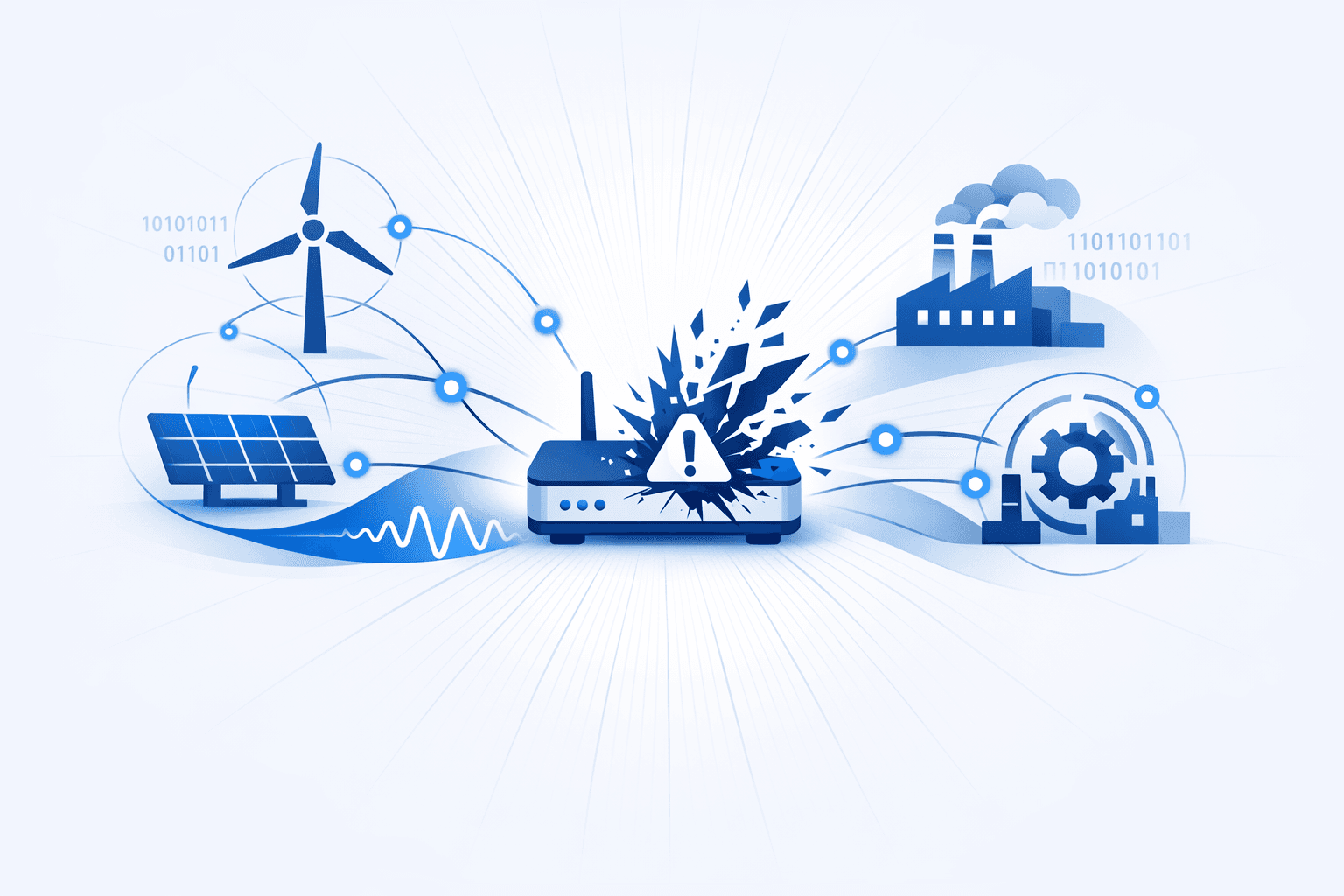
Poland’s Computer Emergency Response Team reported that a destructive cyber incident in December 2025 compromised OT/ICS environments across the country’s energy sector, including renewable energy plants (wind and photovoltaic), a combined heat and power facility, and at least one manufacturing organization. The intrusion reportedly began through vulnerable internet-facing edge devices, after which the actor deployed wiper malware that damaged remote terminal units (RTUs), destroyed data on human-machine interfaces (HMIs), and corrupted firmware on OT devices—resulting in a loss of operator “view and control” even where renewable generation continued producing power but could not be monitored or controlled as designed. Reporting indicated the activity overlapped with infrastructure associated with a Russian government-linked hacking group.
CISA issued an alert to U.S. critical infrastructure organizations to amplify the Polish findings and emphasize mitigations for energy-sector OT/ICS defenders, highlighting the ongoing risk from end-of-support edge devices and the need to harden remote access paths, credential hygiene (including default credentials), and incident response planning for scenarios where OT devices may become inoperable or permanently damaged due to firmware corruption. Separate industry commentary and a Dark Reading article provided broader context on the evolution of OT threats (e.g., lessons from Ukraine’s 2015 grid attack and emerging “living-off-the-plant” techniques), but did not add incident-specific details about the Poland event beyond reinforcing the general trend of increasing attacker capability and interest in industrial environments.
See the actors and campaigns active against you right now.
6 events from the most recent confirmed update back to the earliest known activity.
Following the Poland incident, the UK's National Cyber Security Centre issued a severe cyberthreat alert to critical infrastructure operators, warning that similar targeting could escalate quickly. The guidance urged resilience improvements including vulnerability management, secure configuration, access controls, monitoring, threat hunting, and segmentation.
By mid-February 2026, public reporting highlighted conflicting attribution assessments linking the operation to Russia-associated actors including Static Tundra/Berserk Bear, Sandworm, and Dragos's Electrum cluster. The failed but potentially harmful attack also triggered debate over whether such cyber operations meet legal or strategic thresholds for retaliation under NATO and international law.
On 2026-02-10, CISA published an alert to amplify CERT Polska's findings and warn critical infrastructure operators about OT and ICS security gaps exposed by the Poland incident. The agency emphasized risks from unsupported edge devices and default credentials, and recommended mitigations such as firmware verification, password changes, and OT-focused incident response planning.
On 2026-01-30, CERT Polska published its report on the December 2025 incident, describing three parallel campaigns and warning that the attack could have left nearly half a million residents without heat if it had succeeded. The report characterized the operation as technically unprecedented in scale and highlighted overlap with Russia-linked infrastructure.
The attackers gained access through vulnerable or misconfigured internet-facing edge devices and, in some cases, default credentials, then pivoted into OT environments. They deployed wiper malware that damaged RTUs, destroyed HMI data, and corrupted OT device firmware, causing loss of view and control between facilities and operators even though power generation continued.
Beginning on 2025-12-29, attackers targeted Poland's energy infrastructure, including more than 30 wind and photovoltaic farms, a combined heat-and-power plant, and related organizations. The operation occurred during severe winter conditions and was later described by Polish authorities as one of the country's most aggressive cyber incidents in years.
Vulnerabilities, threat actors, malware, products, organizations, and breaches Mallory has linked to this story.
See the adversaries and campaigns active against your sector right now, ranked by what they're exploiting.
10 references tracked. Mallory keeps watching after this page renders.
lawfaremedia.org
Open sourcedarkreading.com
Open sourcevulnu.com
Open sourcebankinfosecurity.com
Open sourcebankinfosecurity.com
Open sourcebankinfosecurity.com
Open sourcecyberscoop.com
Open sourcecisa.gov
Open sourceMap indicators from this story to your assets and identify affected systems in minutes.
Every observed campaign, victim, and pivot linked to actors named in this story.
Malware, exploits, and IOCs connected to the activity described here.
YARA, Sigma, and Snort rules deployed to your SIEM as soon as they’re published.
Get matching new stories delivered to your team as they break — not the next morning.
Ask questions about this story and take action on the answers.
Other stories Mallory is tracking that overlap on entities, sources, or topic labels.
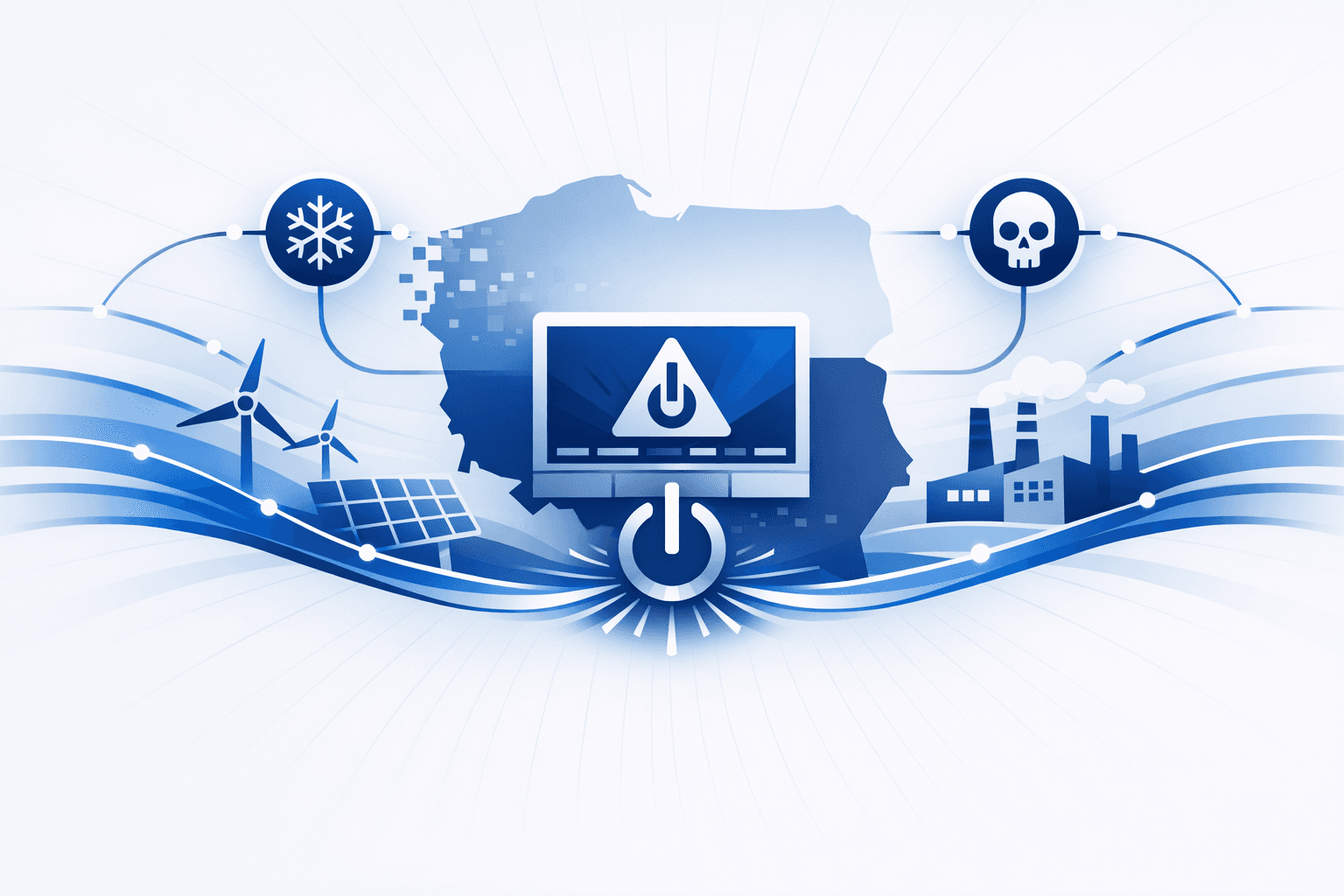
CERT Polska reported **late-2025 sabotage activity** against Poland’s energy sector attributed to the threat actor **Static Tundra**, including coordinated intrusions affecting renewable energy facilities, a large combined heat and power (CHP) plant, and an energy-linked manufacturer. The activity showed a shift from espionage to disruption, including an operational technology (OT) incident in which attackers reached a renewable facility’s **Grid Control Point (GCP)** and executed a shutdown of industrial automation devices. Investigators also observed targeting of **Moxa NPort** serial-to-Ethernet devices, including password changes to lock out operators and deployment of corrupted firmware that could prevent controller startup and require manual recovery. The same reporting described two destructive malware families, **DynoWiper** and **LazyWiper**, used to render systems and data unrecoverable; DynoWiper was documented deleting files from **Mikronika RTU controllers**, while LazyWiper appeared to provide redundant destructive capability. Separately, an opinion piece highlighted that attempted disruption of the Polish distribution grid was **rebuffed and reported**, and used the Poland case (alongside speculative discussion of Venezuela) to argue that energy infrastructure attacks are becoming more common; it provided limited additional technical detail beyond noting ambiguity around attribution and the broader trend toward “democratized” attack tooling.
Feb 3, 2026
Government and industry reporting warns that operational technology and industrial control systems remain dangerously exposed through weak remote access, poor segmentation, and internet-facing devices, giving both state-backed and criminal actors paths into critical infrastructure. A joint **CISA/NSA** advisory said adversaries routinely exploit legacy OT environments, public system information, and insecure remote connections to move from reconnaissance to manipulation of physical processes, while a separate **CISA/FBI** alert tied Chinese state-sponsored intrusions to U.S. natural gas pipeline operators and said the actors stole SCADA and ICS information to build capabilities for future disruption. Recent exposure research also found **6,300** internet-reachable industrial-control and building-automation devices near U.S. data centers, including **BACnet**, **Fox/Niagara**, **Modbus**, and Vertiv/Liebert systems that could affect cooling and power operations. The threat has already translated into real-world disruptive activity and increasingly specialized tooling. Dragos reported **FrostyGoop**, a Golang-based ICS malware that communicates over **Modbus TCP** and was likely used to disrupt heating services in Lviv, Ukraine, after attackers apparently entered through an internet-facing router and traversed poorly segmented networks. Other cited incidents and assessments include Israel’s thwarted attempt against water facilities, persistent Russian probing of U.S. power infrastructure, and leaked-document analysis describing a Russian capability designed to attack rail and petrochemical control systems through telecommunications access. Across the reporting, the common defensive priorities were to eliminate direct public exposure, harden and inventory remote access, enforce MFA, replace default credentials, patch supported systems, restrict engineering tools, and closely monitor OT network and protocol activity.
Jul 18, 2025
Polish authorities and reporting tied to **ESET research** attributed a disruptive cyber incident affecting Poland’s electricity grid to **Russia-linked threat actors**, with **Sandworm** named as the likely operator behind the operation in late 2025. The incident was characterized as a targeted attack on critical infrastructure, reinforcing ongoing concerns about state-aligned activity against European energy networks. A separate malware-newsletter roundup recirculated the attribution as one of many items, while an unrelated CSO Online feature focused on forward-looking **CISO predictions for 2026** and did not provide incident-specific details. Executive teams should treat the Poland grid activity as part of the broader pattern of **Russian state-linked** operations against OT/ICS environments, with emphasis on validating segmentation, monitoring for lateral movement into OT, and ensuring incident response playbooks cover grid/industrial disruption scenarios.
Jan 25, 2026