
Loading story…
A phishing campaign is using emails disguised as payment or money transfer confirmations to trick recipients into opening a malicious XLS attachment. The messages impersonate employees of a specific company in Korea and present the spreadsheet as a legitimate payment slip, using a financial transaction lure to increase the likelihood that targets will open the file.
When opened, the attachment exploits CVE-2017-0199 in Microsoft Office to retrieve a remote HTA payload. The HTA then uses WMI Win32_Process.Create() to launch an obfuscated PowerShell script that downloads a steganographic PNG file, extracts and decrypts an in-memory .NET loader from embedded Base64 data, and ultimately installs Remcos RAT. The malware gives attackers remote access, including command execution, keylogging, screen capture, file manipulation, and data exfiltration to command-and-control infrastructure.

Get the infrastructure and lures behind it.
1 event from the most recent confirmed update back to the earliest known activity.
AhnLab Security intelligence Center (ASEC) reported a phishing campaign in which emails impersonate employees of a company in Korea and pose as payment or money transfer confirmation notices. The emails carry a malicious XLS attachment that exploits CVE-2017-0199 to deliver a multi-stage infection ending in Remcos RAT.
Vulnerabilities, threat actors, malware, products, organizations, breaches, and observables Mallory has linked to this story. Indicator values are masked here and available in full in the app.
Indicator values are masked on this page. See the values in Mallory Domains, IPs, hashes, and URLs are exportable to your SIEM.
Get the infrastructure, lures, and IOCs behind this campaign, ready to push into your email and identity stack.
2 references tracked. Mallory keeps watching after this page renders.
malware.news
Open sourceasec.ahnlab.com
Open sourceMap indicators from this story to your assets and identify affected systems in minutes.
Every observed campaign, victim, and pivot linked to actors named in this story.
Malware, exploits, and IOCs connected to the activity described here.
YARA, Sigma, and Snort rules deployed to your SIEM as soon as they’re published.
Get matching new stories delivered to your team as they break — not the next morning.
Ask questions about this story and take action on the answers.
Other stories Mallory is tracking that overlap on entities, sources, or topic labels.
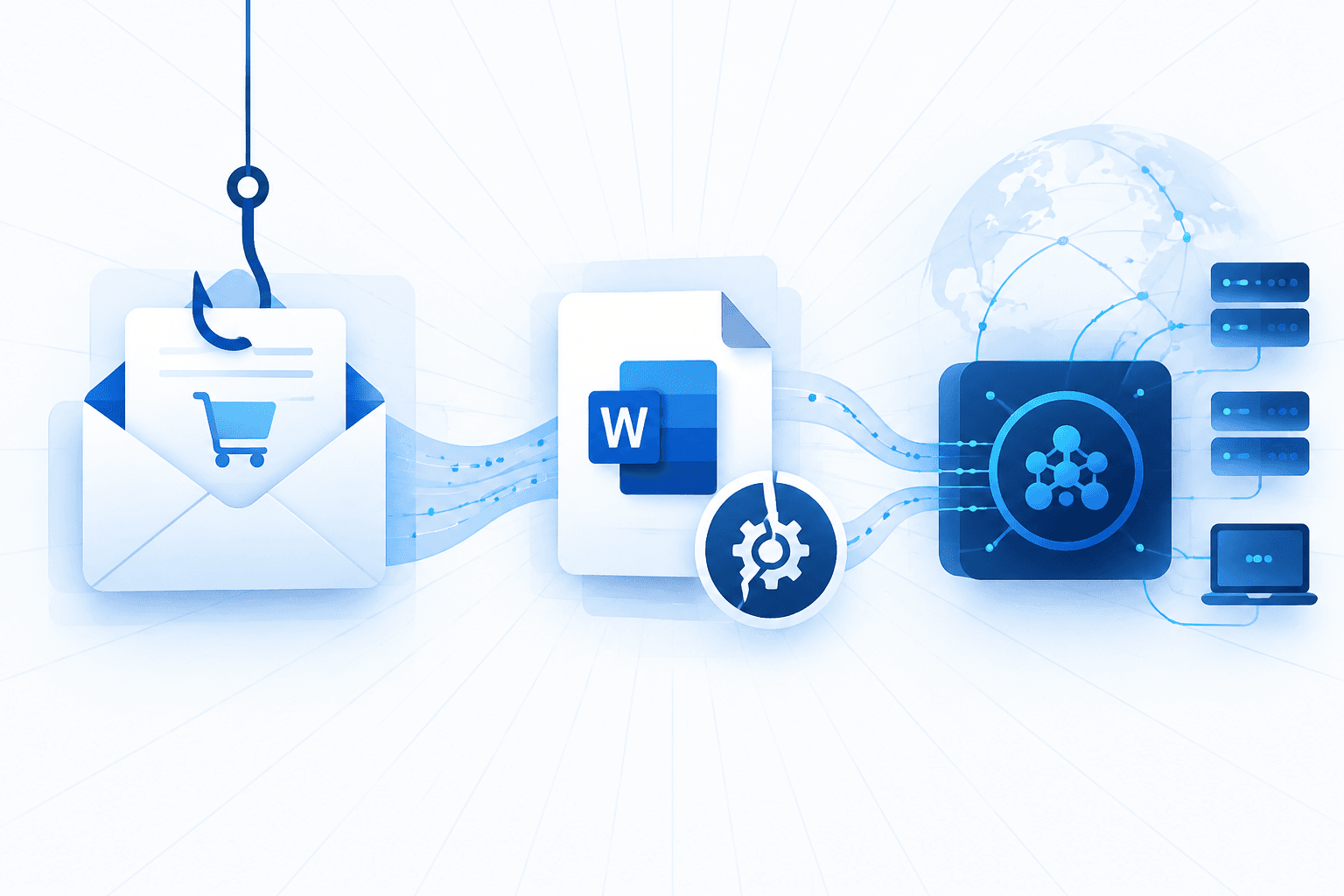
A phishing campaign impersonated employees of a South Korean company and sent project-material purchase-request emails carrying malicious XLS attachments. The spreadsheet displayed a credible decoy purchase form but exploited the Microsoft Office OLE2Link remote-code-execution flaw, `CVE-2017-0199`, to retrieve a malicious HTA payload. The HTA invoked WMI `Win32_Process.Create` to launch obfuscated PowerShell, which downloaded a steganographic PNG containing an in-memory .NET loader. The loader deployed **Remcos RAT**, giving operators remote command execution and the ability to collect system and user data, log keystrokes, capture screens, manipulate files, and exfiltrate data through command-and-control infrastructure.
Sep 30, 2026
Researchers reported multiple **Remcos RAT** campaigns using phishing emails and trusted infrastructure to infect victims while evading detection. In one intrusion chain, a ZIP attachment named `MV MERKET COOPER SPECIFICATION.zip` delivered an obfuscated JavaScript file that fetched a PowerShell loader from `almacensantangel[.]com`; the loader then reconstructed and decrypted payloads in memory, including `ALTERNATE.dll` and `Cqeqpvzeia.exe`. The malware injected into the legitimate Microsoft .NET utility `aspnet_compiler.exe`, communicated with `192[.]3[.]27[.]141:8087`, and stored captured keystrokes and other data in `C:\ProgramData\remcos\logs.dat`, leaving few disk artifacts. A separate campaign used phishing emails that linked to a fake Google Drive sharing page hosted through **Google Cloud Storage** and the trusted `googleapis.com` domain, helping the attack bypass email and web filtering. After user interaction, the infection chain used staged JavaScript redirects or downloads, followed by VBScript or PowerShell execution to retrieve the final Remcos payload, which was then injected into a legitimate Windows process through **process hollowing**, persisted via Windows Registry entries, and opened encrypted command-and-control channels. The activity underscores how attackers are combining living-off-the-land techniques, trusted cloud services, obfuscated scripting, and legitimate Windows binaries to deploy Remcos for surveillance and data theft.
Jun 29, 2026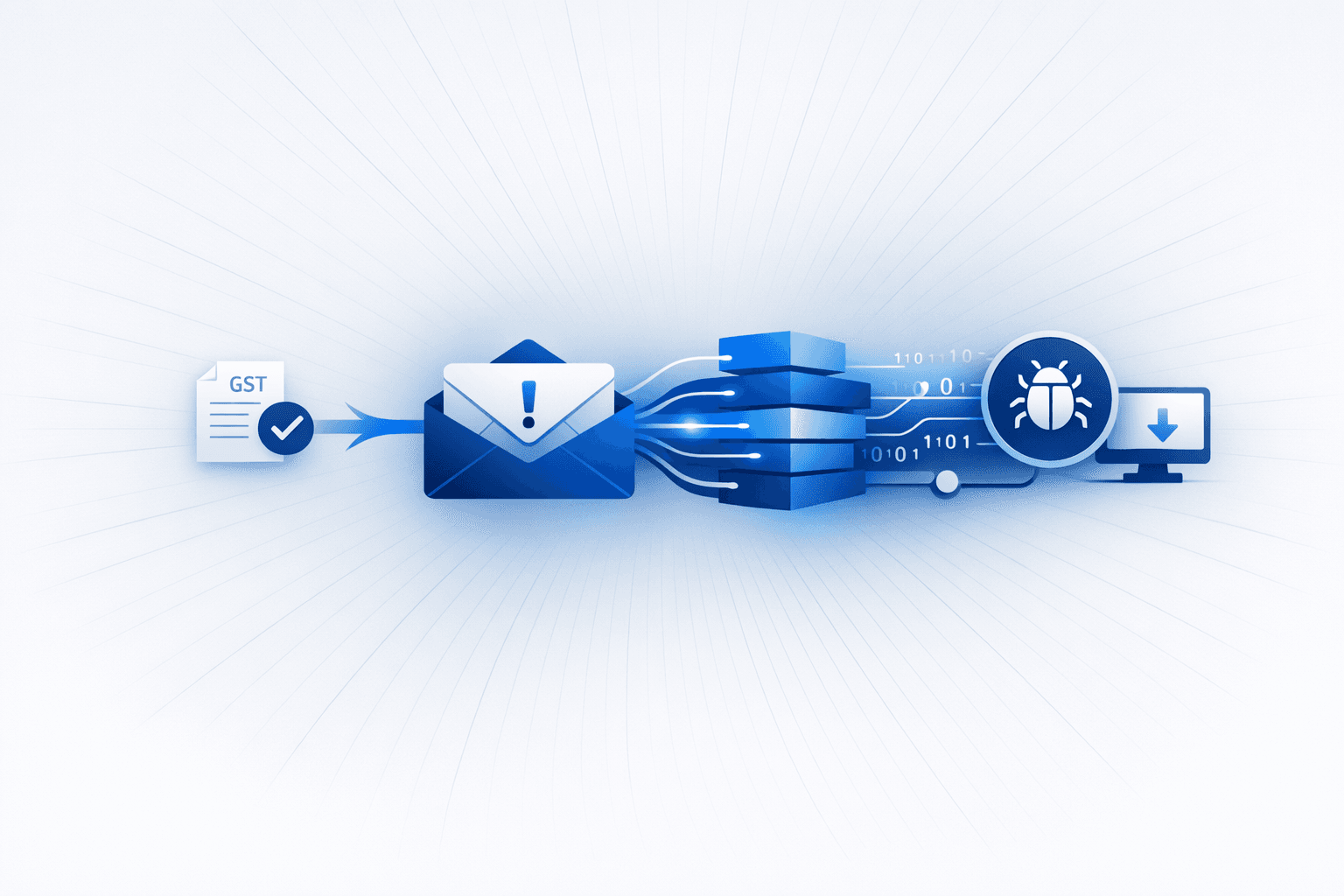
Attackers used spoofed Government of India GST refund emails to target Indian businesses and taxpayers, luring recipients into opening a malicious RAR attachment that launched a multi-stage **.NET** infection chain and ultimately deployed **Remcos RAT**. Seqrite reported that the initial executable unpacked successive in-memory loaders hidden in bitmap resources and DLL stages, including **`Windows Health Optimizer Plus.dll`** and **`perfgurd.dll`**, while using reflection, **XOR-based decryption**, and architecture-aware method dispatch to evade analysis and execute the final payload. The campaign established persistence by copying the executable and launching a **PowerShell** script through a **Run** registry key, and it attempted privilege escalation via **`cmstp.exe`**. The final **Remcos RAT** payload enabled remote access, credential theft, surveillance, and delivery of additional malware. Infrastructure tied to the operation included dynamic DNS domains under **`hath.network`** and **`synology.me`**, with command-and-control activity resolving to **`185.242.4.122`** on hosting associated with **M247 Europe SRL**; researchers assessed the activity as likely financially motivated cybercrime but did not attribute it to a known threat actor.
Jul 23, 2026