
Loading story…
Researchers documented multiple BazaLoader campaigns that used high-interaction phishing lures, including Valentine’s Day retail themes and DocuSign-themed spreadsheets, to trick users into visiting spoofed sites, downloading malicious Excel files, and enabling macros. Once executed, the malware established persistence, injected into legitimate processes, contacted command-and-control infrastructure, and used evolving techniques such as updated .bazar domain-generation logic and heavily obfuscated strings to hinder detection and analysis.
Incident reports showed BazaLoader frequently serving as an initial access loader for broader intrusions that quickly escalated to Cobalt Strike, AdFind reconnaissance, credential theft, lateral movement, and in some cases Anchor DNS deployment, behavior widely associated with Ryuk and later Conti ransomware operations. In one case, reconnaissance began within 41 minutes of infection; in another, attackers progressed from a single endpoint to domain controller access over five days, reinforcing assessments that BazaLoader was a key entry point in enterprise ransomware playbooks tied to TrickBot-aligned affiliates.

Pull IOCs and campaign context straight into your stack.
23 events from the most recent confirmed update back to the earliest known activity.
Malware-Traffic-Analysis.net documented a BazarLoader infection observed on 2022-02-07 that also involved Cobalt Strike. The page provided downloadable indicators of compromise, a packet capture, and malware artifacts for the infection chain.
A phishing campaign observed by researcher Chris Campbell used 'Payment Remittance Advice' emails linking to malicious CSV files that abused Microsoft Excel's Dynamic Data Exchange prompts to launch WMIC and PowerShell, download a DLL, and install BazarLoader leading to BazarBackdoor. AdvIntel's Vitali Kremez said telemetry showed 102 real corporate and government victims over the prior two days.
About 41 minutes after the August 19, 2021 BazarLoader infection, the host began generating Cobalt Strike traffic, and roughly two minutes later AdFind appeared to enumerate the Active Directory environment. Unit 42 noted no ransomware was deployed because the environment was not considered a high-value target.
Unit 42 analyzed an infection generated on August 19, 2021 in which a malicious Excel spreadsheet downloaded a BazarLoader DLL from pawevi[.]com and established command-and-control activity. The DLL was executed with regsvr32.exe and persisted via a registry update.
Unit 42 said the malicious .xlsb spreadsheet used in its case study was discovered on August 18, 2021 and had a last modified date of August 17, 2021. The file used DocuSign branding and macros to deliver BazarLoader.
Malware-Traffic-Analysis.net documented an infection observed on 2021-08-12 in which a ZIP archive named 'Stolen Images Evidence.zip' delivered BazarLoader, followed by Cobalt Strike activity. The case included associated IOCs, packet capture data, and malware samples such as 'Stolen Images Evidence.js' and 'VieFT.dat.'
Unit 42 documented a BazarCall social-engineering infection on April 14, 2021 in which a fake subscription-cancellation email led a victim to call a phone number, visit a fake website, download an Excel file, and enable macros that installed BazarLoader. The report tied the infection to Campo Loader redirect URLs, BazarLoader download URLs, and host artifacts created under C:\Users\Public and C:\ProgramData.
FortiGuard Labs reported a new Bazar Trojan variant spread via phishing emails that redirected victims to fake document downloads such as Preview_report20-01.exe. The analysis detailed its SSL C2 communications with englewoodcarwashh[.]us:443, Date-header-based client verification, and injection of the decrypted payload into cmd.exe.
Proofpoint published analysis on February 11, 2021 describing January and February BazaLoader phishing campaigns that required unusually high user interaction. The company assessed these campaigns were not associated with TA800 or TA572 and likely involved other affiliates.
Proofpoint reported additional BazaLoader payload URLs, hashes, and C2 infrastructure first observed on February 8, 2021. The indicators included both conventional domains and .bazar-based command-and-control infrastructure.
Proofpoint listed another set of BazaLoader payload and command-and-control indicators first observed on February 1, 2021. These included a new payload URL, malware hash, and several HTTPS C2 URLs.
Proofpoint reported BazaLoader payload URLs, hashes, and command-and-control URLs first observed on January 29, 2021, tied to one of the phishing campaigns. The indicators included an Excel payload URL and multiple HTTPS C2 endpoints.
The same January 2021 Bazar Loader sample was first detected on VirusTotal on January 23, 2021, followed later that day by detections of its unpacked second stage and final payload.
A Johannes Bader analysis documented a Bazar Loader sample named Preview_report20-01.exe compiled on January 20, 2021, reflecting a slight update to the malware's domain generation algorithm compared with the December version.
Unit 42 reported that multiple campaigns distributed BazarLoader during summer 2021. From late July through mid-August 2021, three major campaigns were BazarCall, a copyright-violation themed campaign, and TA551 (Shathak).
Proofpoint observed several BazaLoader phishing campaigns in January 2021 using Valentine's Day themes such as flowers and lingerie. These campaigns relied on fake retail websites, PDF order lures, and Excel macros to deliver the malware.
Hornetsecurity said it first observed a BazarLoader phishing campaign on 2020-10-13 at 13:00 UTC using fake termination-themed emails and a legitimate Google Docs link to deliver a malware executable named Report10-13.exe. The report said the loader used OpenNIC DNS and a DGA-generated .bazar domain tied to EmerDNS to fetch BazarBackdoor, with Ryuk ransomware as the eventual monetization stage.
Proofpoint stated that BazaLoader was first observed in the wild in April 2020. Later analysis pieces also referenced April 2020 as the malware family's initial discovery period.
Proofpoint reported that BazaLoader campaign volume increased during 2020 and peaked in October. It also correlated some 2020 BazaLoader campaigns with public reports of affiliate activity associated with Ryuk ransomware infections.
A forensic analysis documented a BazarISO sample distributed as an ISO file named Documents-17.iso containing docs.lnk and autorun.exe. The LNK launched rundll32.exe with advpack.dll,RegisterOCX to execute the payload, and static analysis indicated capabilities including keylogging, registry modification, file discovery, and anti-debugging behavior.
The DFIR Report said the Bazar, Cobalt Strike, and Anchor DNS intrusion progressed from a single endpoint to full domain compromise within five days. During that period, the attackers performed credential dumping, lateral movement, and extensive network discovery.
In the same intrusion, Bazar established persistence and reconnaissance, then about one hour later launched Cobalt Strike, after which Anchor DNS was dropped and executed. The report assessed the activity as consistent with pre-ransomware operations associated with Ryuk-linked actors.
The DFIR Report described an intrusion beginning with a malicious DocuSign-themed Excel 4.0 macro document that retrieved a payload from morrislibraryconsulting[.]com. The follow-on malware was manually executed as a Bazar loader sample.
Vulnerabilities, threat actors, malware, products, organizations, breaches, and observables Mallory has linked to this story. Indicator values are masked here and available in full in the app.
Indicator values are masked on this page. View all 199 in Mallory Domains, IPs, hashes, and URLs are exportable to your SIEM.
Pull the IOCs, campaigns, and victimology behind this family, ready to push into your SIEM and EDR.
18 references tracked. Mallory keeps watching after this page renders.
isc.sans.edu
Open sourceisc.sans.edu
Open sourcemalware-traffic-analysis.net
Open sourcemalware-traffic-analysis.net
Open sourcefortinet.com
Open sourceproofpoint.com
Open sourcefireeye.com
Open sourcehornetsecurity.com
Open sourceMap indicators from this story to your assets and identify affected systems in minutes.
Every observed campaign, victim, and pivot linked to actors named in this story.
Malware, exploits, and IOCs connected to the activity described here.
YARA, Sigma, and Snort rules deployed to your SIEM as soon as they’re published.
Get matching new stories delivered to your team as they break — not the next morning.
Ask questions about this story and take action on the answers.
Other stories Mallory is tracking that overlap on entities, sources, or topic labels.
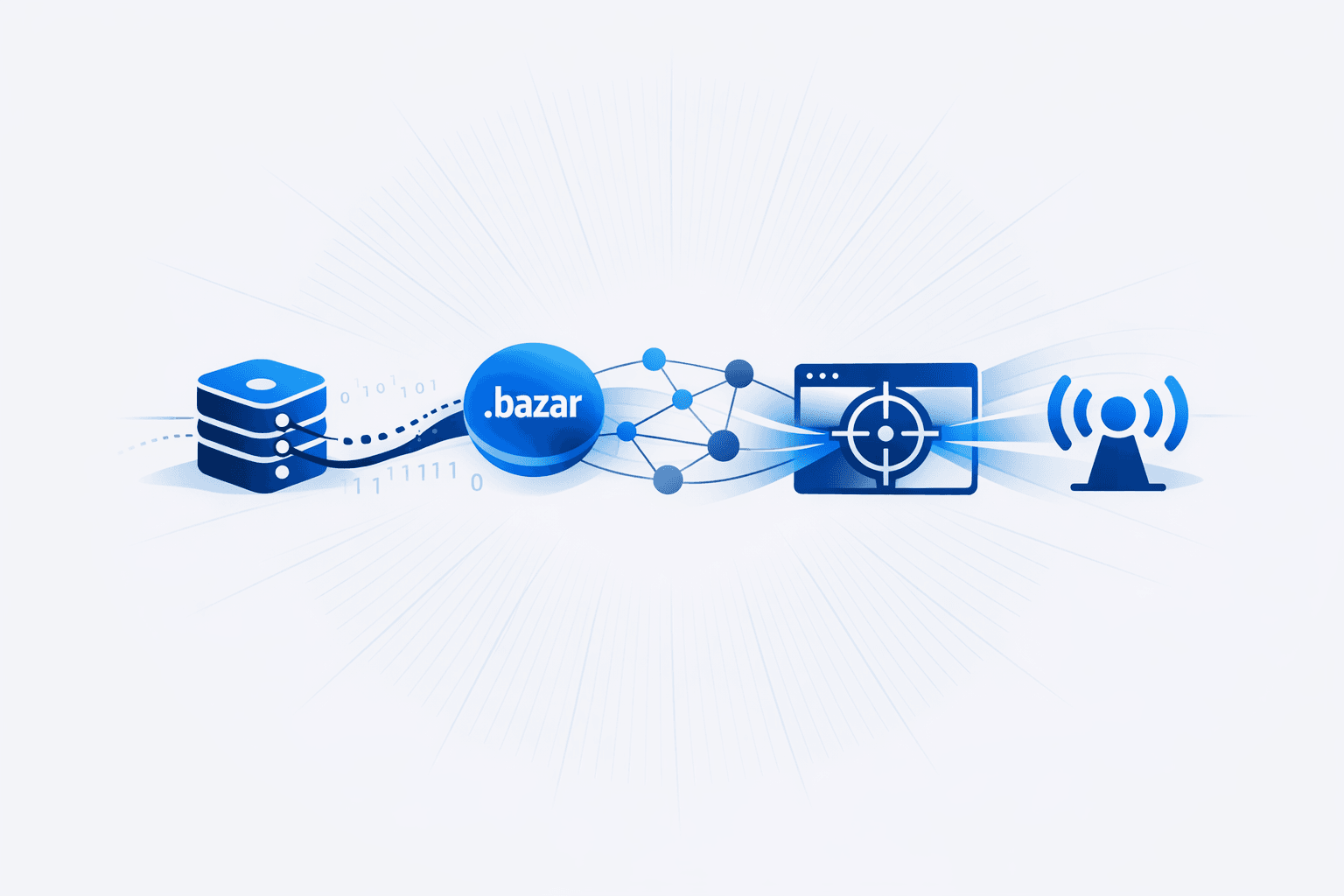
Researchers detailed how **BazarLoader** evolved as an enterprise-focused malware loader tied to the TrickBot ecosystem, using the decentralized `.bazar` namespace on EmerDNS/OpenNIC for command-and-control and rotating algorithmically generated domains each month. Early variants generated 12-character domains and later shifted to 8-character patterns built from consonant-vowel pairs, expanding the monthly candidate pool from about 2,160 to 12,996 domains; one later variant contained a coding flaw that caused many summer-month domains to become invalid, disrupting parts of its own DGA-based infrastructure. Separate reverse-engineering of BazarLoader’s infection chain showed the malware commonly arrived through phishing and malicious ISO files, where an `LNK` launched a DLL via `rundll32.exe`, unpacked shellcode, and exposed the final loader. The loader used anti-analysis checks, language-based execution filtering, dynamic API resolution, decoy traffic, cryptographic validation, and process hollowing, then fetched follow-on payloads from hard-coded HTTPS IPs or fallback `.bazar` domains to deliver tools such as **Cobalt Strike** and **Conti ransomware**.
Aug 15, 2026
Sophos reported that attackers used the **Buer** malware-as-a-service loader to gain initial access in a Ryuk ransomware intrusion, highlighting a shift in how Ryuk affiliates were reaching victims. The intrusion began with a low-volume spear-phishing campaign that used malicious documents hosted on **Google Docs**, and Buer was then used to deploy a **Cobalt Strike** beacon that enabled lateral movement before **Ryuk** ransomware was launched across the network. The report said the activity later expanded into broader spam campaigns that also delivered other loaders, including **Bazar** and **ZLoader**, suggesting overlapping delivery infrastructure and coordinated lures. Sophos described Buer as a commercial loader for Windows that supports campaign management, victim filtering, and command-and-control tasking, and noted that observed samples used a stolen **DigiCert** code-signing certificate along with anti-analysis features and checks designed to avoid infecting systems in CIS-region countries.
Aug 14, 2026
Researchers linked **Batloader** activity to the **Water Minyades / DEV-0569 / SteelClover** ecosystem, which used malvertising, SEO poisoning, and fake software download pages to lure victims into installing trojanized packages. The campaigns abused legitimate installer frameworks such as **Advanced Installer** and **WiX**, then shifted to obfuscated JavaScript and PyArmor-protected Python loaders that fingerprinted hosts, contacted command-and-control infrastructure, escalated privileges, and attempted to disable security tools. Operators also used cloned software sites and malicious Google ads to distribute MSI files that launched PowerShell, added Microsoft Defender exclusions, and retrieved encrypted follow-on payloads. The infections were used to selectively deploy a broad set of malware, including **Qakbot**, **Ursnif**, **Vidar**, **ZLoader**, **RedLine Stealer**, **Raccoon Stealer**, **Cobalt Strike**, and remote-management tools such as **Atera** and **Syncro**. Trend Micro reported that Batloader infections observed from September 2022 onward were associated with **Royal ransomware**, while NTT documented a surge of related infections at Japanese companies in early 2023 through the **FakeGPG** and **BatApp** campaigns. The activity was concentrated heavily in the United States but also affected Canada, Germany, Japan, and the United Kingdom, underscoring Batloader's role as a flexible initial-access platform for both credential theft and ransomware intrusion chains.
Aug 15, 2026