
Loading story…
A newly identified modular malware family dubbed SynkLoader is being deployed through Microsoft Teams phishing messages that impersonate corporate IT help desks and direct users to install a fake "PowerShell Cleaner" MSI hosted on Azure Blob Storage. Researchers found the infection chain uses in-memory PowerShell execution and a bundled Python runtime to launch a multi-language framework spanning PowerShell, Python, C#, and native C/C++ DLLs, allowing the malware to remain largely memory-resident while profiling infected systems and establishing persistence through a scheduled task created via COM.
SynkLoader supports credential theft and hands-on-keyboard intrusion through several modules, including a fake Windows lock screen component known as PhishLocker that captures user passwords, traffic tunneling through the victim host, interactive PowerShell access, and VNC-style desktop streaming for remote control. By emulating the malware's command-and-control protocol and supplying decoy enterprise telemetry, researchers observed operators deploy additional tooling and conduct Active Directory-focused reconnaissance, leading to a low-to-medium confidence assessment that the activity is tied to a ransomware group or an initial access broker supporting ransomware operations.

Get the infrastructure and lures behind it.
7 events from the most recent confirmed update back to the earliest known activity.
Expel published technical analysis of SynkLoader, including indicators of compromise and defensive guidance. The report documented the malware's modules, phishing delivery method, and techniques such as fake lock-screen credential theft and traffic redirection.
Expel identified the previously unknown SynkLoader malware family on August 18, 2026 while investigating a client incident after an EDR alert flagged a scheduled task. That investigation led researchers to analyze the multi-stage intrusion later documented in Expel's public report.
Analysis cited by Expel indicated the previously unknown SynkLoader malware family was first compiled and distributed around July 28, 2026. Researchers later tied it to Microsoft Teams phishing that impersonated corporate IT help desks.
Based on the operators' focus on Active Directory scale, credential capture, and interactive intrusion behavior, researchers assessed that SynkLoader is likely associated with ransomware activity or an initial access broker serving ransomware actors. The assessment was described with low-to-medium confidence in Expel's reporting.
By emulating the malware's command-and-control protocol and presenting a fake large enterprise Active Directory environment, Expel induced the operators to deploy additional tooling. The response included modules for persistence, credential theft, traffic tunneling, and interactive access, revealing hands-on-keyboard activity.
After analyzing the intrusion, researchers identified a newly discovered modular malware family and named it SynkLoader. They highlighted its unusual multi-language design and memory-resident modules intended to evade detection.
In the observed intrusion, attackers used a Microsoft Teams phishing lure impersonating an IT help desk and convinced a victim to download a fake "PowerShell Cleaner" MSI from Azure Blob Storage. The installer launched a multi-stage malware chain using PowerShell, Python, C#, and native DLL components.
Vulnerabilities, threat actors, malware, products, organizations, breaches, and observables Mallory has linked to this story. Indicator values are masked here and available in full in the app.
Indicator values are masked on this page. View all 16 in Mallory Domains, IPs, hashes, and URLs are exportable to your SIEM.
Get the infrastructure, lures, and IOCs behind this campaign, ready to push into your email and identity stack.
10 references tracked. Mallory keeps watching after this page renders.
securityonline.info
Open sourcemeetcyber.net
Open sourcecryptika.com
Open sourcecybersecuritynews.com
Open sourcecryptika.com
Open sourcecyberveille.ch
Open sourcebleepingcomputer.com
Open sourceexpel.com
Open sourceMap indicators from this story to your assets and identify affected systems in minutes.
Every observed campaign, victim, and pivot linked to actors named in this story.
Malware, exploits, and IOCs connected to the activity described here.
YARA, Sigma, and Snort rules deployed to your SIEM as soon as they’re published.
Get matching new stories delivered to your team as they break — not the next morning.
Ask questions about this story and take action on the answers.
Other stories Mallory is tracking that overlap on entities, sources, or topic labels.
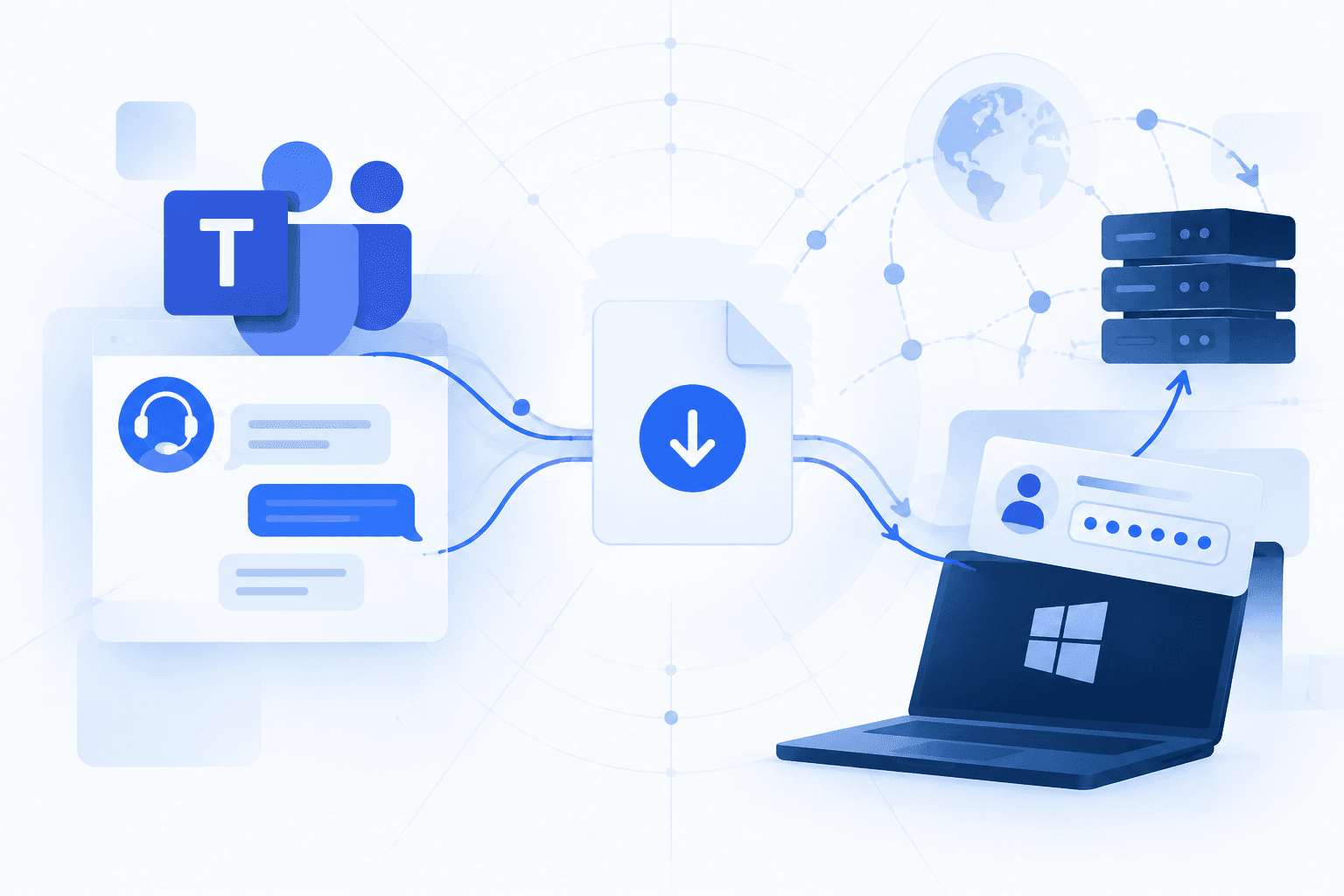
Threat actors are using Microsoft Teams external chats to impersonate internal IT help-desk staff, persuading employees to install malware or grant remote access. The campaign relies on attacker-controlled Microsoft 365 tenants and trusted-looking display names such as **“IT Service Desk,”** exploiting permissive cross-tenant communication rather than a Microsoft Teams software vulnerability. One reported operation delivered **SynkLoader** through a malicious MSI sent in a Teams phishing message. SynkLoader establishes persistence through scheduled tasks and deploys a **PhishLocker** component that displays a counterfeit Windows lock screen to capture plaintext credentials. Organizations should limit Teams external communications to trusted domains, ensure external-sender indicators are visible, and require employees to independently verify unsolicited support contacts.
Sep 22, 2026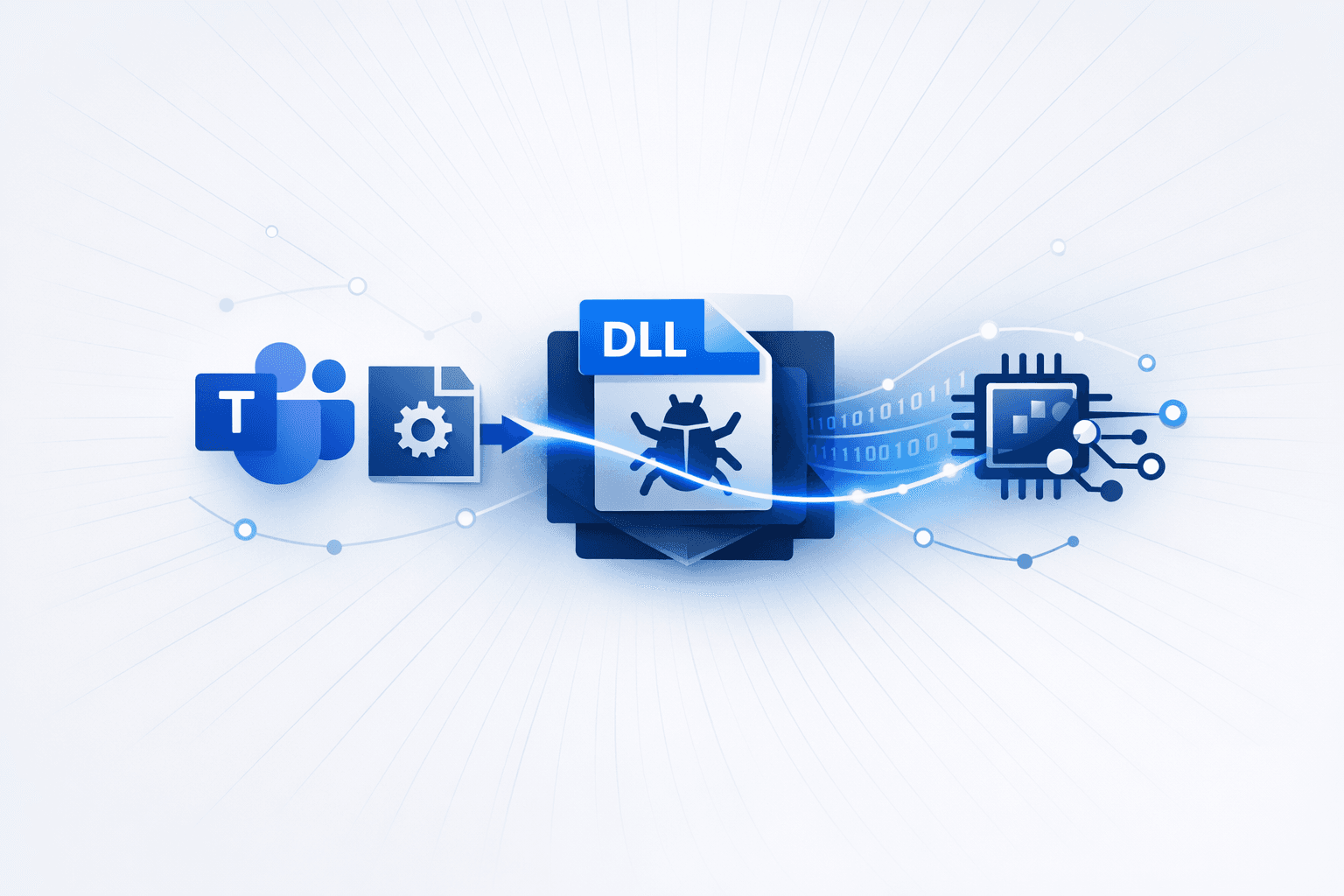
A malware campaign is using fake Microsoft Teams download pages promoted on **X** to lure corporate users into installing trojanized ZIP archives that deploy **ValleyRAT**. Researchers said the infection chain relies on an **NSIS** installer and **DLL sideloading** through Tencent’s legitimate `GameBox.exe`, then uses PowerShell to add Windows Defender exclusions, hide files, and establish persistence through unauthorized service creation and registry artifacts including `_CCGDAT`. Once executed, the loader decrypts staged payloads from `user.dat` in memory using **AES** and **XOR**, with additional evasion through API hashing and reflective loading. The final ValleyRAT payload captures keystrokes, clipboard contents, and active-window activity before exfiltrating data to command-and-control infrastructure at `103.215.77.17`; researchers said the campaign shows Chinese-language artifacts and behavioral overlaps that likely tie it to the **SilverFox APT** cluster.
Jun 30, 2026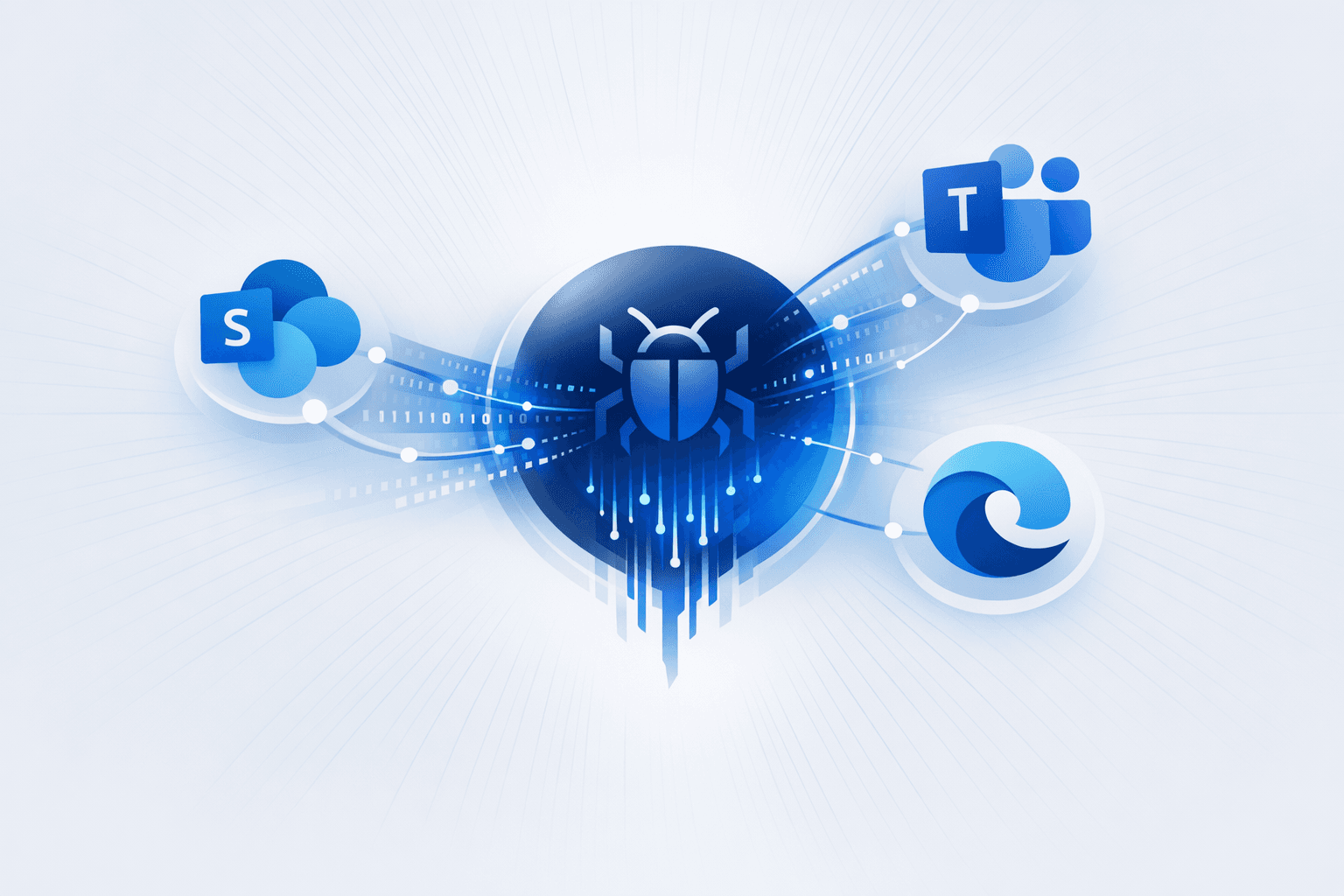
Researchers disclosed **TwinLoot**, a previously undocumented Python-based malware framework that conducts command-and-control almost entirely through trusted Microsoft cloud services. Ontinue said the implant uses **SharePoint Online** and the **Microsoft Graph API** as a dead-drop C2 channel, abuses **Microsoft Teams** TURN relay infrastructure for interactive access, and routes traffic through the victim’s own **Microsoft Edge** browser to blend malicious activity into normal enterprise cloud usage. Investigators linked the activity to an ongoing campaign and assessed the likely initial access vector as a Microsoft Teams social-engineering lure in which an actor posing as IT support convinced a victim to run a PowerShell command. TwinLoot supports credential harvesting, arbitrary command execution, reconnaissance, screenshot capture, and reverse **SOCKS5** tunneling for pivoting and lateral movement. Its credential theft module presents a convincing fake Windows lock screen to capture passwords, while its persistence mechanism uses an offline-forged **`NTUSER.MAN`** mandatory profile hive without requiring administrative privileges, a technique researchers described as the first recorded malicious use in the wild of this Windows internals method. Analysts said the framework’s combination of Microsoft 365 dead-drop C2, Teams relay abuse, and headless browser transport is a first-of-its-kind design, and urged defenders to baseline normal SharePoint, Teams, and Graph API activity while monitoring OAuth applications, consent grants, and other anomalous cloud behavior.
Aug 22, 2026